

Close Menu
Healthtost
  • News
  • Mental Health
  • Men’s Health
  • Women’s Health
  • Skin Care
  • Sexual Health
  • Pregnancy
  • Nutrition
  • Fitness
  • Recommended Essentials
What's Hot

Gut-friendly diet linked to lower risk of coronary heart disease mortality

July 9, 2026

New Sunscreen Ingredient: Is This The SPF Upgrade We’ve Been Waiting For?

July 9, 2026

5 Easy High Fiber Bowl Recipes

July 8, 2026
Facebook X (Twitter) Instagram
  • About Us
  • Contact Us
  • Privacy Policy
  • Terms and Conditions
  • Disclaimer
Facebook X (Twitter) Instagram
Healthtost
SUBSCRIBE
  • News

    Socioeconomic status confers unequal reductions in metabolic disease among racial, ethnic groups

    July 8, 2026

    Only one in 10 Australians know the Black Triangle safety symbol

    July 8, 2026

    Study reveals why patients with rare leukemia develop resistance to tagraxofusp

    July 7, 2026

    Countable Labs and Promega Announce Collaboration Agreement to Facilitate End-to-End Biological Sample Preparation and Rare Variant Detection

    July 7, 2026

    New virus insights lay foundation for treatment of JC polyomavirus infection

    July 6, 2026
  • Mental Health

    Almost 20% of new mums have anxiety or depression, but a promising psychedelic treatment is on the horizon

    July 7, 2026

    How can ART help us improve our mental health? With 3 Ways

    July 5, 2026

    How much do friends affect the mental health of teenagers? What a new study can (and can’t) tell us

    July 3, 2026

    What happens in your blood when you are stressed? We put it to the test

    June 28, 2026

    Why negative news grabs our attention and what it means for our mental health

    June 25, 2026
  • Men’s Health

    Gut-friendly diet linked to lower risk of coronary heart disease mortality

    July 9, 2026

    Men don’t just avoid their health. Many lose themselves.

    July 8, 2026

    The Crazy Hard Standards of the Hardest PE Program in History

    July 8, 2026

    Why our relationships are becoming more dishonest and what we can do about it

    July 7, 2026

    Definitive Guide: The Primal Blueprint

    July 7, 2026
  • Women’s Health

    Taite Heller on Why Barre Became a Top-5 Fitness Trend

    July 8, 2026

    Sunscreen TikTok convinces young people

    July 7, 2026

    Biology, Myths and Real Care

    July 7, 2026

    The shape of the strong black woman

    July 6, 2026

    208: What Mold Really Does to Your Health and How to Find It with Brian Karr

    July 5, 2026
  • Skin Care

    New Sunscreen Ingredient: Is This The SPF Upgrade We’ve Been Waiting For?

    July 9, 2026

    How to achieve the perfect tan

    July 8, 2026

    How I did it: I plump the skin without fillers

    July 6, 2026

    Natural bug bite relief with herbal remedies

    July 4, 2026

    Why Jojoba Beads Beat Coconut Shell Pow

    July 3, 2026
  • Sexual Health

    Complete Career Guide — Sexual Health Alliance

    July 8, 2026

    Because your sexual health matters more than you think

    July 5, 2026

    Fildena 150 How It Works: Mechanism & Benefits

    July 4, 2026

    Climate justice is reproductive justice

    July 2, 2026

    5 STDs that can cause bruising

    July 2, 2026
  • Pregnancy

    Calf Raises During Pregnancy: Step-by-Step Guide and Benefits

    July 8, 2026

    Tri-Tri Triplet Pregnancy with Vaginal Birth Story – The Birth Hour Triplet Pregnancy and Vaginal Birth Story with Ashlie Holladay

    July 7, 2026

    Common pregnancy drugs linked to higher rates of autism diagnosis in large study

    July 6, 2026

    Monsoon Infections During Pregnancy: Safety Tips for Expectant Moms

    July 5, 2026

    How to be the support she really needs

    July 4, 2026
  • Nutrition

    5 Easy High Fiber Bowl Recipes

    July 8, 2026

    Salmon Teriyaki Recipe (Ridiculously Easy!) • Kath Eats

    July 8, 2026

    Can exercise counteract a high-fat meal?

    July 6, 2026

    Natural ways to boost energy throughout the day

    July 6, 2026

    My story with iron deficiency as a plant-based nutritionist and runner

    July 4, 2026
  • Fitness

    Using External Signaling to Improve Linear Acceleration – Tony Gentilcore

    July 8, 2026

    5 Simple Screen Changes That Can Improve Sleep and Focus

    July 7, 2026

    How to prevent muscle loss while losing weight

    July 5, 2026

    The role of nutrition in maintaining energy during regular exercise

    July 5, 2026

    Junior Nsemba’s 3 best drills for strength, speed and dominance on the rugby field

    July 3, 2026
  • Recommended Essentials
Healthtost
Home»News»Prunes may protect bone structure and strength in postmenopausal women, study finds
News

Prunes may protect bone structure and strength in postmenopausal women, study finds

healthtostBy healthtostJune 26, 2024No Comments5 Mins Read
Facebook Twitter Pinterest LinkedIn Tumblr Reddit WhatsApp Email
Prunes May Protect Bone Structure And Strength In Postmenopausal Women,
Share
Facebook Twitter LinkedIn Pinterest WhatsApp Email

Dairy is not the only food that is good for bone health. Prunes may also protect bone structure and strength in postmenopausal women, according to a new study led by Penn State researchers. The findings, published in Osteoporosis Internationalsuggest that daily consumption of plum slows the progression of age-related bone loss and reduces the risk of fracture.

This is the first randomized controlled trial to examine three-dimensional bone outcomes in relation to bone structure, geometry and estimated strength. In our study we saw that daily consumption of plums affected factors related to fracture risk. This is clinically invaluable.”


Mary Jane De Souza, distinguished professor of kinesiology and physiology at Penn State;

Bones are composed of dynamic tissues that are constantly in the process of remodeling. Specialized bone cells remove old bone and replace it with new bone. With age, the scales begin to tip and the body breaks down bones faster than it can build them.

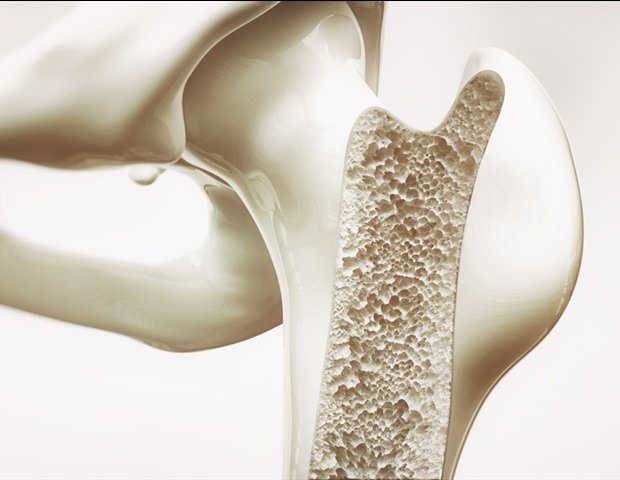
Accelerated bone loss can lead to osteoporosis, a disease where the bones become less dense and the structure of the bones changes, making them weaker and at greater risk of fracture. More than 10 million Americans have the condition, according to the Centers for Disease Control and Prevention, and it is more common in women compared to men and in the elderly.

It’s of particular concern for postmenopausal women, the researchers said. Estrogen, a hormone critical to bone health, declines during this phase of life, and lower estrogen levels accelerate bone loss. While there is a drug available to treat osteoporosis, researchers said many women who should be taking it are not taking it.

Plums offer a promising alternative, according to De Souza. They contain bioactive compounds such as polyphenols that may moderate the inflammatory pathways that lead to bone loss.

Previous studies mainly used dual-energy X-ray absorptiometry (DXA) to assess two-dimensional bone density and to diagnose osteoporosis. But DXA scans cannot distinguish between different types of bone tissue or measure the structural properties of bone, which can serve as a proxy for bone strength and quality, the researchers explained.

“When we look at bone density, we look at how much bone there is, but we also want to know about the quality of the bone. When we look at a 3D image, we can see the bone structure, the geometry and the microarchitecture, that is, it tells us how good it is the bone,” De Souza said.

To determine whether daily consumption of plums affected bone quality, the research team conducted a 12-month randomized controlled trial with 235 postmenopausal women. Participants were divided into one of three groups: no plums; 50 grams, or four to six, prunes daily. or 100 grams, or 10 to 12, prunes daily. Every six months, they were assessed using regional quantitative computed tomography or pQCT scanning, which allows cross-sectional imaging to measure three-dimensional bone density, bone geometry, and bone strength.

Over the course of a year, the researchers found that measures of bone density and bone strength in the tibia, or tibia bone, all decreased in the women in the control group. In contrast, those who ate at least four to six prunes each day maintained bone density and bone strength and preserved bone structure, particularly in cortical bone. While women in both prune groups saw benefits, four to six prunes a day may be the most feasible dose. Women in the 100-gram group dropped out at a higher rate because they got tired of incorporating so many prunes into their daily diet.

“It’s pretty exciting data for a 12-month study,” De Souza said. “We were able to preserve and preserve the bone in the weight-bearing cortical bone of the tibia, and maintaining cortical bone and bone strength is key to preventing fracture.”

Eating plum could also potentially reduce the risk of osteoporosis, De Souza explained, but more research is needed.

With this paper, the research team drew on a series of studies investigating the relationship between plums and bone health. In a previous study with the same group of women, the research team showed that eating prunes daily for a year also preserved total bone density in the hip. They have also investigated possible mechanisms behind the protective effects of prunes, including how prunes affect the bacteria in the gut microbiome. De Souza said they hope to continue to expand on these findings in future studies.

Other Penn State authors on the paper include Nancy Williams, professor of kinesiology and physiology, and Janhavi Damani, PhD in the graduate program in integrative and biomedical physiology at the Huck Institutes of the Life Sciences. Kristen Koltun, who was a doctoral student at Penn State at the time of the research and is currently an assistant professor of sports medicine and nutrition at the University of Pittsburgh, led the study. Co-author Nicole Strock earned her PhD at Penn State and is currently a human performance scientist at NASA’s Johnson Space Center. Connie Weaver, Distinguished Research Professor at San Diego State University. Hang Lee, associate professor of medicine at Harvard Medical School. Connie Rogers, professor of Nutritional Sciences at the University of Georgia. Mario Ferruzzi, professor of pediatrics at the University of Arkansas for Medical Sciences. and Cindy Nakatsu, professor of agronomy at Purdue University, also contributed to the work.

Funding from the California Prune Board supported this project.

Source:

Journal Reference:

Koltun, KJ, et al. (2024) Prunes maintain cortical density and estimated tibial strength in a 12-month randomized controlled trial in postmenopausal women: The Prune Study. Osteoporosis International. doi.org/10.1007/s00198-024-07031-6.

bone finds postmenopausal Protect Prunes Strength structure study women
bhanuprakash.cg
healthtost
  • Website

Related Posts

Socioeconomic status confers unequal reductions in metabolic disease among racial, ethnic groups

July 8, 2026

Only one in 10 Australians know the Black Triangle safety symbol

July 8, 2026

Study reveals why patients with rare leukemia develop resistance to tagraxofusp

July 7, 2026

Leave A Reply Cancel Reply

Don't Miss
Men's Health

Gut-friendly diet linked to lower risk of coronary heart disease mortality

By healthtostJuly 9, 20260

A national analysis shows that diets that support a healthier gut microbiota may help identify…

New Sunscreen Ingredient: Is This The SPF Upgrade We’ve Been Waiting For?

July 9, 2026

5 Easy High Fiber Bowl Recipes

July 8, 2026

Using External Signaling to Improve Linear Acceleration – Tony Gentilcore

July 8, 2026
Stay In Touch
  • Facebook
  • Twitter
  • Pinterest
  • Instagram
  • YouTube
  • Vimeo
TAGS
Baby benefits body brain cancer care Day Diet disease exercise finds Fitness food Guide health healthy heart Improve Life Loss Men mental Natural Nutrition Patients People Pregnancy research reveals risk routine sex sexual Skin Skincare study Therapy Tips Top Training Treatment ways weight women Workout
About Us
About Us

Welcome to HealthTost, your trusted source for breaking health news, expert insights, and wellness inspiration. At HealthTost, we are committed to delivering accurate, timely, and empowering information to help you make informed decisions about your health and well-being.

Latest Articles

Gut-friendly diet linked to lower risk of coronary heart disease mortality

July 9, 2026

New Sunscreen Ingredient: Is This The SPF Upgrade We’ve Been Waiting For?

July 9, 2026

5 Easy High Fiber Bowl Recipes

July 8, 2026
New Comments
    Facebook X (Twitter) Instagram Pinterest
    • About Us
    • Contact Us
    • Privacy Policy
    • Terms and Conditions
    • Disclaimer
    © 2026 HealthTost. All Rights Reserved.

    Type above and press Enter to search. Press Esc to cancel.