

Close Menu
Healthtost
  • News
  • Mental Health
  • Men’s Health
  • Women’s Health
  • Skin Care
  • Sexual Health
  • Pregnancy
  • Nutrition
  • Fitness
  • Recommended Essentials
What's Hot

Machine learning can help close pregnancy drug safety gaps

May 27, 2026

As more athletes open up about depression, anxiety and suicide, a minority of fans are up in arms

May 27, 2026

PMOS, Irregular Periods & Fertility Symptoms

May 27, 2026
Facebook X (Twitter) Instagram
  • About Us
  • Contact Us
  • Privacy Policy
  • Terms and Conditions
  • Disclaimer
Facebook X (Twitter) Instagram
Healthtost
SUBSCRIBE
  • News

    Machine learning can help close pregnancy drug safety gaps

    May 27, 2026

    Women who sleep less may experience more irregular menstrual cycles

    May 27, 2026

    New study tests vitamin D analog against pancreatic cancer

    May 26, 2026

    How smart cities can protect outdoor recreation in a warming world

    May 26, 2026

    Roswell Park scientists present five key cancer studies at clinical meeting

    May 25, 2026
  • Mental Health

    As more athletes open up about depression, anxiety and suicide, a minority of fans are up in arms

    May 27, 2026

    Healing is where change begins. Habits are…

    May 24, 2026

    The Antidepressant Myth RFK Jr. he wants you to believe

    May 20, 2026

    Are you caught in the cycle of chronic pain? How does Thera…

    May 15, 2026

    Why Menopause Matters in Substance Use Disorder Prevention, Treatment, and Recovery

    May 14, 2026
  • Men’s Health

    Why Kenya, Ethiopia, Japan and the US stand out in global distance running

    May 26, 2026

    ‘Vas Madness’ shows the power of messaging in men’s contraceptive decisions

    May 26, 2026

    Why men’s mental, emotional and relational health is essential now more than ever

    May 25, 2026

    30 minute bodyweight workout routine for beginners

    May 21, 2026

    Fewer sessions of radiation therapy for prostate cancer have few side effects

    May 19, 2026
  • Women’s Health

    PMOS, Irregular Periods & Fertility Symptoms

    May 27, 2026

    The truth about fasted training for women

    May 26, 2026

    Voting rights are under attack

    May 26, 2026

    “Is exercise medicine?” – Exercise through a cancer diagnosis

    May 25, 2026

    The MIND Diet: A Brain-Health Approach

    May 23, 2026
  • Skin Care

    Spa success starts with Smart Marketing: Know Your Customer

    May 26, 2026

    Is the UltraClear laser resurfacing for you?-SkinCare Physicians

    May 23, 2026

    Ceramides for Skin Barrier: What they are and why your skin needs them

    May 22, 2026

    10 myths about sun care that are damaging your skin

    May 21, 2026

    Non-food Skin Care: What Really Clogs Pores?

    May 18, 2026
  • Sexual Health

    7 Ways Your Mattress Affects Your Sex Life Sex with Emily

    May 27, 2026

    Fildena 50 User Experience and Benefits Review

    May 25, 2026

    PROGRESS OF CREATING EVIDENCE-BASED KNOWLEDGE LOCALLY < SRHM

    May 24, 2026

    Can gonorrhea turn into HIV?

    May 23, 2026

    The new wave of smart sex toys and why sex professionals should care — Sexual Health Alliance

    May 22, 2026
  • Pregnancy

    Infertility, endometriosis and positive birth history at the birth center

    May 27, 2026

    Does creatine cause hair loss in women? – Pink Stork

    May 24, 2026

    Supporting Women through the Sacred Transitions of Life

    May 22, 2026

    39 gender reveal quotes for the perfect Instagram caption

    May 20, 2026

    Prevention of Hyperemesis Gravidarum (HG) and First Home Birth, Fourth Baby

    May 19, 2026
  • Nutrition

    Does your appetite change in the summer?

    May 25, 2026

    Why I Don’t Count Macros • Kath Eats

    May 24, 2026

    Does less protein increase FGF21 for longevity?

    May 23, 2026

    How to eat to feel grounded

    May 23, 2026

    Dietitian’s Guide to Energy, Gut, Hormones

    May 22, 2026
  • Fitness

    From Social Work to Health Coaching: A Story of AFPA Graduates

    May 26, 2026

    What is Locus of Control? Empowering Customers

    May 24, 2026

    Russell Dickerson Reveals Exact Training Plan That Keeps Him Shredded on Tour

    May 24, 2026

    You walk. This is great. Here’s what you’re still missing.

    May 23, 2026

    Clothes from the last time – The Fitnessista

    May 21, 2026
  • Recommended Essentials
Healthtost
Home»Men's Health»New research reveals mechanism behind deadly neuroendocrine prostate cancer
Men's Health

New research reveals mechanism behind deadly neuroendocrine prostate cancer

healthtostBy healthtostOctober 29, 2024No Comments5 Mins Read
Facebook Twitter Pinterest LinkedIn Tumblr Reddit WhatsApp Email
New Research Reveals Mechanism Behind Deadly Neuroendocrine Prostate Cancer
Share
Facebook Twitter LinkedIn Pinterest WhatsApp Email

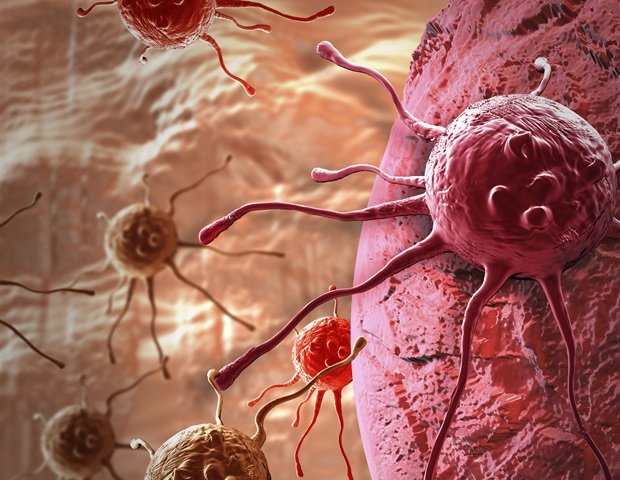
A leading scientist whose discoveries about prostate cancer have led to life-saving treatments is now shedding light on an emerging and deadliest form of the disease: neuroendocrine prostate cancer (NEPC).

Most prostate cancers are classified as adenocarcinomas, which rely on a protein called the androgen receptor (AR) to survive and grow. Over the past decade, several effective AR-targeting drugs have become available. Physician-scientist Charles Sawyers, MD of Memorial Sloan Kettering Cancer Center (MSK), was instrumental in drawing attention to AR as a primary therapeutic target.

These drugs have saved many lives, but some people become resistant to AR treatments.

In recent years, Dr. Sawyers and colleagues at MSK made a surprising discovery about why this happens: prostate cancer cells can completely change their identity to escape the effects of AR-targeting drugs. This ability, known as lineage plasticity, allows prostate cancer cells to transform from adenocarcinoma to neuroendocrine prostate cancer, a much more aggressive and deadly form of the disease.

Cell shape change causes neuroendocrine prostate cancer to develop in 15% of patients receiving androgen receptor therapy. This makes NEPC the second most common type of this disease. And it’s especially deadly: The average survival rate for someone with neuroendocrine prostate cancer is only 18 months.

Now a team led by Dr. Sawyers has developed a powerful new research tool for understanding how this transition unfolds. The new platform makes it possible to observe the change in cellular states from the earliest stage, allowing researchers to tease apart the genetic mutations and cell-to-cell signals that are critical for lineage switching. It also helps shed light on the role played by surrounding cells, known as the tumor microenvironment.

“There is an urgent need to understand what drives this transformation in order to develop better treatments,” says Dr. Sawyers. “This new research platform enables us to identify the molecular factors involved in this transition at different stages.”

The ASCL1 protein helps with NEPC transition

Using this new tool, his team has already made a key discovery: The transition from adenocarcinoma to NEPC depends on a protein called ASCL1. Turning off the gene that makes this protein can prevent the transition.

But time is critical.

Delete it Ascl1 gene before initiation of transition can prevent adenocarcinoma from turning into NEPC. However, if the cancer has already become NEPC, disabling Ascl1 it will only cause the tumor to subside temporarily. The cancer comes back as many different histological variants, including an even more aggressive NEPC.

The results are reported in Nature Cancer.

This research suggests that ASCL1 is a good candidate as a drug target. But it also highlights the importance of early intervention in men with prostate cancer likely to become NEPC.”


Rodrigo Romero, PhD, researcher in the Sawyers lab and first author of the study

The new research platform gets answers faster

Previous research from the lab of Dr. Sawyer used a genetically engineered mouse model of prostate cancer. Dr. Romero says one limitation of these models is that they take time to create.

“If you’re interested in a gene like Ascl1to understand its operation you will need to create a strain with it Ascl1 He deleted the gene and crossed it with another strain, and then observed how that deletion affects the biology,” says Dr. Romero. “This could take months or even years.”

The new research platform provides answers much faster. Researchers take normal mouse prostate glands and grow them as organoids -? Three-dimensional structures composed of cells grouped and spatially arranged like an organ or tissue. Using a gene-editing technology called CRISPR, researchers can selectively delete specific genes in organoids and then transplant them into mice, which clarifies the role a given gene plays in both normal cell function and cancer development.

“We thought Ascl1 may be the key to the transition, but we needed strong evidence,” says Dr. Romero. “With this platform we were able to identify it as essential to the transformation in just three months.”

Research to develop ASCL1-targeted therapy for neuroendocrine prostate cancer

There are currently no drugs that target ASCL1. The protein is a transcription factor, which is involved in the process of transcribing DNA into RNA, the first step in gene expression.

“Transcription factors are notoriously difficult to make small molecule drugs,” says Dr. Romero. “But we’ve seen a lot of progress in targeting proteins that were once thought to be untreatable—like KRAS—and many groups are working to target transcription factors.”

In the future, the researchers plan to continue turning off other genes, one by one, to get a complete picture of which genes need to be turned on or off to cause the transition to NEPC. It is possible Ascl1 need to work with other genes -? or does it require signals from other cells in the tumor microenvironment -? before it goes into overdrive.

For example, researchers suspect a gene called Rb1 must be mutated to initiate ASCL1 plasticity, and perhaps other signals from the microenvironment are required. Clues to potential cooperating genes may emerge from a computational and systems biology approach taken in collaboration with the laboratory of computational biologist Dana Pe’er, PhD.

Elucidation of the different players will be essential to identify biomarkers that indicate which adenocarcinoma patients are at greater risk for prostate cancer transition to NEPC. If researchers can stratify patients into different risk groups, it would help guide clinical decisions.

“If we follow patients while they are on treatment, it may eventually make sense to switch higher-risk patients from AR drugs to a more targeted neuroendocrine therapy,” says Dr. Romero. “But we need to develop a much more comprehensive data set to get a clearer picture of what’s driving the transformation. This research platform allows us to get those answers much faster.”

Source:

Memorial Sloan Kettering Cancer Center

Journal Reference:

Romero, R., et al. (2024). The neuroendocrine transition in prostate cancer is dynamic and dependent on ASCL1. Nature Cancer. doi.org/10.1038/s43018-024-00838-6.

cancer deadly mechanism neuroendocrine prostate research reveals
bhanuprakash.cg
healthtost
  • Website

Related Posts

New study tests vitamin D analog against pancreatic cancer

May 26, 2026

Why Kenya, Ethiopia, Japan and the US stand out in global distance running

May 26, 2026

‘Vas Madness’ shows the power of messaging in men’s contraceptive decisions

May 26, 2026

Leave A Reply Cancel Reply

Don't Miss
News

Machine learning can help close pregnancy drug safety gaps

By healthtostMay 27, 20260

JMIR Publications today published a report on developments in the evidence gap regarding drug safety…

As more athletes open up about depression, anxiety and suicide, a minority of fans are up in arms

May 27, 2026

PMOS, Irregular Periods & Fertility Symptoms

May 27, 2026

Infertility, endometriosis and positive birth history at the birth center

May 27, 2026
Stay In Touch
  • Facebook
  • Twitter
  • Pinterest
  • Instagram
  • YouTube
  • Vimeo
TAGS
Baby benefits body brain cancer care Day Diet disease exercise finds Fitness food Guide health healthy heart Improve Life Loss Men mental Natural Nutrition Patients Pregnancy protein research reveals risk routine sex sexual Skin Skincare study Therapy Tips Top Training Treatment ways weight women Workout
About Us
About Us

Welcome to HealthTost, your trusted source for breaking health news, expert insights, and wellness inspiration. At HealthTost, we are committed to delivering accurate, timely, and empowering information to help you make informed decisions about your health and well-being.

Latest Articles

Machine learning can help close pregnancy drug safety gaps

May 27, 2026

As more athletes open up about depression, anxiety and suicide, a minority of fans are up in arms

May 27, 2026

PMOS, Irregular Periods & Fertility Symptoms

May 27, 2026
New Comments
    Facebook X (Twitter) Instagram Pinterest
    • About Us
    • Contact Us
    • Privacy Policy
    • Terms and Conditions
    • Disclaimer
    © 2026 HealthTost. All Rights Reserved.

    Type above and press Enter to search. Press Esc to cancel.