

Close Menu
Healthtost
  • News
  • Mental Health
  • Men’s Health
  • Women’s Health
  • Skin Care
  • Sexual Health
  • Pregnancy
  • Nutrition
  • Fitness
  • Recommended Essentials
What's Hot

Scientists develop ultra-thin skin sensors for seamless health monitoring

July 15, 2026

I did red light therapy for 3 months so I shouldn’t have

July 15, 2026

Is pelvic floor dysfunction inevitable for older women?

July 15, 2026
Facebook X (Twitter) Instagram
  • About Us
  • Contact Us
  • Privacy Policy
  • Terms and Conditions
  • Disclaimer
Facebook X (Twitter) Instagram
Healthtost
SUBSCRIBE
  • News

    Scientists develop ultra-thin skin sensors for seamless health monitoring

    July 15, 2026

    Global childhood immunization rates stagnate despite slight recovery from pandemic

    July 15, 2026

    Weight loss and anti-inflammatory drugs combine to fight leukemia

    July 14, 2026

    Unreliable datasets shape clinical prediction models

    July 14, 2026

    Bariatric surgery is safe, effective for obese teenagers and young adults

    July 13, 2026
  • Mental Health

    Is it okay to be imperfect and still be happy? 6 Challenges

    July 15, 2026

    How can you be tired but wired? Blame it on your stone age brain

    July 12, 2026

    Almost 20% of new mums have anxiety or depression, but a promising psychedelic treatment is on the horizon

    July 7, 2026

    How can ART help us improve our mental health? With 3 Ways

    July 5, 2026

    How much do friends affect the mental health of teenagers? What a new study can (and can’t) tell us

    July 3, 2026
  • Men’s Health

    I did red light therapy for 3 months so I shouldn’t have

    July 15, 2026

    Sexual evolution: What 500 million years of life tell us about sex, gender and mating

    July 15, 2026

    Low testosterone or just stress? How to tell the difference

    July 11, 2026

    Gut-friendly diet linked to lower risk of coronary heart disease mortality

    July 9, 2026

    Men don’t just avoid their health. Many lose themselves.

    July 8, 2026
  • Women’s Health

    Is pelvic floor dysfunction inevitable for older women?

    July 15, 2026

    I tried to hide my hemiparesis

    July 15, 2026

    Kyoto recap, bamboo forest and monkey park

    July 13, 2026

    Menopause and Your Microbiome: How Gut Health Shapes Weight, Mood, and Hormones

    July 11, 2026

    They heard us. Now will they listen?

    July 11, 2026
  • Skin Care

    Summer skin care tips for sensitive skin – why your skin suddenly breaks out

    July 15, 2026

    How to use nature’s retinol: Bakuchiol in your beauty routine

    July 13, 2026

    How our natural hair care achieves salon-level results without silicones

    July 11, 2026

    Coconut Allergy and Skin Care: 20 Questions Finally Answered by a Pharmacist

    July 11, 2026

    New Sunscreen Ingredient: Is This The SPF Upgrade We’ve Been Waiting For?

    July 9, 2026
  • Sexual Health

    Celebrating 30 years of Sex Sense

    July 15, 2026

    STDs in older adults are on the rise—up to seven times higher than in 2012

    July 13, 2026

    Fildena 150 Benefits | Effective ED & Sexual Performance Treatment

    July 11, 2026

    Painful sex after menopause: When is it time to seek treatment?

    July 11, 2026

    Emotional capitalism and artificial intimacy

    July 10, 2026
  • Pregnancy

    Exercise Wall Angels During Pregnancy: A Step-by-Step Guide

    July 15, 2026

    Breech VBAC (Vaginal Birth after Caesarean Section) Birth Story

    July 13, 2026

    How baby showers have changed throughout history

    July 13, 2026

    Calf Raises During Pregnancy: Step-by-Step Guide and Benefits

    July 8, 2026

    Tri-Tri Triplet Pregnancy with Vaginal Birth Story – The Birth Hour Triplet Pregnancy and Vaginal Birth Story with Ashlie Holladay

    July 7, 2026
  • Nutrition

    Chocolate Cherry Chia Pudding: Easy Vegan Recovery Snack

    July 14, 2026

    The Cholesterol Question: A Breakthrough Victory for Keto and Cognitive Health

    July 14, 2026

    15 No-Cook Dinners for Kids (Because It’s Too Hot to Turn on the Oven)

    July 12, 2026

    30 Minute Chicken Pesto Pasta (Dietist Approved)

    July 11, 2026

    5 Easy High Fiber Bowl Recipes

    July 8, 2026
  • Fitness

    How to Choose a Fitness Certification on a Budget

    July 14, 2026

    Meet the Belle Vitale™ Supplement System: Two Formulas. A comprehensive approach to hormone health.

    July 11, 2026

    where we ate in Tokyo (and gluten-free options!)

    July 9, 2026

    Using External Signaling to Improve Linear Acceleration – Tony Gentilcore

    July 8, 2026

    5 Simple Screen Changes That Can Improve Sleep and Focus

    July 7, 2026
  • Recommended Essentials
Healthtost
Home»Mental Health»Improving Firearm Safety in Pediatric Primary Care
Mental Health

Improving Firearm Safety in Pediatric Primary Care

healthtostBy healthtostDecember 13, 2024No Comments5 Mins Read
Facebook Twitter Pinterest LinkedIn Tumblr Reddit WhatsApp Email
Improving Firearm Safety In Pediatric Primary Care
Share
Facebook Twitter LinkedIn Pinterest WhatsApp Email

December 12, 2024
• Research Highlights

Firearm injuries and deaths among youth are a major public health concern. While safe storage is a proven safety measure, less than 30% of homes with children report storing firearms locked and unloaded; . In a new study funded by the National Institute of Mental Health, researchers aimed to address this gap by testing the effectiveness of two scalable approaches to promoting safe firearm storage when used during routine well-child visits.

What is the Safe Firearms Storage Program?

Multiple medical societies and the US Office of the Surgeon General endorse clinicians as a critical source of firearms safety guidance. Pediatricians are trusted messengers who regularly discuss safety issues with parents and other caregivers, and both parents and clinicians believe it is appropriate to include firearm storage alongside other safety discussions. Teaching parents how to store firearms safely can help save lives, with studies showing that clinicians who talk to parents about firearm safety improve home storage practices.

With this in mind, a team of researchers and clinicians (in collaboration with health leaders, firearms safety experts, and caregivers) developed a firearms safe storage program called SAFE (Suicide and Accident Prevention through Family Education) Firearm .
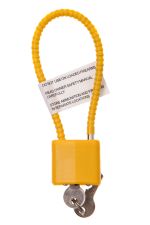
A yellow cable lock with key attached and safety instructions.

Credit: SolidMax.

Pediatric clinicians deliver the program during well-child visits. It consists of a short conversation with parents about the importance of safe firearm storage and offering them a free cable lock. The program is easy to implement and takes less than a minute during well-child visits. In one previous clinical trial parents who received the original SAFE Firearm program were twice as likely to store firearms safely at home. However, the program has not been widely implemented and this study attempted to make it easier.

What did the researchers do in the study?

The research team, led by Rinad Beidas, Ph.D. at Northwestern University Feinberg School of Medicine, tested two approaches to implementing the SAFE Firearm program in pediatric primary care.

Clinicians saw more than 47,300 children ages 5 to 17 for well-child visits during the study. Visits were conducted in 30 pediatric clinics in two large and diverse health care systems in Michigan and Colorado. Participating clinics were part of it Mental Health Research Network a consortium of research centers located in health care systems dedicated to improving the mental health of patients.

The researchers randomly assigned clinics to use one of two simple support strategies and compared the effectiveness of the strategies in promoting delivery of the firearms program:

  • Nudge: Clinicians were reminded to deliver the program via an automatic reminder in patients’ electronic health records.
  • Nudge+: Clinicians received the reminder plus 1 year of facilitation to implement the program (examples of facilitation included guidance on talking with parents, assistance with implementation barriers, and feedback on clinic performance).

What did the study find?

Before the study, about 2% of pediatric clinicians reported offering advice on safe storage and cord locks during well-child visits. After using Nudge or Nudge+, the number of clinicians engaging in these behaviors increased significantly.
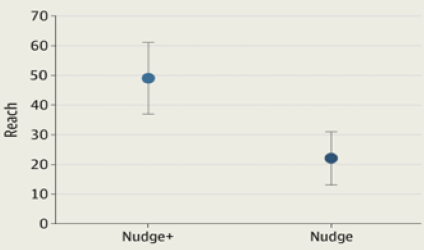
Results graph showing Reach on the y-axis and intervention groups (Nudge+ and Nudge) on the x-axis. The chart shows that the Nudge+ group had a significantly higher reach than the Nudge group.

Reach (percentage of parents who received both components of the firearm storage program) when clinicians used Nudge+ or Nudge. Reprinted from “Implementation of a Safe Firearm Storage Program in Pediatric Primary Care: A Cluster Randomized Trial,” by RS Beidas et al., 2024, JAMA Pediatrics, 178(11), p. 1104–1113. Copyright 2024 Beidas RS et al.

Although both strategies resulted in an increase in provision of the two components of safe firearm storage, the Nudge+ strategy (reminder and facilitation) proved to be much more effective. Significantly more clinicians who received Nudge+ performed the intervention (49%) compared to those who received only the Nudge reminder (22%).

Not only did the additional support increase program delivery, but it did not require many additional resources or effort. Nudge+ clinics received only 8.7 hours of additional support per clinic each year, which came mostly from email or chat.

What do the results mean?

This is one of the first and largest studies in the United States to focus on implementing universal safe storage of firearms as a routine and regular part of well-child visits. Findings demonstrate the large positive impact of using low-burden and relatively inexpensive support strategies to deliver a safe firearms storage program during pediatric primary care. Combined with results from a previous study funded by NIMH demonstrating high support among clinicians for working with parents on firearms storage safety provides compelling insight into how best to support clinicians and clinics in working with parents on this life-saving topic.

The study had several strengths, including diverse participants, a randomized study design, and an evidence-based approach. However, it also had some limitations. For example, there was no control group that provided care as usual. There are also the limitations of electronic health records: The data do not indicate how long and to what extent clinicians discussed firearm storage with parents, nor is it guaranteed that clinicians always documented these conversations. Additionally, the study only focused on cable locks, and there may be other methods of securing firearms that are more effective or more acceptable to parents.

Next steps for the researchers include analyzing data from surveys conducted with parents throughout the study to determine whether receiving the gun safe storage program improved actual home safety practices. The researchers also plan to test these strategies for delivering the program in other youth-serving settings, such as community centers, after-school programs, and faith-based organizations.

Reference

Beidas, RS, Linn, KA, Boggs, JM, Marcus, SC, Hoskins, K., Jager-Hyman, S., Johnson, C., Maye, M., Quintana, L., Wolk, CB, Wright, L. ., Pappas, C., Beck, A., Bedjeti, K., Buttenheim, AM, Daley, MF, Elias, M., Lyons, J., Martin, ML, … Ahmedani, BK (2024). Implementation of a safe firearm storage program in pediatric primary care: A cluster-randomized trial. JAMA Pediatrics, 178(11), 1104–1113. https://www.doi.org/10.1001/jamapediatrics.2024.3274

Financing

care Firearm improving Pediatric primary safety
bhanuprakash.cg
healthtost
  • Website

Related Posts

Summer skin care tips for sensitive skin – why your skin suddenly breaks out

July 15, 2026

Is it okay to be imperfect and still be happy? 6 Challenges

July 15, 2026

How can you be tired but wired? Blame it on your stone age brain

July 12, 2026

Leave A Reply Cancel Reply

Don't Miss
News

Scientists develop ultra-thin skin sensors for seamless health monitoring

By healthtostJuly 15, 20260

While wearable health sensors are becoming more common, current iterations are uncomfortable to use. For…

I did red light therapy for 3 months so I shouldn’t have

July 15, 2026

Is pelvic floor dysfunction inevitable for older women?

July 15, 2026

Summer skin care tips for sensitive skin – why your skin suddenly breaks out

July 15, 2026
Stay In Touch
  • Facebook
  • Twitter
  • Pinterest
  • Instagram
  • YouTube
  • Vimeo
TAGS
Baby benefits body brain cancer care Day Diet disease exercise finds Fitness food Guide health healthy heart Improve Life Loss Men mental Natural Nutrition Patients People Pregnancy research reveals risk routine sex sexual Skin Skincare study Therapy Tips Top Training Treatment ways weight women Workout
About Us
About Us

Welcome to HealthTost, your trusted source for breaking health news, expert insights, and wellness inspiration. At HealthTost, we are committed to delivering accurate, timely, and empowering information to help you make informed decisions about your health and well-being.

Latest Articles

Scientists develop ultra-thin skin sensors for seamless health monitoring

July 15, 2026

I did red light therapy for 3 months so I shouldn’t have

July 15, 2026

Is pelvic floor dysfunction inevitable for older women?

July 15, 2026
New Comments
    Facebook X (Twitter) Instagram Pinterest
    • About Us
    • Contact Us
    • Privacy Policy
    • Terms and Conditions
    • Disclaimer
    © 2026 HealthTost. All Rights Reserved.

    Type above and press Enter to search. Press Esc to cancel.