


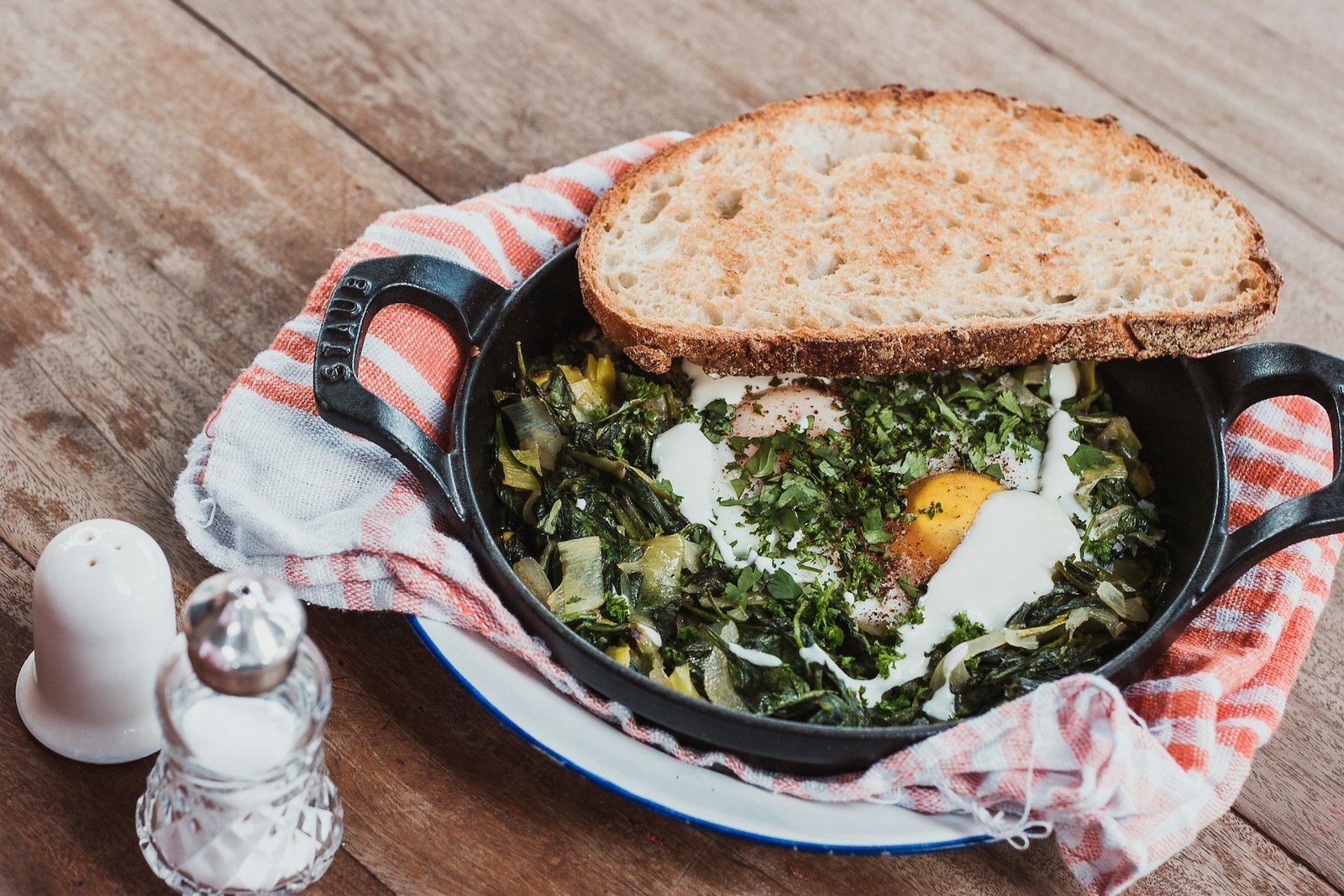
Worry about the foods you eat, do research, read labels, stay informed on nutrition blogs. But you may be missing an important factor in your health journey if you don’t pay attention to the best non-toxic cookware options and what your cookware is made of.
There are so many pots and pans sold in stores and online, some with hefty price tags. But knowing which ones are fads and which ones are tried and true can help you avoid exposure to harmful toxins. The good news is that the best non-toxic cookware options aren’t always the most expensive.
Before you cook an egg, saute some veggies, or start a big batch of soup, check out the best cookware for your kitchen and get ready for toxin-free meals.
There are many materials that cookware is made of today, and labels can often be misleading. Pots and pans can be made of a single material or have a coated base material, such as an enameled iron pan.
Fast heating ability, response to temperature change and heat distribution may vary depending on the type of cookware used. If you have an induction cooker, you may need to take this into account as well, as only cookware made with magnetic metals will work on induction hobs.
The last factor is mineral overload. Some minerals can leach minerals into your food, which may not be a bad thing if you are deficient. But over time, using the same kinds of pots and pans can expose you to too much.
Non-stick Cookware
“Non-stick” has become a general term for a range of cookware that has a coating that prevents food from sticking to the pan. What makes up this coating varies greatly.
Since the 1960s, Teflon has been used for non-stick coating, but has fallen out of favor due to its well-known increased risk of cancer. Teflon is a chemical called C8, which is a perfluorooctanoic acid (PFOA), part of the per and polyfluoroalkyl substances (PFAS) family. Teflon from C8 has now been banned as of 2014, but Teflon versions are still sold.
Now, similar products are available that proudly claim to be Teflon-free, but they’re no better.
PFAS are still used in some of these coatings, so while marketing-wise these products may claim to be free of PFOA or Teflon, they may not be free of all PFAS.
Exposure to PFAS, sometimes called “forever chemicals” because of their difficulty in eliminating, has been found to they suppress the immune system, cause birth defects and increase the risk of cancer.
While the convenience of non-stick pans can be tempting, they are not recommended as there are healthier options that may not cause sticking… or cancer.
Ceramic coating
Ceramic coated cookware has become the non-stick choice for non-stick shuns. In other words, it may not contain PFAS, but it may still be just as problematic as traditional non-stick pans.
This type of cookware can range in base material, but can have a silica sand coating that creates a non-stick surface.
This coating has been found to be at risk leaching of titanium and silicon into food with regular use and care. Also, if the coating is scratched, the food is exposed to the base metal, which is often aluminum because it is good for heat distribution.
If you really need cookware that will be instantly non-stick, ceramic is a better choice than Teflon-like products, but keep in mind that they are not heat resistant and the non-stick properties may not last the life of the pan. Also consider that some cookware works with induction cooktops and others don’t check the labels.
Stainless steel
Uncoated stainless steel cookware is a great all-purpose choice because it can go from stovetop to oven and even grilling (depending on the handle). It is durable and works with induction stoves. Clogging may occur and cleaning may be difficult. But they don’t require much care, and soap and water are usually plentiful. Cooking with stainless steel can take some getting used to, because it’s best to let them heat up completely before adding food. And it may need quite a bit of oil.
Some stainless steel options may even have a coating if it claims to be non-stick, so checking the labels is crucial. Since there is no coating, stainless steel should not leach or react with food. Exceptions are very acidic foods, which may leach a very small amount of chromium and nickel during prolonged cooking.
Overall, stainless steel is great for cookware and is one of the easiest and safest choices. All you need is to make sure you get real, uncoated stainless steel and maybe a little practice cooking with it.
Glass
Uncoated glass cookware can be some of the cleanest you can find, but it can also be difficult.
While glass won’t leach toxins into your food, older glassware was often tempered with other materials. New products available for purchase now have stricter regulations than what you might be able to pick up from thrift stores or your grandma’s house.
This may also apply to the coatings found on some glassware. But it doesn’t get much cleaner than glass for your cookware.
The difficulty comes from how sensitive glass can be. Glass is obviously fragile when it comes to storage and preservation, but actual cooking can also be a problem, as glass can break or shatter from too high a temperature or change in temperature.
The glass may take a while to heat up, but once it does, it holds the temperature well. Will not work with induction stoves.
Cast iron
There’s a reason professional chefs love cast iron. And one reason why well seasoned cast iron pans are known to be passed down through the generations.
Cast iron pots and pans transmit heat well, are durable and can withstand high temperature. They can also provide great baking and go easily from the stove to the oven.
Probably the two biggest complaints about cast iron are weight and confusion about care. People are often nervous about pans losing their seasoning and rusting.
To prevent rust, keep the surface well oiled. But yes, you can use metal cleaners, even soap, as long as it’s seasoned with oil again. There is also the salt method.
Although there is some concern about iron exposure during extensive use of cast iron, alternating between cookware materials should keep levels safe. In fact, many iron deficient people use these pans to help balance their iron levels.
This should remain true even with higher acid foods if the pan is well seasonedjust not for prolonged cooking.
Cast iron cookware tends to be a good choice that doesn’t cost an arm and a leg, but will last almost forever. Plus, it works great with induction stoves.
Copper
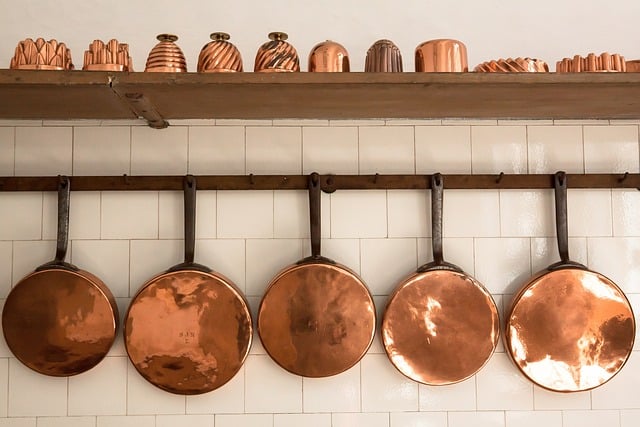
Perhaps one of the most beautiful types of cookware, copper certainly has its pros and cons.
Copper is incredibly responsive to heat, but usually cannot be used on induction stoves. Some pots and pans use only copper, while others combine it with stainless steel to enhance the response of that metal. It can also be lined with canned food.
Copper works best for baking and making homemade chocolate, caramel and cream.
But aside from what is usually a steep price, there are a few other issues with copper.
Caring for copper can be tricky because it dents and tarnishes easily.
There is also some concern about copper toxicity, but this mainly concerns acidic foods, which are not recommended in copper cookware. Because of this, these days most copper pots and pans are coated. Unfortunately, the plating is usually nickel or tin, which corrode quickly and can also have their own toxicity issues.
While it can be tempting to just let the beautiful pots hang as decoration, using copper wisely and alternating with other materials allows you to put this beauty to good use.
How to choose the best non-toxic cookware for your kitchen
Finding the best non-toxic cookware options can seem difficult, but as with food, sometimes variety is the best approach.
Consider what you are cooking, at what temperature and for how long. And if you want to have a range of options at your disposal, the best collection will include cast iron and stainless steel, with glass and copper playing an occasional role.
The best ones will last a long time if you give them the care they need, giving you years of roasted meats, sautéed greens, hearty soups, comforting breakfasts and special desserts.
Ready to take your health and nutrition knowledge to the next level?
Enroll in the Master Nutrition Therapist certification program and become an expert in holistic wellness, including how everyday choices—like cooking with non-toxic cookware—affect health. Apply today and empower yourself to make informed decisions for a healthier lifestyle! Learn more
About the author: Maya Strausberg earned her Master Nutrition Therapist certification from NTI before starting her private nutrition therapy practice. She now offers writing and editing services to nutritionists and other health professionals around the world through her business, Family Tree Nutrition.
Photos:
- Photo by Cathal Mac an Bheatha on Unsplash
- Photo by Janko Ferlič on Unsplash
- Image by stux from Pixabay
