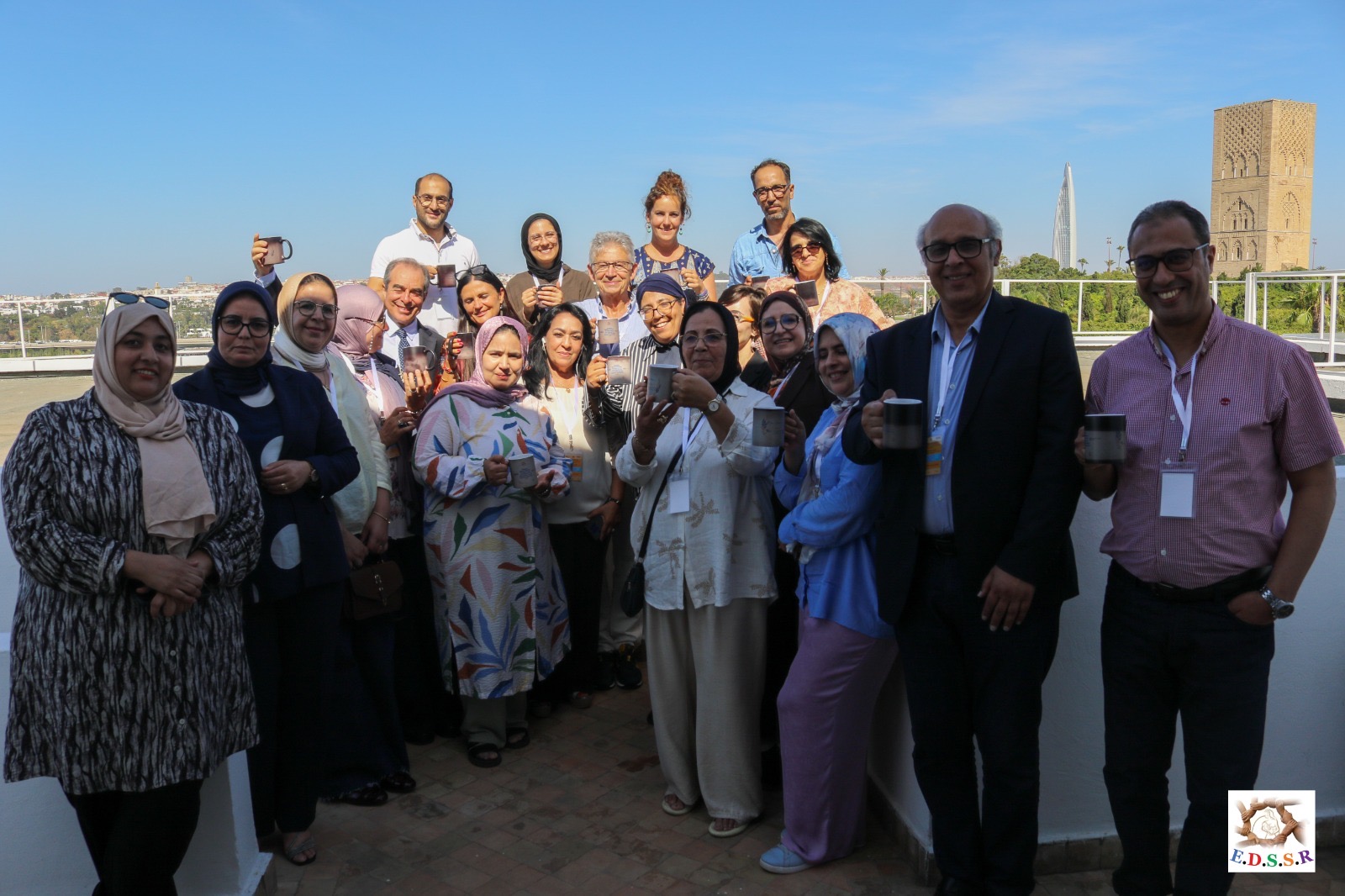
On June 1 and 2 in Rabat, the Association Ensemble pour les Droits à la Santé Sexuelle et Reproductive (EDSSR), in collaboration with the National Center for Reproductive Health under CHU Ibn Sina and the Mohammed V University of Rabat, with strategic support from the Norwegian Embassy in Morocco, and in collaboration with the international newspaper Sexual and Reproductive Health Issues (SRHM) as well as partner institutions, including CERRHUD (Benin) and research teams from Guinea, convened a high-level international workshop.
The workshop focused on the interim dissemination of findings from the project: “From research to action: influencing sexual and reproductive health policies through evidence and advocacy”.
The meeting brought together a wide range of stakeholders, including researchers, public institutions, civil society organizations and international partners from Morocco, Benin and Guinea. Participants came together around a common goal: to strengthen the links between knowledge production, policy action and social transformation in the area of sexual and reproductive health and rights (SRHR).
A central message emerged during the discussions: public policies on SRHR can only be effective, equitable and sustainable when they are evidence-based, supported by multi-sectoral dialogue and driven by strong civil society engagement.
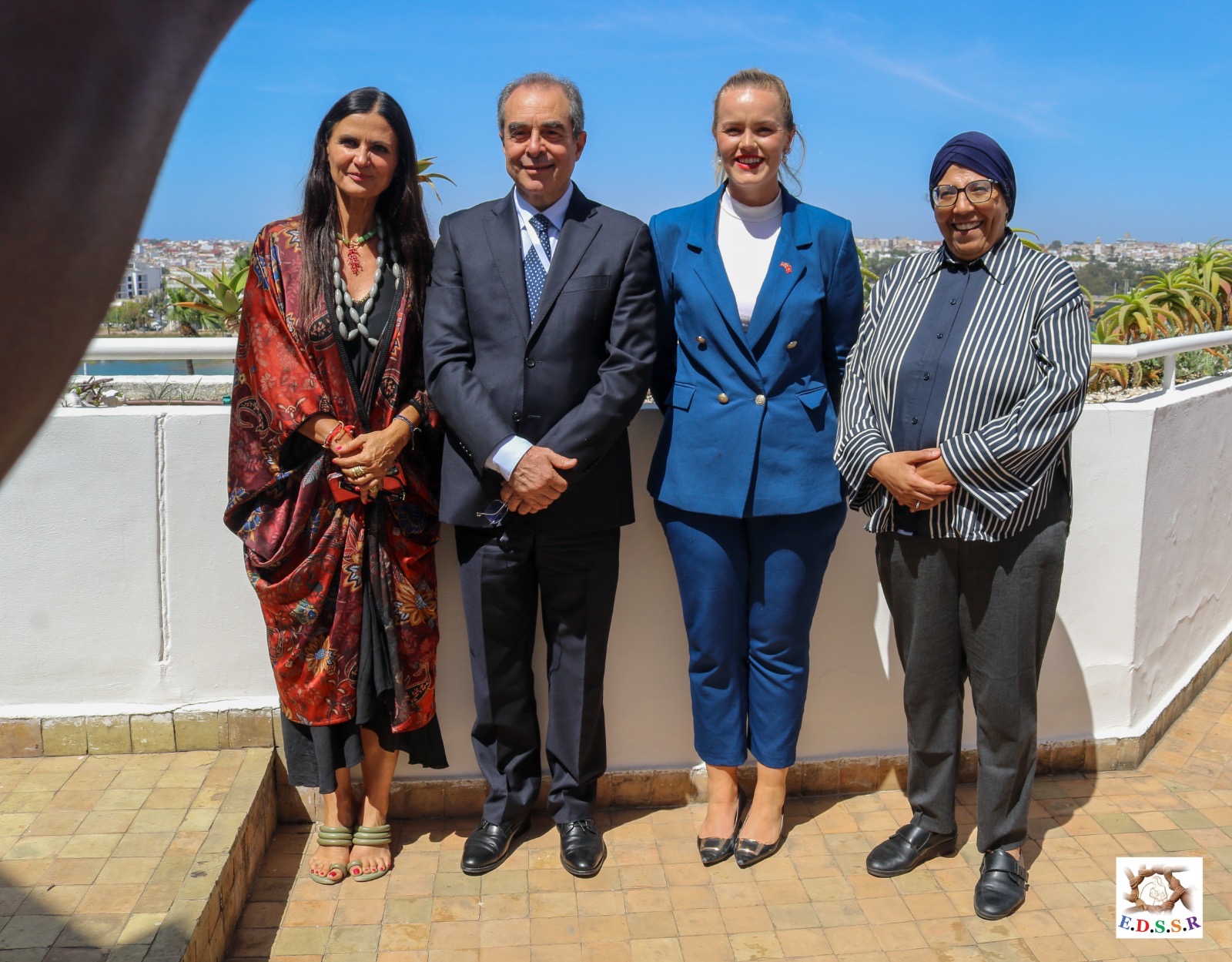
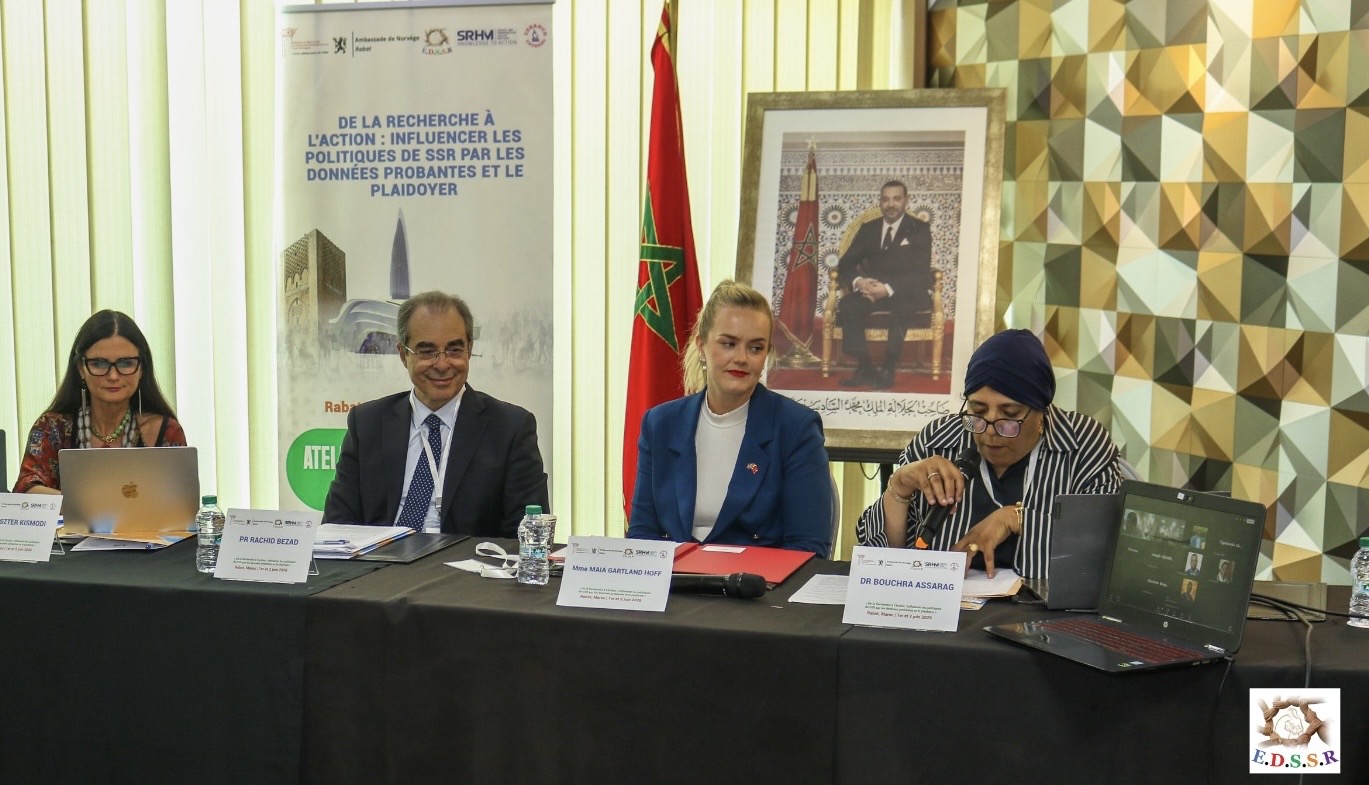 In her speech, EDSSR President Dr Bouchra Assarag highlighted the strategic importance of the project as a driver of transformation. The initiative aims to strengthen the capacities of early career researchers, strengthen the role of civil society organizations in evidence-based advocacy and support the emergence of a new generation of actors committed to promoting sexual and reproductive health and rights in francophone Africa.
Discussions highlighted several key challenges, such as translating research findings into concrete public policies, the critical role of advocacy in shifting social norms, integrating human rights and gender approaches, and addressing persistent barriers to the systematic use of scientific evidence in decision-making processes.
 Special sessions presented research findings from Morocco, Benin and Guinea. These studies highlighted the need to foster social innovation, promote gender equality and adopt rights-based approaches in order to sustainably improve access to SRHR services, particularly for the most vulnerable populations.
The workshop also served as a strategic venue to consolidate regional cooperation, highlighting the added value of North-South and South-South cooperation, scientific mentoring, capacity building and networking between researchers and advocates.
Participants called for intensified collaboration to build a more cohesive regional ecosystem capable of translating research into concrete action and high-impact public policies.
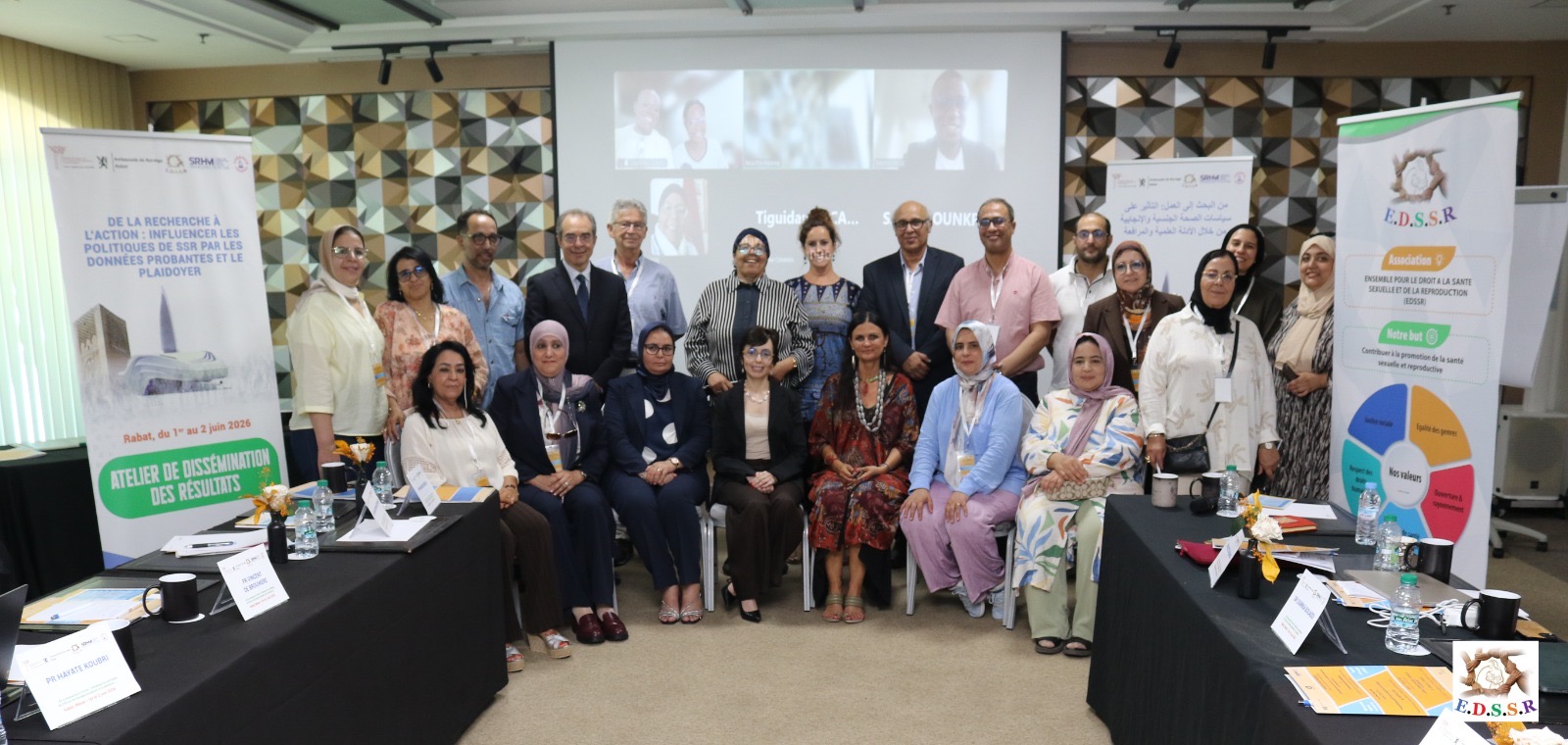
From research to action: a strategic partnership to strengthen sexual and reproductive health in African francophones
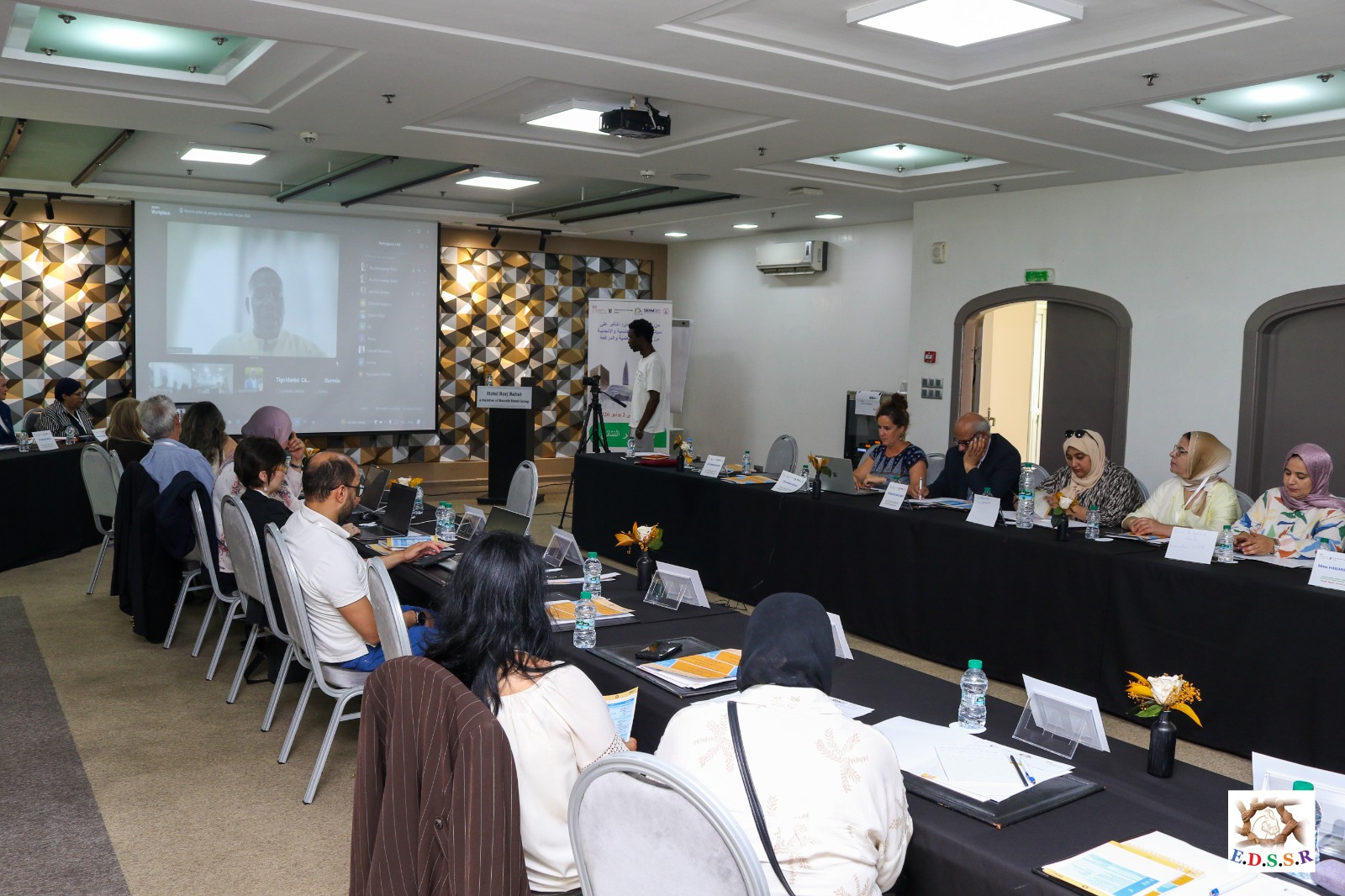 Les 1ᵉʳ et 2 juin à Rabat, the Association Ensemble pour les Droits à la Santé Sexual et Reproductive (EDSSR), in partnership with the National de santé reproductive related du CHU Ibn Sina et de l’université V’université Mohammedaveu l’ambassade de Norvège au Maroc, et en collaboration avec la revue Internationale Sexual and Reproductive Health Matters (SRHM) ainsi que des Institutions Partenaires including le CERRHUD (Bénin) et des équipes de recherche de Guinée, a international dissemination of results midway through the project:From research to action: influencing sexual and reproductive health policies through evidence and advocacy“.
Cette rencontre brought together a wide range of actors — researchers, public institutions, civil society organizations and international partners from Morocco, Bénin and Guinea — around a common objective: passer production actionsnaqueisseentles et transformation sociale en matière de santé sexuelle et reproductive (SSR).
At the heart of the discussions, a central message was imposed: les politiques publiques en SSR ne peuvent être efficacious, equitable et durable que si elles reposent sur des données probantes, un dialogue multisectoriel et unsocial engagement fort de la societée.
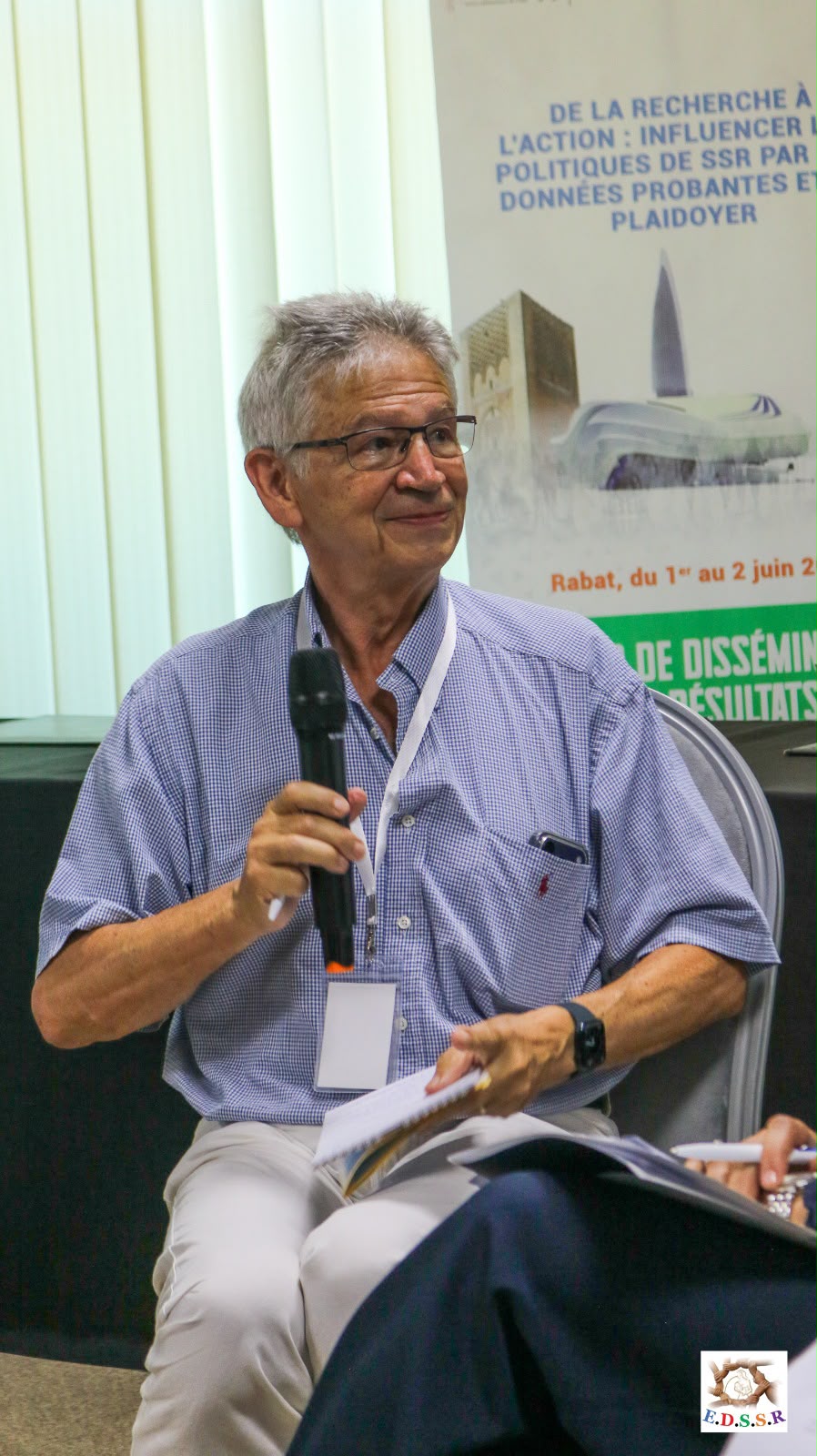 In her intervention, the president of the EDSSR, Dr. Bouchra Assarag, highlighted the strategic scope of this project, designed as a transformation lever. This one aims to strengthen the capacities of young researchers, to structure the role of organizations of civil society in the evidence-based argument, and to support the emergence of a new development of sexual and reproductive rights in French-speaking Africa.
Les échanges ont mis en évidence several structuring stakes: the translation of research results into concrete public policies, the central role of advocacy in the transformation of social norms, the integration of humanistic approaches that persisting obstacles to the systematic use of scientific data in decision-making processes.
Specific sessions allowed the results of the research conducted in Morocco, Benin and Guinea to be presented. Ces travaux ont confirmed the need to reinforce social innovation, gender equity and rights-based approaches in order to sustainably improve access to SSR services for the most vulnerable populations.
The atelier also constituted a strategic space for the consolidation of regional cooperation, putting forward the added value of North-South and South-South cooperation dynamics, scientific mentoring, reinforcement of researchers and actors of advocacy.
Les participants ont appelé à intensifier ces synergies afin de bâtir un ecosystem regional plus coherent, able de transform les résultats de recherche en actions concrètes et politiques publiques à fort influence socially.