

Close Menu
Healthtost
  • News
  • Mental Health
  • Men’s Health
  • Women’s Health
  • Skin Care
  • Sexual Health
  • Pregnancy
  • Nutrition
  • Fitness
  • Recommended Essentials
What's Hot

Can your customers actually do what you want them to do? – Tony Gentilcore

February 2, 2026

The young fall behind, the old thrive

February 2, 2026

Some people gain confidence when they think things through, others lose it – new research

February 2, 2026
Facebook X (Twitter) Instagram
  • About Us
  • Contact Us
  • Privacy Policy
  • Terms and Conditions
  • Disclaimer
Facebook X (Twitter) Instagram
Healthtost
SUBSCRIBE
  • News

    The young fall behind, the old thrive

    February 2, 2026

    Simple hemiarch surgery effective for elderly patients with aortic dissection

    February 2, 2026

    Embedded Monte Carlo and deep learning improve radiotherapy QA

    February 1, 2026

    Age shapes long-term outcomes after multiarterial CABG strategies

    February 1, 2026

    Cells can generate negative viscosity to promote movement

    January 31, 2026
  • Mental Health

    Some people gain confidence when they think things through, others lose it – new research

    February 2, 2026

    3 practical ways to improve a writer’s mental health

    January 31, 2026

    Your phone is not a weakness. It’s a distraction machine. Here’s how to regain your focus.

    January 25, 2026

    Find out how you can support people with eating and substance use disorders

    January 24, 2026

    Feeling unprepared for the AI ​​boom? You are not alone

    January 23, 2026
  • Men’s Health

    Testicular cancer self-examination and why it could save your life

    February 2, 2026

    25-Minute Bodyweight Functional Training Program for Beginners

    February 1, 2026

    Turning everyday eggs into powerful nutrient delivery systems

    January 30, 2026

    Affordable food can be better, both for you and the planet

    January 30, 2026

    Full Body Kettlebell Complex for Strength and Muscle Definition

    January 25, 2026
  • Women’s Health

    Prenatal care in 2026: New recommendations for healthy pregnancy

    February 1, 2026

    3 Teens Quit Social Media for a Week — and Loved It

    February 1, 2026

    Exercises for Prevention, Symptoms & Recovery

    January 31, 2026

    Cómo puedo saberlo: ¿Es tristeza o depresión?

    January 31, 2026

    Over 40 Body Rebuild – How to Build Muscle and Lose Fat

    January 30, 2026
  • Skin Care

    The Perfect Nighttime Skincare Routine, Edited by About Face Aesthetics

    February 1, 2026

    Cleaners that make a difference: How to choose yours

    January 30, 2026

    How to Layer Hyaluronic Toner + Serums for G – The Natural Wash

    January 29, 2026

    How to bathe my newborn – Tropical skin care

    January 29, 2026

    SPF and Snow: Everything you need to know

    January 28, 2026
  • Sexual Health

    A guide to a comfortable cervical check with Dr. Unsworth

    February 1, 2026

    How “Bridgerton” and the Other Romances Evolved in Their Depictions of Consent

    January 30, 2026

    Extraction, gold mining and SRHR in Kenya

    January 29, 2026

    How the Wabi-Sabi Body Frame is Rewriting Body Image Therapy — Sexual Health Alliance

    January 28, 2026

    Is an HPV vaccine enough?

    January 25, 2026
  • Pregnancy

    Is it safe to drink milk during pregnancy? What to know

    January 31, 2026

    12 Expert Answers to Your Pregnancy Yoga Questions

    January 29, 2026

    Best Pregnancy and Postpartum Fitness Course 2026

    January 27, 2026

    The best baby travel products for visiting family

    January 26, 2026

    The top 3 pregnancy facials that are safe and effective

    January 25, 2026
  • Nutrition

    5 Ways You’re Sabotaging Your Metabolism

    February 2, 2026

    How to Save Money on Travel • Kath Eats

    February 1, 2026

    How low can LDL cholesterol go on PCSK9 inhibitors?

    January 31, 2026

    Signs that your body is ready to reset

    January 31, 2026

    Healthy Pakistani Recipes: Low-Oil Versions of Beloved Classics

    January 30, 2026
  • Fitness

    Can your customers actually do what you want them to do? – Tony Gentilcore

    February 2, 2026

    7 Essential Mental Health Tips for Healthy Aging

    February 2, 2026

    Beginner-friendly menopause workouts to build strength

    February 1, 2026

    Best Cereals for Weight Loss: 7 Healthy, Satisfying Choices

    February 1, 2026

    Inside the OPEX Mentorship Method Week 7: Lifestyle & Nutrition

    January 31, 2026
  • Recommended Essentials
Healthtost
Home»Men's Health»A simple hand grip test can reveal your future obesity risk
Men's Health

A simple hand grip test can reveal your future obesity risk

healthtostBy healthtostOctober 20, 2025No Comments6 Mins Read
Facebook Twitter Pinterest LinkedIn Tumblr Reddit WhatsApp Email
A Simple Hand Grip Test Can Reveal Your Future Obesity
Share
Facebook Twitter LinkedIn Pinterest WhatsApp Email

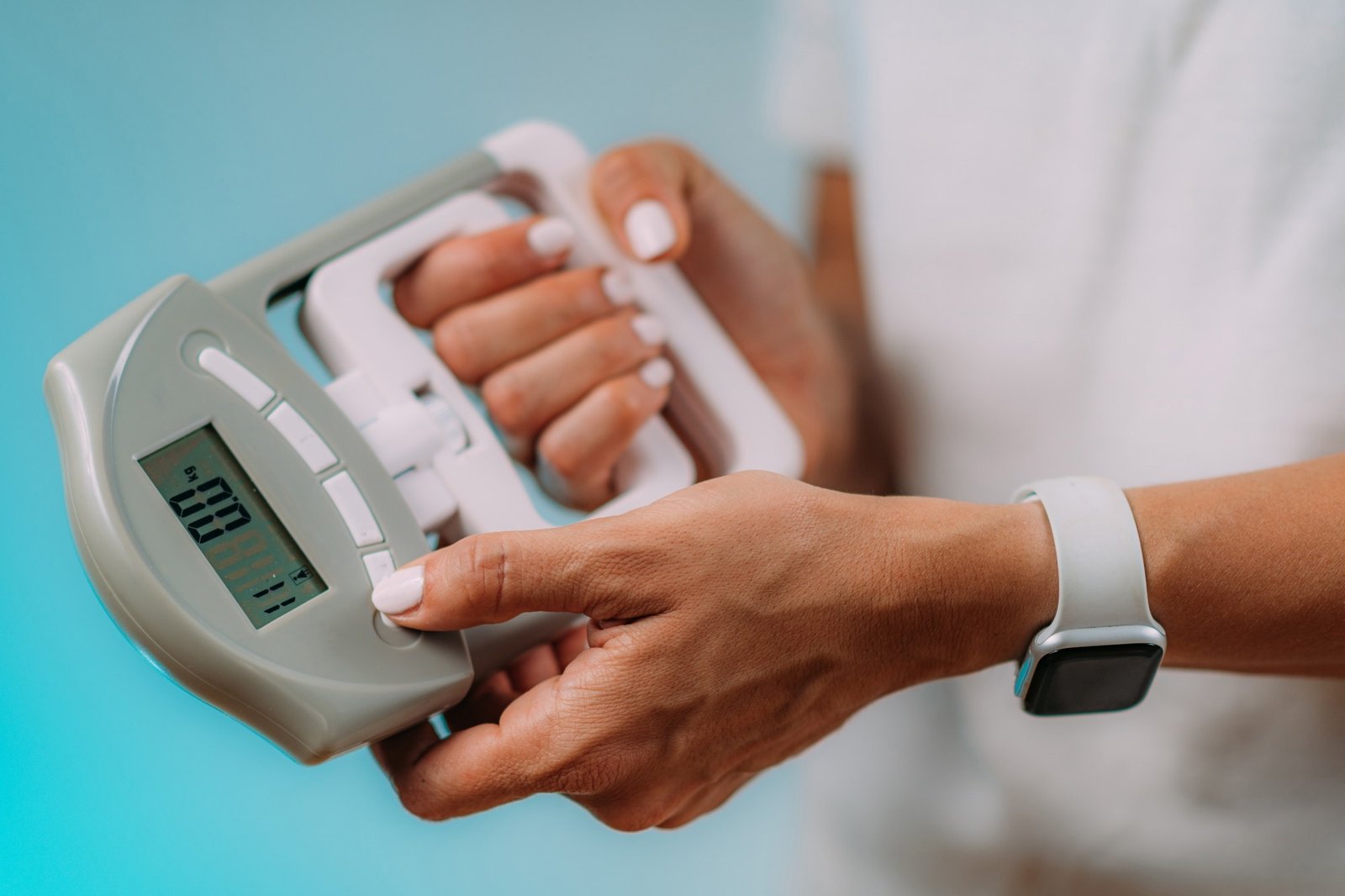
A The quick handgrip test could do more than measure muscle strength. can predict who is most at risk of obesity-related diseases long before symptoms appear.

Study: Handgrip Strength and Trajectories of Preclinical Obesity Progression: A Multistate Model Analysis Using the UK Biobank. Image credit: Microgen/Shutterstock.com

The obesity epidemic is sweeping the world, driven primarily by unhealthy lifestyle choices. Its association with multiple long-term adverse health outcomes highlights the urgent need to identify predictors of obesity that could guide preventive strategies. A recent study published in The Journal of Clinical Endocrinology & Metabolism examines the value of handgrip strength in predicting the progression of preclinical obesity.

Import

Obesity was officially recognized as a disease in January 2025, in a consensus statement published in The Lancet Diabetes & Endocrinology. Preclinical obesity refers to elevated anthropometric (related to body shape) indices of obesity but without functional impairment due to obesity.

Preclinical obesity can progress to clinical obesity, characterized by metabolic dysfunction and a higher risk of death. It is not clear how this development is affected by muscle strength.

Body mass index (BMI) is the most common measure used to diagnose obesity. However, it fails to distinguish between total lean mass and muscle mass versus fat mass, although they play very different roles in health. Athletes, for example, may have a high BMI because of their muscle hypertrophy, but they are not obese.

BMI also fails to identify the location of fat distribution, even though visceral fat deposition is associated with cardiovascular disease (CVD) and metabolic dysfunction, unlike other locations. Furthermore, obesity diagnoses based on BMI do not capture many obese phenotypes. In many young and middle-aged adults, total body fat percentage more accurately describes obesity than BMI, even in those with a normal BMI.

Visceral obesity is associated with muscle weakness, increased odds of physical disability, chronic disease (including cardiovascular disease), and death. Thus, muscle strength and function much better reflect obesity-related health consequences.

Again, low grip strength predicts a higher risk of death over age 50, independent of obesity (as defined by BMI). In contrast, obesity or overweight as defined by BMI has sometimes been found to show protective associations against mortality among people over 70 years of age. Therefore, BMI alone is not a useful indicator of obesity risk.

About the study

Data were obtained from UK Biobank. Both BMI and any of 18 signs of obesity-related dysfunction were identified, including signs of increased intracranial pressure, cardiovascular disease, apnea, chronic fatigue, heart failure, hypertension, kidney disease, and chronic severe knee pain.

The current study sought to capture the association of handgrip strength with the transition from preclinical to clinical obesity. This group was identified by the presence of a high body mass index together with one of the following measurements in excess:

  • Waist circumference
  • Waist-hip ratio
  • Waist-height ratio
  • Body fat percentage

Three models were used to track handgrip strength trajectories from baseline to decline in function or death. The first model tracked three transitions, from baseline to obesity-induced first impairment, then to dual impairment, and finally to all-cause death. The second he traced it to first dysfunction and then to all-cause mortality. The third model progressed from baseline to death, with no obesity-related dysfunction in between.

Muscle-to-weight ratio (MWR) was defined as the ratio of total thigh fat-free muscle volume to body weight, while lean-to-weight ratio (LWR) was defined as the ratio of total lean mass to body weight. These were based on magnetic resonance imaging (MRI) and dual-energy X-ray absorptiometry (DXA), respectively.

Finally, the researchers analyzed how grip strength is related to the risk of obesity-related disorders and death.

Study results

There were 8,163 deaths during a mean follow-up period of 13.4 years. The risk of progression to preclinical obesity stages decreased with each standard deviation (SD) increase in grip strength.

The greatest reduction in risk was found in the first model, in progression from baseline to first dysfunction, where the risk decreased by 14% per increase in SD handgrip strength. For the second progression, the risk was reduced by 8% and by 13% during the third transition.

In the second model, similar reductions were observed in the two progressions. Even without any dysfunction, grip strength predicted a 9% lower risk of progression from baseline to all-cause mortality (the third model).

Compared among third parties, higher grip strength was protective across all models. The strongest effect was on transition from dual impairment to all-cause death, where the risk decreased by 23% per SD increase in handgrip strength.

These findings confirm previous research indicating that muscle strength is more accurately related to body composition than BMI. Muscle strength is lower with visceral obesity, while increased grip strength is associated with better glucose and lipid regulation.

Interestingly, MWR was more strongly associated with a reduced risk of developing preclinical obesity than DXA data, indicating that the latter may underestimate aging-related muscle loss.

Mechanisms underlying the association of better health with increased grip strength in high BMI individuals could include the relationship between grip strength and reduced body fat percentage, as fat deposition is the driver of obesity-related dysfunctions. On average, people with higher grip strength also had lower levels of the inflammatory marker C-reactive protein (CRP) at baseline.

Skeletal muscle secretes myokines, molecules that help regulate metabolism and insulin sensitivity. Reduced muscle strength can disrupt these protective pathways. However, these mechanisms were suggested as possible explanations rather than directly tested in this study. In addition, the authors report that low muscle strength may parallel reduced bone mineral density, which has been associated in previous studies with cardiovascular risk.

conclusions

For the first time, this study showed that

Increased grip strength was significantly associated with a reduced risk of developing obesity-related disorders and all-cause mortality.

However, as an observational study, it does not prove causation.

Future studies should validate these results and extend them to other obesity models. These findings suggest that increasing muscle strength may be an early intervention to prevent the progression of preclinical obesity. These results apply to individuals with preclinical obesity at baseline and may not generalize to other populations.

Download your PDF copy now!

future Grip hand obesity reveal risk simple Test
bhanuprakash.cg
healthtost
  • Website

Related Posts

Testicular cancer self-examination and why it could save your life

February 2, 2026

Simple hemiarch surgery effective for elderly patients with aortic dissection

February 2, 2026

25-Minute Bodyweight Functional Training Program for Beginners

February 1, 2026

Leave A Reply Cancel Reply

Don't Miss
Fitness

Can your customers actually do what you want them to do? – Tony Gentilcore

By healthtostFebruary 2, 20260

There is a lot to consider when evaluating a new customer.Their unique injury history (past…

The young fall behind, the old thrive

February 2, 2026

Some people gain confidence when they think things through, others lose it – new research

February 2, 2026

Testicular cancer self-examination and why it could save your life

February 2, 2026
Stay In Touch
  • Facebook
  • Twitter
  • Pinterest
  • Instagram
  • YouTube
  • Vimeo
TAGS
Baby benefits body brain cancer care Day Diet disease exercise finds Fitness food Guide health healthy heart Improve Life Loss Men mental Natural Nutrition Patients People Pregnancy protein research reveals risk routine sex sexual Skin study Therapy Tips Top Training Treatment ways weight women Workout
About Us
About Us

Welcome to HealthTost, your trusted source for breaking health news, expert insights, and wellness inspiration. At HealthTost, we are committed to delivering accurate, timely, and empowering information to help you make informed decisions about your health and well-being.

Latest Articles

Can your customers actually do what you want them to do? – Tony Gentilcore

February 2, 2026

The young fall behind, the old thrive

February 2, 2026

Some people gain confidence when they think things through, others lose it – new research

February 2, 2026
New Comments
    Facebook X (Twitter) Instagram Pinterest
    • About Us
    • Contact Us
    • Privacy Policy
    • Terms and Conditions
    • Disclaimer
    © 2026 HealthTost. All Rights Reserved.

    Type above and press Enter to search. Press Esc to cancel.