


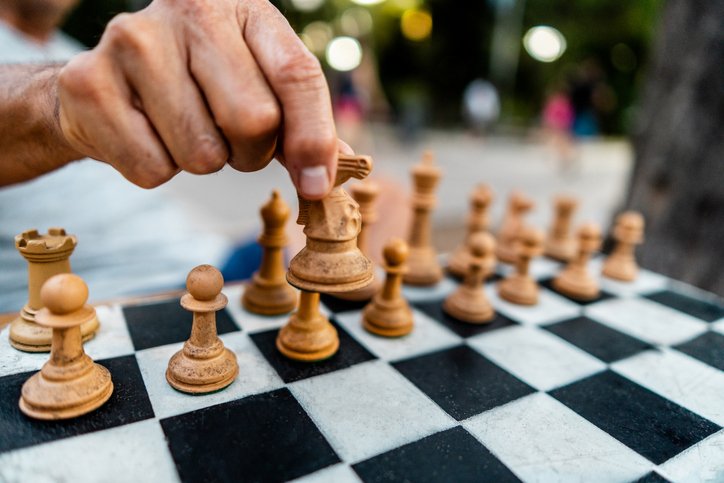
“Just 10 more minutes.”
“Just one more game.”
“Only until I get my score to 850.”
I told myself these things about chess this weekend as I recovered from having my wisdom teeth removed. I took off work for two days in anticipation of the pain and complications from the procedure and as a marathon runner, I am currently following the doctor’s protocol of not running for the five days following surgery. I had four wisdom teeth removed so I had to drug myself and drive home.
So without being able to work and run, I had a significant amount of free time that I don’t usually have, so I had to find a way to pass the time. I had to limit my exercise to basically nothing and only eat very bland foods, so I struggled to get enough calories in as well.
The first two days, I spent three or four hours eating — just eating, watching TV or YouTube videos. Since I could only eat things like pudding, ice cream, refried beans, and peanut butter/almonds, it took a long time to get the amount of calories I normally eat.
Downtime can be quite difficult for me, so I’ve been trying to occupy myself with a few things: reading a book, watching TV, playing video games, or writing. I didn’t engage in any at all — I could watch a show for an episode, read a book for 20-30 minutes, or write for 20 minutes, but ultimately I wasn’t “hooked” on any of them. That’s okay — all I needed was to get through the days until I could get back to normal life.
But in my boredom, I played chess. and take it more seriously. I’ve been playing chess for four years now and it’s one area of my life, unlike others, where I haven’t really improved. I have improved personally and professionally in my relationships, as a runner and at work, but my chess score has remained the same for the past several years.
I play mostly 10 minute games with quick matches and daily games and my rating hovers around the mid 600s which is an advanced chess beginner. I showed a lot of promise beyond my rating, playing against
and other better players, but I often made critical mistakes or didn’t know how to close games well in my endgames.
I must have played close to 1000 games by now, so being stuck in the mid 600s means the lack of improvement has been hard. I have fun playing chess, sure, and a close loss can be just as exciting as a win.
However, I thought that during this time, when I basically had nothing to do, I could focus on getting better at chess. I could keep bashing games, but the best I could do was review games. With a free chess.com membership, however, I was limited to commenting on one game per day and could only do a few puzzles. I also didn’t have access to many courses.
So I decided to pay for a Chess.com membership to get better. This gave me access to unlimited reviews, unlimited lessons, and unlimited puzzles. I spent time learning new openings, new endgames and new tactics. I won’t go into the specifics of chess too much, but once I started playing, reviewing and taking lessons, I couldn’t stop once I got the premium membership.
I was winning a lot of games and went from mid 600’s to low 800’s in a very short amount of time. Of course I would lose, but I won much more than I lost. I just couldn’t stop. I was on a roll, a huge roll, and I kept trying to put a limit on myself to stop playing. But after another game, usually one that I won most of the time, I kept playing. Often it wasn’t the games themselves that fascinated me, but the feeling of seeing patterns and strategies I hadn’t seen before, and scores I’d never achieved before.
For two days in a row, this process was repeated until I fell asleep. I played about 6 hours of daily chess games a day, while also trying to give energy to reading and various chores around the house.
Sure, that probably would have been fine when I was 12, but now I’m 29 with a lot of adult responsibilities like working, taking care of a house, managing finances, and more.
Four years ago, I was diagnosed with ADHD. It validated many of the self-regulation and impulsivity issues I’ve had throughout my life. I struggled with focus. And in that time, I’ve developed strategies for managing these systems, including breaking up the day into 20-30 minute chunks dedicated to specific tasks, taking breaks when overstimulated, and leveraging high-pressure, high-adrenaline situations when prompted.
As a result, when I miss the regulation I’ve built up over the past few years, it’s frustrating.
The real effect of not doing much for two days wasn’t the big stress for me – it was how I felt. I felt out of control, completely absorbed in another world, and well, like I used to play video games when I was much younger, where a whole weekend could go by with me playing 12 hours a day.
I was completely addicted to video games at certain points in my life, particularly MMORPGs. During these times, I was engrossed and my main priority was to progress through games like MapleStory, level up my character, improve my rank in my battalion, and improve the amount of damage I could do to enemies and the missions I could complete. I neglected homework and hanging out with my friends just so I could play MapleStory all day.
I recognized something about my addiction to video games and capitalizing on those addictive tendencies with my Chess.com premium membership. At the core of this video game addiction was, of course, an escape from real life, a distraction from the misery at home with parents who didn’t get along at all.
But I recognized something else: if I could channel all that self-improvement motivation into that video game, if I could redirect those energies into work, reading a book, playing an instrument, playing a sport, then I could accomplish a lot. Of course, the problem was that these things weren’t as interesting as playing a video game.
But I was always clinging to that feeling of leveling up and getting better. I recognized even when I was 8 years old, when I woke up at 5 in the morning to play PlayStation 2 games like Grant Theft Auto: San Andreas and keep the volume down so my parents don’t know I had a ton of motivation and energy directed towards this gaming hobby.
ADHD hyperfocus is a symptom I have recognized when I am fully absorbed and in the zone. I’ve learned to channel a lot of that addictive personality and energy into my work, becoming a marathoner, running. I still struggle with balance because I can go overboard, and no, it’s not fun to work or run all the time. But no matter what, I always get a huge rush from the same things that the rise of these video games gave me two decades ago.
The feeling of improving, getting better, reaching new heights I didn’t know I was capable of before. I guess you could say self-improvement, but I feel like that ‘climbing’ feeling always went a little deeper – it was like exploring my limits and my potential, climbing a mountain and getting closer and closer to the top. I wasn’t there yet, but I was closer, and even if I needed a quick break, I wanted nothing more than to keep climbing.
I think that’s why chess in the last two days has been out of bounds and lack of control. I won and I’m getting much better. I have more resources to study my strategy and game. I don’t think it helps that chess ability is often seen as correlated with intelligence and analytical ability, so there’s a part of it — if I was better at chess, it would make me more confident in my identity as a smart guy with strong analytical skills. I’m getting better after four years of stagnation, so while the chess itself is fun, the improvement is more addictive.
As nice as the break is, I want more balance and would rather read more books, spend more time dedicated to learning a language, or do something else with more utility. I will say that even in the days when I spent 12 hours playing video games, there was always an element of sadness that hasn’t gone away. If all the fun and leveling up wasn’t great right now, I wouldn’t be doing it. But it was the lack of balance and deregulation that would make me regret it.
Now I’ve created a limit: no more quick games. Daily games only. I have to wait for the opponent to play me back, often hours later or the next day. This way, I can be more conscious about my moves and strategy, but I can also prevent that phenomenon that makes me lose control.
It’s just chess, and there are worse things to spend all day doing. It’s just about how I feel and how my brain responds. There is a signal that it is time to stop and that either my body or my mind have their limits. I can go for a run and my body won’t want to run anymore (unless it’s in my training program).
I can watch a TV show that I like and be able to stop and not want to watch more. I can have one drink and not want to drink more. But I can’t play certain video games or quick games of chess and not come away feeling like I just want to play another round. My brain can process most things, but this wasn’t one of them.
—
This post was previously published on MEDIUM.COM.
—
Sign up for The Good Men Project newsletter
(function($) { window.fnames = []; window.ftypes = []; fnames[0]=’EMAIL’; ftypes[0]=’email’; })(jQuery); var $mcj = jQuery.noConflict(true);
If you believe in the work we do here at The Good Men Project, join us as a Premium Member today.
All Premium members can watch The Good Men Project ADS-free.
Need more information? A full list of benefits is here.
—
Photo source: iStock.com
The post What Chess Taught Me About My ADHD Brain appeared first on The Good Men Project.
