

Close Menu
Healthtost
  • News
  • Mental Health
  • Men’s Health
  • Women’s Health
  • Skin Care
  • Sexual Health
  • Pregnancy
  • Nutrition
  • Fitness
  • Recommended Essentials
What's Hot

Higher BMI increases risk of 19 cancers as global review widens obesity-cancer link

June 17, 2026

Ingredient Spotlight: Betaine – Woohoo Body

June 17, 2026

Abortion bans, restrictions could cost US economy $140 billion: New report

June 17, 2026
Facebook X (Twitter) Instagram
  • About Us
  • Contact Us
  • Privacy Policy
  • Terms and Conditions
  • Disclaimer
Facebook X (Twitter) Instagram
Healthtost
SUBSCRIBE
  • News

    The heart tissue repair drug may also help repair and regenerate damaged kidney tissue

    June 16, 2026

    Women track nocturnal disturbances more accurately than men, new data show

    June 16, 2026

    Wastewater analysis offers new approach to monitoring HIV burden

    June 15, 2026

    The dual strategy of blood donation and early screening offers hope to families

    June 15, 2026

    Study reveals frequent stop and start patterns with GLP-1 drugs

    June 14, 2026
  • Mental Health

    Performing under pressure? For athletes it depends on 3 main things

    June 14, 2026

    GLP-1 drugs like Ozempic promise more than just weight loss. But what is science versus hype?

    June 10, 2026

    Expectations of Indian Daughters: 10 Weird

    June 8, 2026

    How to Encourage a Child to Try New, Scary Things (Without Injuring Him in the Process)

    June 5, 2026

    Why your wearable health tracker can make you feel anxious

    June 1, 2026
  • Men’s Health

    Higher BMI increases risk of 19 cancers as global review widens obesity-cancer link

    June 17, 2026

    Lane 1 of the track

    June 16, 2026

    What do I eat in a day?

    June 16, 2026

    Looking for love in all the right places: Healing the wounds that undermine our relationships

    June 15, 2026

    Fathers shape childhood obesity risk long before birth

    June 10, 2026
  • Women’s Health

    Is there a difference between body, soul and spirit?

    June 16, 2026

    Uncovering the Latest Amino Acid Link to Weight Loss: The Cysteine ​​Link

    June 14, 2026

    Our Health Survey is ongoing. We have until July 13 to fight back.

    June 14, 2026

    Why is my sex drive so low? 10 common causes of low libido in women

    June 13, 2026

    “How to Show Up” – Supporting a woman undergoing cancer treatment

    June 13, 2026
  • Skin Care

    Ingredient Spotlight: Betaine – Woohoo Body

    June 17, 2026

    The best waterproof eyeliner for sensitive eyes and allergies

    June 16, 2026

    What is shea butter? Benefits & Uses

    June 16, 2026

    Knowing your plants is a plus – but formulation has different rules – Sally B’s Skin Yummies

    June 15, 2026

    Why Skin Barrier Repair C – Lifeline Skin Care

    June 14, 2026
  • Sexual Health

    Abortion bans, restrictions could cost US economy $140 billion: New report

    June 17, 2026

    Sex and human rights in the digital age

    June 16, 2026

    Can COVID increase the risk of developing HPV-related cancer?

    June 16, 2026

    Complete Career Guide — Sexual Health Alliance

    June 15, 2026

    Sex after 50—Sexuality as we age

    June 12, 2026
  • Pregnancy

    Amazing group baby shower gift ideas for a coworker

    June 16, 2026

    Nosebleeds in Pregnancy: Causes and Safe Treatments

    June 14, 2026

    What can they do for women? – Pink stork

    June 14, 2026

    A one-of-a-kind pregnancy magazine: for reflection, healing and growth

    June 11, 2026

    Your No-BS guide to surviving a summer pregnancy

    June 9, 2026
  • Nutrition

    Arrae Tone Gummies: A New Marketing Grift

    June 15, 2026

    The vaginal health boom and why it matters

    June 14, 2026

    Diagon Alley, Gringotts, Toothsome & Our Last Day • Kath Eats

    June 14, 2026

    Which beans are best at preventing the spread of cancer?

    June 13, 2026

    The energy equation: PFF at every meal

    June 12, 2026
  • Fitness

    ‘Squatter Hunter’ Flash Shelton Reveals The Scaling Tactics That Help Him Reclaim Homes Safely

    June 16, 2026

    My experience at Korean Head Spa

    June 14, 2026

    The Fitness Zeitgeist – Tony Gentilcore

    June 13, 2026

    Too busy for the gym? Try this 21-minute workout

    June 12, 2026

    5 Reasons Yoga Moms Turned to Silent Heavy Silicone Vests

    June 11, 2026
  • Recommended Essentials
Healthtost
Home»Men's Health»Higher BMI increases risk of 19 cancers as global review widens obesity-cancer link
Men's Health

Higher BMI increases risk of 19 cancers as global review widens obesity-cancer link

healthtostBy healthtostJune 17, 2026No Comments5 Mins Read
Facebook Twitter Pinterest LinkedIn Tumblr Reddit WhatsApp Email
Higher Bmi Increases Risk Of 19 Cancers As Global Review
Share
Facebook Twitter LinkedIn Pinterest WhatsApp Email

A sweeping analysis of 1.5 million cancer cases shows that excess body weight may shape cancer risk more broadly than previously recognized, with risks varying by cancer type, gender and region.

Study: Fat and cancer: a systematic review and meta-analysis. Image credit: Piyawat Nandeenopparit / Shutterstock

In a recent systematic review and meta-analysis published in the journal Metabolism of Natureresearchers combed through decades of peer-reviewed literature to reassess the global relationship between body mass index (BMI) and cancer risk.

The analyzes pooled data from more than 1.5 million documented cancer cases and found that elevated BMI was positively associated with 19 different types of cancer, significantly more than the 13 previously identified by consensus reports. The review further identified notable regional and gender variations in these risks and found that genetic evidence generally supported many of the observed associations, although not uniformly across all cancer types.
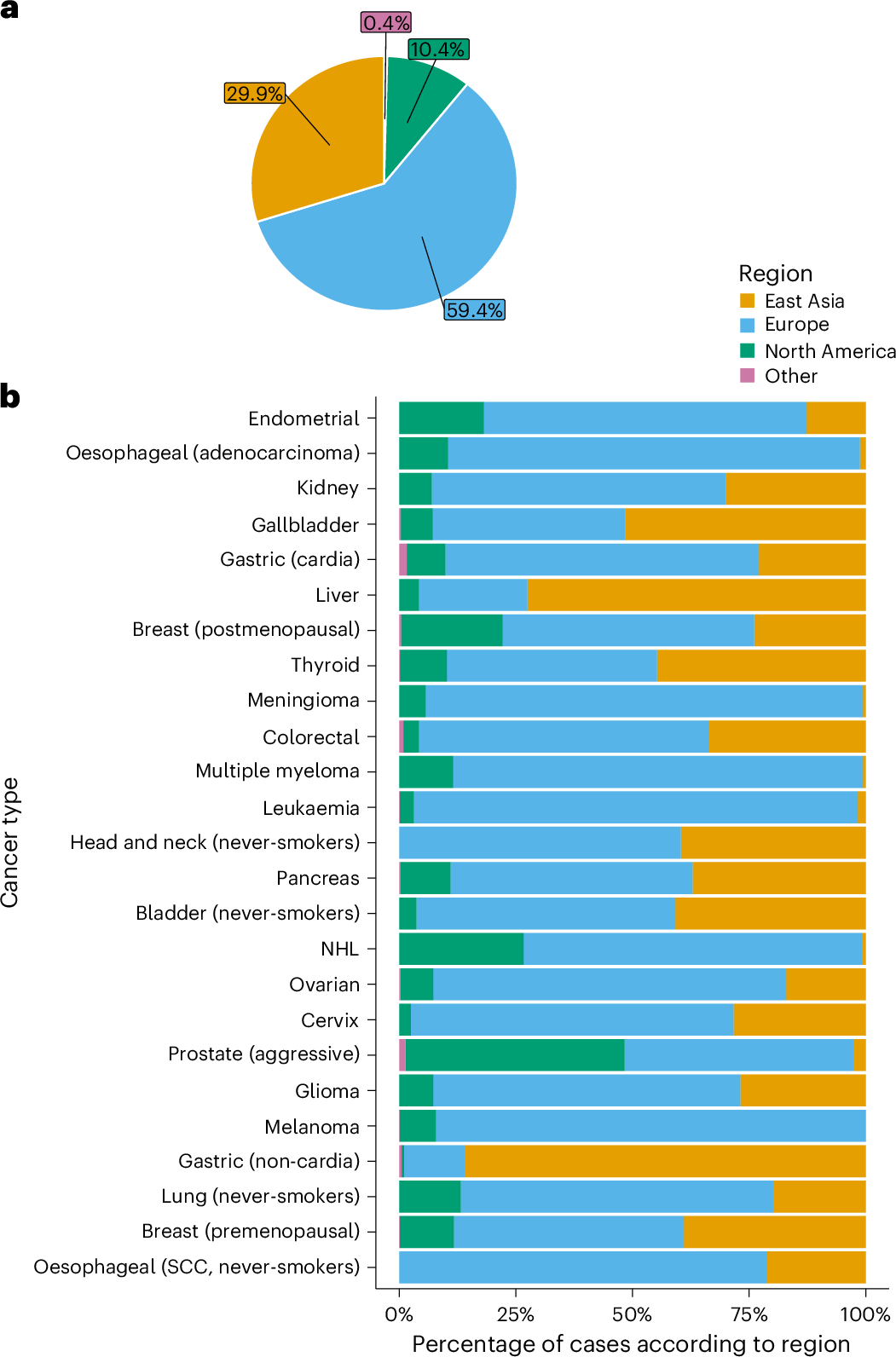
a, Sum of 25 types of incident cancers. b, Individual cancers. Estimates from pooled studies covering multiple regions for which country-specific case numbers were not available were excluded from this figure (head and neck). Numbers may not add up due to rounding.

aSum of 25 types of cancer incidents. siIndividual cancers. Estimates from pooled studies covering multiple regions for which country-specific case numbers were not available were excluded from this figure (head and neck). Numbers may not add up due to rounding.

Background

The association between excess body weight and cancer risk is by no means a new concept. For years, major health organizations such as the World Cancer Research Fund (WCRF) and the International Agency for Research on Cancer (IARC) have warned that carrying excess weight increases the risk of at least 13 types of cancer.

However, as global obesity rates continue to show unprecedented growth, particularly in low- and middle-income countries, researchers highlight important gaps in our understanding of how these factors work biologically.

For example, it remains unclear whether obesity-related cancer risks apply equally to different global populations or whether alternative measurements, such as waist circumference, provide a clearer picture of the association between obesity and subsequent cancer risk.

Although previous reviews aimed to address these knowledge gaps, they lacked data from different geographic regions (most focused on American and European populations) and did not include data from next-generation genetic cohorts, thus necessitating a reevaluation of the variables that best explain these observed relationships.

About the review

The present review aimed to meet these requirements and inform future weight management and oncology policy by synthesizing comprehensive prospective cohort studies from online scientific repositories (PubMed, EMBASE and Scopus) from database inception to April 2025.

The final set of publications in the review included 226 separate peer-reviewed articles (n = 1,520,512 cancer cases) covering data from 23 countries (6 major geographic locations) and documenting 557 separate BMI-cancer risk associations in 25 common cancer types.

For the meta-analyses, all hazard ratios from the included publications were standardized to a scale measuring a 5 kg/m² increase in BMI, thus maintaining statistical uniformity and allowing direct comparisons between previously non-overlapping datasets.

Since most of the datasets were observational (identifying correlations), Mendelian randomization (MR) analyzes were used to strengthen causal inference. MRI analyzes use inherited genetic variations as receptors for lifetime exposure to the variable under consideration (here, increased body weight).

Finally, to minimize the effects of tobacco use (as a residual confounder), smoking-related cancers were assessed using data from lifetime nonsmokers.

Study Findings

Meta-analyses revealed statistically significant evidence linking participants’ higher BMI with increased risk of 19 different types of cancer, with risk estimates varying nearly 20-fold in magnitude between cancer types. For example, at the higher end, analyzes showed that each 5-point increase in BMI was associated with a 58% increase in endometrial cancer risk (relative risk [RR] = 1.58, 95% confidence interval [CI]: 1.51–1.67) and a 47% increase in the risk of esophageal adenocarcinoma (RR = 1.47).

Most importantly, the data revealed positive associations for leukemia (RR = 1.09), non-Hodgkin’s lymphoma (RR = 1.05), bladder cancer (RR = 1.04), and glioma (RR = 1.03), none of which had previously been identified as malignancies associated with BMI overstatement.

The authors also reported inverse associations for premenopausal breast cancer, lung cancer among nonsmokers, and esophageal squamous cell carcinoma among nonsmokers.

The study further identified significant regional disparities in the observed associations between BMI and cancer risk. For example, postmenopausal breast cancer risks associated with a 5-unit increase in BMI were found to present approximately twice the risk in East Asian cohorts (RR = 1.25) compared with corresponding European cohorts (RR = 1.11, p-heterogeneity = 7.6 × 10⁻⁶), emphasizing the non-generalizability of results from the second cohort to the first.

Similarly, gender differences were identified, as seen in the associations with colorectal cancer, which were significantly stronger in men (RR = 1.17) than in women (RR = 1.06, p-heterogeneity = 8.9 × 10−¹0). In contrast, the BMI-Gallbladder Cancer association was stronger in women (RR = 1.33) than in men (RR = 1.13, p-heterogeneity = 9.5 × 10⁻⁵).

Finally, when comparing BMI versus waist circumference as predictors of subsequent cancer risk, the review found that both variables yielded broadly similar risk estimates, although modest differences were observed for some cancer types.

conclusions

This review validates previous research indicating the substantial impact of obesity on cancer risk and the global burden of cancer, while highlighting that previous frameworks have greatly underrepresented regional risks, particularly in East Asian populations, where differences in hormone therapy use, estrogen exposure, gallbladder etiology, tumor subtype patterns, partial surveillance arrest or re-representation.

Furthermore, the review highlights that significant regional limitations remain, with Africa, South Asia and Central America (among other regions) remaining underrepresented by long-term cancer incidence cohorts even in the present study.

Future research should prioritize diverse understudied populations in order to elucidate a truly fair understanding of modifiable cancer risk factors.

Download the PDF copy by clicking here.

Journal Reference:

  • Watts, EL, Gonzalez-Feliciano, A., Gunter, MJ, Chatterjee, N., & Moore, SC (2026). Fat and cancer: a systematic review and meta-analysis. Metabolism of Nature. DOI: 10.1038/s42255-026-01542-8.
BMI cancers global higher increases link obesitycancer Review risk widens
bhanuprakash.cg
healthtost
  • Website

Related Posts

Lane 1 of the track

June 16, 2026

What do I eat in a day?

June 16, 2026

Can COVID increase the risk of developing HPV-related cancer?

June 16, 2026

Leave A Reply Cancel Reply

Don't Miss
Men's Health

Higher BMI increases risk of 19 cancers as global review widens obesity-cancer link

By healthtostJune 17, 20260

A sweeping analysis of 1.5 million cancer cases shows that excess body weight may shape…

Ingredient Spotlight: Betaine – Woohoo Body

June 17, 2026

Abortion bans, restrictions could cost US economy $140 billion: New report

June 17, 2026

‘Squatter Hunter’ Flash Shelton Reveals The Scaling Tactics That Help Him Reclaim Homes Safely

June 16, 2026
Stay In Touch
  • Facebook
  • Twitter
  • Pinterest
  • Instagram
  • YouTube
  • Vimeo
TAGS
Baby benefits body brain cancer care Day Diet disease exercise finds Fitness food Guide health healthy heart Improve Life Loss Men mental Natural Nutrition Patients Pregnancy protein research reveals risk routine sex sexual Skin Skincare study Therapy Tips Top Training Treatment ways weight women Workout
About Us
About Us

Welcome to HealthTost, your trusted source for breaking health news, expert insights, and wellness inspiration. At HealthTost, we are committed to delivering accurate, timely, and empowering information to help you make informed decisions about your health and well-being.

Latest Articles

Higher BMI increases risk of 19 cancers as global review widens obesity-cancer link

June 17, 2026

Ingredient Spotlight: Betaine – Woohoo Body

June 17, 2026

Abortion bans, restrictions could cost US economy $140 billion: New report

June 17, 2026
New Comments
    Facebook X (Twitter) Instagram Pinterest
    • About Us
    • Contact Us
    • Privacy Policy
    • Terms and Conditions
    • Disclaimer
    © 2026 HealthTost. All Rights Reserved.

    Type above and press Enter to search. Press Esc to cancel.