


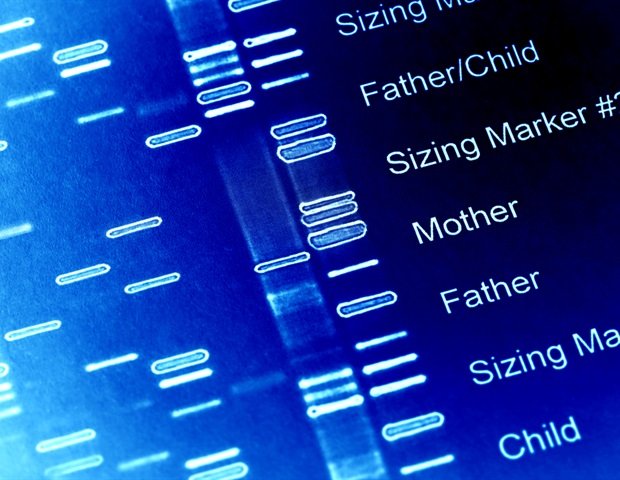
A new test provides a much more complete picture of DNA than current standard diagnostics and leads to a diagnosis more often. The test can replace fifteen other tests, making it faster and more efficient. Researchers from the Radboud University Medical Center recommend in the New England Journal of Medicine that this test be adopted everywhere as the first choice for rare genetic disorders.
A condition is considered rare if it affects fewer than one in two thousand people. However, up to 400 million people worldwide have a rare disease, as there are over seven thousand different types. Eighty percent of them have a genetic cause. A diagnosis often takes years to reach. However, the diagnosis is important: it provides clarity, insight into the future, contact with others in similar situations and the ability to assess the risks when planning to have children.
Researchers from Radboudumc and Maastricht UMC+ are working together to increase the chances of diagnosing genetic disorders. They compared current standard diagnostics—which often involve multiple tests to arrive at a diagnosis—with a new DNA test in a thousand patients. “We showed that the new test gives three percent more diagnoses. It can also replace fifteen other tests. We recommend using this test worldwide as a first choice,” says Professor of Translational Genomics Lisenka Vissers.
Puzzle
The new test is based on the so-called long-read genome sequence. When looking for a genetic abnormality, doctors look at a person’s complete DNA. Currently, this is done in fragments of about three hundred building blocks, which are then joined into the complete DNA sequence. The new test reads segments of up to twenty thousand building blocks. Like a puzzle, assembling the DNA puzzle is much easier with such large pieces, resulting in a more complete picture.
In addition, the new test reads not only the building blocks, but also the modifications on the outside of the DNA. These modifications can turn genes on or off and are sometimes the cause of a rare disorder.
So it’s important to measure them as well. With current diagnostics, this requires additional specialized testing, but with large readings we see these modifications as a two-in-one bonus.”
Christian Gilissen, Professor of Genome Bioinformatics
New diagnoses
The number of diagnoses is expected to continue to increase in the future, says Professor of Genomic Technologies Alexander Hoischen. He and his team have previously linked genetic abnormalities to various disorders. “Thanks to the extended reads, we have an even more comprehensive view of the DNA and can detect complex and hard-to-find abnormalities. We then associate them with specific conditions. In this way our knowledge grows and we can make more diagnoses.’
The long sequence was also used in the recent Undiagnosed Hackathon in Nijmegen, organized by UMCNL. Almost 150 specialists from all Dutch university medical centers came together to search for diagnoses for 33 families. The new test mapped the DNA of all families in detail. Combined with the expertise of so many specialists, this resulted in five new diagnoses.
Source:
Journal Reference:
