


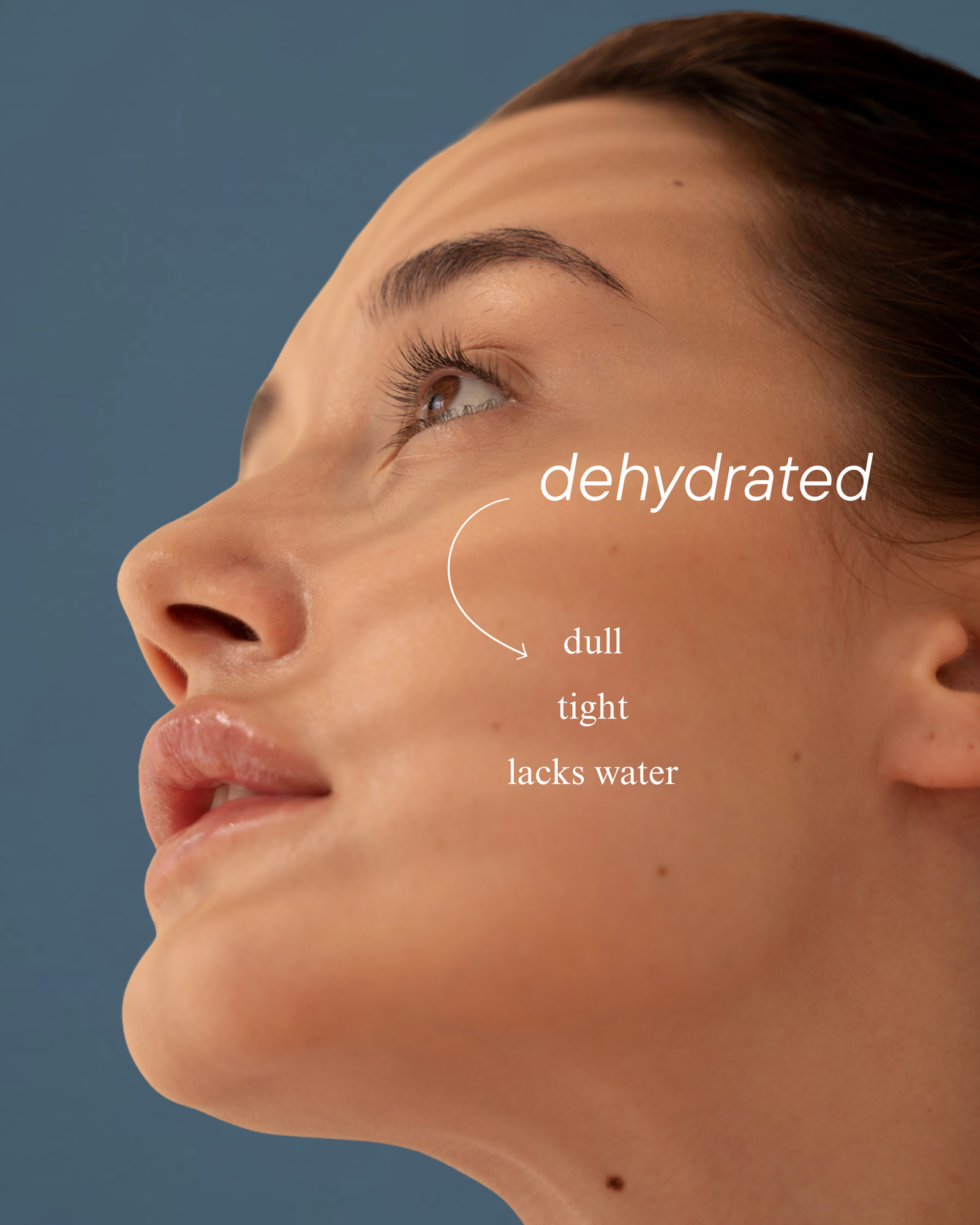
If your skin care routine suddenly feels like it’s stopped working, dehydration could be the reason.
Many people think they have dry skin when their skin is actually lacking in water.
And understanding the difference can completely change the way your skin looks, feels and responds to products.
Because while dry skin lacks oil, dehydrated skin lacks hydration.
Dealing with the wrong concern often leaves skin even more irritated, congested, dull or uncomfortable over time.
The good news is that once hydration and barrier support is restored, skin often begins to look healthier, smoother and brighter.
Dry Skin vs. Dehydrated Skin: What’s the Difference?
Although they may look similar, dry skin and dehydrated skin are not the same thing.
Dry skin is a skin type, while dehydration is a temporary condition that can affect any skin type — including oily skin.
Dry skin naturally produces less oil.
He may feel:
* rough
* flakes
* consistently dry
* uncomfortable all year round
Dry skin often benefits from richer nutrients and protective ingredients.
Dehydrated skin water is missing, not oil.
It often occurs:
* tight
* dim
* tired
* more sensitive than usual
Dehydration can happen suddenly due to stress, weather, excessive exfoliation, travel, lack of sleep, or an overly aggressive skincare routine.
One of the biggest misconceptions in skincare is that oily skin cannot be dehydrated.
In fact, oily skin is one of the most commonly dehydrated skin types.
What causes dehydrated skin?
Dehydration develops when the skin barrier struggles to retain water effectively.
This can happen from:
* overexfoliation
* harsh cleaners
* excessive sun exposure
* dry air or indoor heating
* anxiety and lack of sleep
* excessive use of active ingredients
* travel and climate change
* does not properly support the skin barrier
Even high-quality skincare products can lose their effectiveness when hydration levels are depleted.
Healthy skin absorbs differently.
Signs that your skin may be dehydrated
Dehydrated skin often feels “flaky” before people fully understand why.
Some of the more common signs include:
* tightness after cleansing
* dull or tired appearance
* Temporary fine lines appear more noticeable
* makeup that separates or sticks unevenly
* increased sensitivity
* skin oily but uncomfortable
* products that sit on the surface instead of being absorbed well
A simple way to recognize dehydration is the pinch test.
Pinch the skin on your cheek lightly.
If it wrinkles easily or lacks bounce, dehydration may be present.
If roughness and flaking feel more constant, dryness may be the biggest concern.
Can oily skin become dehydrated?
Absolutely.
Oily skin may still lack water.
When dehydration occurs, the skin may actually produce more oil while trying to compensate for water loss.
This often creates skin that feels:
* oily but firm
* congestion but uncomfortable
* Shiny without looking shiny
Adding heavier creams alone may not solve the problem.
In many cases, light hydration and barrier support are more effective.
Because hydration matters more than most people realize
Hydration affects much more than surface moisture.
Well-moisturized skin often shows:
* smoother
* brighter
* calmer
* more durable
* more balanced
Hydration also supports:
* flexibility
* barrier function
* overall comfort
* better absorption of the product
When hydration levels are low, the skin barrier becomes more vulnerable to irritation, sensitivity and moisture loss.
A healthy glow tends to return when the skin feels balanced again.
How to properly hydrate dehydrated skin
The most effective hydration routines focus on supporting the skin barrier while helping the skin attract and retain water.
Step 1: Start with a gentle cleanser
Cleansing should never leave the skin stripped or tight.
A gentle cleanser helps:
* remove clutter
* Maintaining balance
* Prepare the skin for hydration
If skin feels squeaky clean afterwards, the cleanser may be too harsh.
Step 2: Apply moisturizer immediately after cleansing
One of the most neglected steps in skin care is the timely application of hydration.
A hydrating toner like Lifeline ProPlus Brightening Toner helps:
* replenishes hydration after cleansing
* Supports smoother texture
* prepare the skin for better absorption
Applying moisturizer before the skin is completely dry helps reduce moisture loss.
Step 3: Use a light water-based moisturizer
Hydration treatments should help attract and retain water without leaving a heavy or greasy feeling.
Lifeline ProPlus advanced water therapy helps improve the appearance of:
* blur
* dehydration
* uneven texture
* visible skin fatigue
For dehydrated skin, light hydration is often more effective than thick barrier products alone.
Step 4: Support firmness and elasticity
As skin matures, collagen and elastin naturally decrease, which can contribute to visible dehydration and reduced resilience.
Lifeline ProPlus Collagen Booster and Lifeline ProPlus Elastin Booster help support:
* vigor
* elasticity
* smoother texture
* overall skin resilience
The healthy structure helps the hydration last longer.
Step 5: Protect the skin barrier
A compromised skin barrier allows moisture to escape more easily.
Barrier-supporting formulas help seal in moisture while protecting against environmental stressors.
Lifeline ProPlus Advanced Recovery Complex helps:
* strengthen the skin barrier
* improve comfort
* reduces visible dryness
* supports the long-term maintenance of hydration
The best ingredients for dehydrated skin
Certain ingredients are particularly helpful in restoring hydration and supporting barrier health.
Hyaluronic Acid
It helps to attract and retain water within the skin.
Tiles
Help strengthen the skin barrier and reduce moisture loss.
Peptides
Support skin structure and resilience with a healthier appearance.
Development Factors
Help support visible skin renewal and rejuvenation.
Antioxidants
Help protect against environmental stress that can weaken the skin barrier over time.
Common mistakes that can worsen dehydration
Sometimes skin care routines accidentally increase water loss instead of improving hydration.
Over-exfoliation
Too many acids or scrubs can weaken the skin barrier.
Use of harsh cleaners
Stripping cleansers often leave the skin tighter and more dehydrated.
Skipping moisturizer
Hydration needs barrier support to stay sealed into the skin.
Relying only on heavy oils
Oil and moisturizer are not the same thing.
Ignoring Environmental Stress
Air conditioning, travel, weather changes and indoor heating all affect hydration levels.
How long does it take for dehydrated skin to improve?
Many people begin to notice improvements within days of switching to a skin care regimen that focuses on hydration.
Consequently, the skin often begins to appear:
* softer
* smoother
* brighter
* more balanced
Long-term improvements in barrier texture and strength may take several weeks.
Why Your Skin Still Feels “Out Of Place”
If your skin care routine no longer seems to be giving you the results you expect, dehydration may be the missing piece.
When hydration levels are low:
* Makeup does not perform well
* Active ingredients become more irritating
* radiation is reduced
* sensitivity increases
Supporting hydration and restoring the skin barrier often improves the overall appearance of the skin more effectively than simply adding heavier products.
Dry skin and dehydrated skin are often confused, but understanding the difference can dramatically improve the way skin looks and feels.
Healthier skin isn’t always the result of doing more.
Often, it comes from restoring balance, supporting the barrier and giving the skin the hydration it has been missing.
When hydration becomes the foundation, shine tends to follow.
