


Shoulders that look strong from every angle don’t happen by accident. Getting that coveted “V” shape requires targeted training and consistency.
If your routine is heavy with pressing movements, chances are your front delts are well developed while your laterals are lagging behind. This results in strong shoulders that do not yet have a naturally rounded appearance.
The dumbbell lateral raise solves this problem by isolating your lateral deltoids, creating the width and definition that the press cannot provide. Follow this guide to master perfect form, avoid common mistakes, and learn different variations of the dumbbell lateral raise.
What is the Lateral Dumbbell Raise?
The dumbbell lateral raise is an isolation exercise designed to strengthen and tone your lateral deltoids—the middle part of your shoulder muscles. While compound movements like overhead presses work your shoulders as part of a larger movement, lateral raises zero in on that area.
This focused approach makes it ideal for building shoulder width and creating a “V” shape. It’s the lateral deltoids, more than any other part of your shoulder, that give you a broad, athletic look when viewed from the front or back.
As an aside, strong lateral deltoids also play a big role in shoulder stability and injury prevention. When you strengthen the sides of your shoulders, you create better balance throughout the joint. This is especially important if you often train with pressing movements. Doing lateral raises will fill in the gaps in your shoulder development, leading to better lifting performance and fewer imbalances that could cause shoulder problems down the road.
Which muscles are fired during lateral raises?
While the lateral raise is an isolation exercise that primarily targets your lateral deltoids, your body never works just one muscle in complete isolation. Side raises also affect:
- Lateral Deltoids – This is the middle part of your shoulder that does most of the work, lifting the weight to one side and controlling the descent.
- Anterior and Posterior Deltoids – The front and rear deltoids help you to a lesser extent when you pull the weights away from your body.
- Table muscles – Your upper traps stabilize your shoulder blades throughout the moment, especially at the top of each rep.
- Forearms – Gripping the dumbbells throughout the set challenges your forearm endurance, especially as fatigue sets in at higher rep ranges.
How do you do a side raise correctly?
The dumbbell lateral raise may seem simple, but there is an art to doing it right. In fact, practicing proper form will help you build strength safely and see results faster.
Here’s how to properly perform a lateral dumbbell raise to improve upper body balance, shoulder stability, and posture while sculpting attention-grabbing shoulders.
1. Start in a standing position
Stand tall with a dumbbell in each hand. Let the weights hang at your sides with your palms facing in toward your thighs. Next, place your feet under your hips and bend your knees slightly, then brace your core. Finally, pull your shoulders up, back and down, away from your ears.
2. Lift the Weights
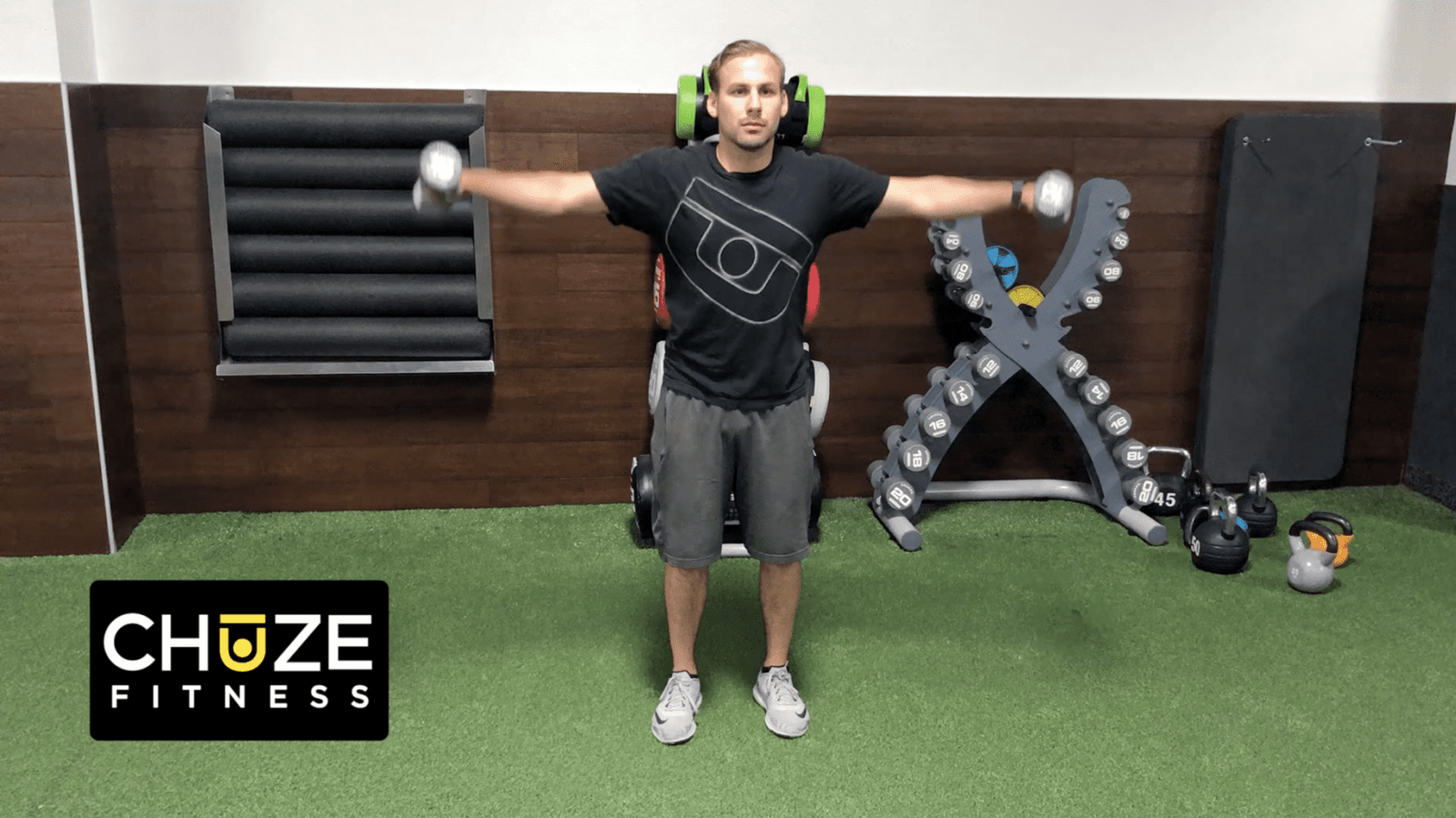
Exhale, then raise both dumbbells out to the sides, bringing your arms away from your body until the dumbbells reach shoulder height.
3. Pause at the top
Once the dumbbells reach shoulder height, hold them there for a while. This short pause helps you really feel the contraction in your sides.
4. Lower slowly
Inhale and slowly lower the dumbbells back to your starting position at your sides. Control the descent, taking 2-3 seconds to return the dumbbells to your thighs.
Most importantly, try to maintain a smooth, steady movement – without using momentum or swing – and keep your shoulders relaxed to avoid neck tension.
Lateral Dumbbell Raise Tips for Beginners
If you’re new to lateral raises, these tips will help you master the move in no time:
- Start light – Even if you’re used to lifting, start with lighter weights and more reps for lateral raises. You might be surprised how difficult it can be to isolate these side flaps, even with light weights.
- Slow down – Slowing down can lead to better muscle activation. Try lifting for 2 seconds and lowering for 3-4 seconds to force your muscles to work harder and reduce the temptation to use momentum as a crutch.
- Practice in front of a mirror – Position yourself in front of a mirror so you can monitor your form. This will help you deal with issues like lifting unevenly, hunching your shoulders, or letting your elbows drift forward or back.
Mistakes to avoid when doing dumbbell lateral raises
Recognizing these mistakes can help you avoid injury and maximize your efforts:
- Lifting too high – Once your arms go up parallel to the floor, your shoulder joint takes over and your side soles disengage. Stop at shoulder height, and if you can’t get there without lifting higher, use lighter dumbbells.
- Shrugging your shoulders – When your shoulders come up towards your ears, you are no longer performing a lateral exercise. Before each repetition, bring your shoulders down and back, and if they still creep up, lower your weight.
- Swinging the weights – It’s easy to build momentum with your hips or back to lift the weights. However, if you need momentum to lift the weight, it’s too heavy.
- Bending your elbows a lot – Your elbow angle should remain constant. If your elbows bend more as you lift, you’re unconsciously trying to make the exercise easier.
- Leaning too far back or forward – Keep your back straight. If you’re twisting, leaning, or shifting your weight from foot to foot instead of looking forward, you’ve lost control of the movement.
To correct most of these mistakes, you’ll need to do one of two things: Choose lighter weights or slow down. Lifting heavier weights with poor form can defeat the purpose of the exercise at best and lead to injury at worst.
How Effective Are Dumbbell Lateral Raises?
If your goal is to develop broader, more defined shoulders, lateral raises are one of your best tools.
This is because the lateral raise targets the muscles that create shoulder width. While compound presses involve your lats, they don’t isolate the muscles like lateral raises do. This isolation is what allows specific muscles to develop in that area.
In fact, research using electromyography shows that lateral raises cause high levels of lateral deltoid engagement. So when you want to build a specific muscle, exercises that isolate and maximize activation in that muscle tend to produce the best results.
Lateral raises also affect the overall health of your shoulders. Strengthening your lateral deltoids helps balance out the front-heavy development that most people have from bench and bench. If your shoulders are more balanced, this means improved posture and a lower risk of injury.
Finally, this exercise is incredibly accessible. You don’t need fancy equipment or years of training. you just need a pair of dumbbells and yourself. Anyone can learn a proper lateral raise and start seeing the benefits within weeks of practice.
Lateral Dumbbell Raises vs. Other Shoulder Exercises
While lateral raises are essential for building defined shoulders, they work best as part of a complete shoulder program. Compare these exercises to the dumbbell lateral raise to see where they fit into your routine.
Dumbbell lateral raise versus overhead press
Overhead presses are compound movements that work your deltoids, triceps and even your core. Meanwhile, lateral raises isolate your lateral grooves and prove more effective for targeting the development of the lateral lats.
You need both overhead presses and lateral raises for a complete shoulder development plan, as each exercise targets different muscles.
Dumbbell Lateral Raise vs. Standing Row
Standing rows work your lateral extremities, but they also heavily engage your traps and require internal shoulder rotation that some people find uncomfortable. Lateral raises keep your shoulder in a more natural position while giving a more isolated focus to the lateral limbs.
Standing rows feel great for some people, but if they bother your shoulders, side raises offer similar benefits with less stress on the joints.
Dumbbell Lateral Raise vs. Arnold Press
Arnold presses combine an overhead press with the twist, hitting all three heads of your deltoids in one move. They are effective but complex. On the other hand, lateral raises are simpler and easier to learn, but only target the lateral head.
Use Arnold presses when you want to work everything at once and lateral raises when you want to tackle your side lats.
What are the other variations of side raising?
Once you’re comfortable with a lateral raise, you can try these variations to improve your workout and add a new challenge to your routine:
- Seated Lateral Dumbbell Raise – The seat eliminates any chance of using momentum from your legs or hips, resulting in tighter form and more intense muscle activation. Basically, this variation forces your shoulders to do all the work.
- Lateral cable raises – Cables provide constant tension throughout the movement, unlike dumbbells, where the tension drops off at the bottom. This constant resistance leads to greater muscle stimulation and growth.
- One arm lateral raise – Train one side at a time to fully focus on your form. This variation also helps you identify and correct strength imbalances between your left and right shoulders.
Build stronger shoulders at Chuze Fitness
You don’t need to load up a bar with plates or learn complicated weightlifting routines to build impressive shoulders. While the lateral raise may seem simple, this focused exercise targets exactly what many shoulder programs are missing.
Want to see the technique in action before you try it? This video demonstration walks you through each step.
At Chuze Fitness, we don’t just hand you equipment and wish you luck. Our instructors are invested in your success and our spaces are designed to feel welcoming and accessible. All you need to do is show up ready to work and we’ll provide you with everything you need to make it happen.
Sources:
StatPearls. Anatomy, shoulder and upper extremity, deltoid muscle.
International Journal of Environmental Research and Public Health. An electromyographic analysis of lateral raise and frontal raise variations in competitive bodybuilders.
