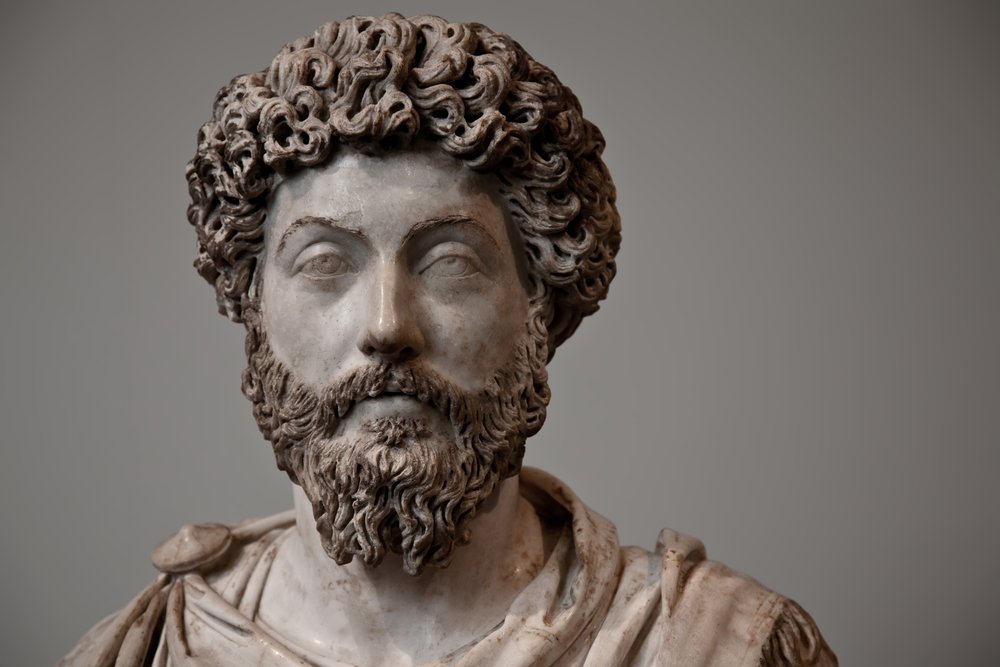
Marcus Aurelius: A Closer Look
Marcus Aurelius widely regarded as the father of Stoicism. He was a philosopher and Roman emperor whose quotes are almost unavoidable on social media. Stoicism is based on the idea that virtue and honor should be pursued while enduring the pains and hardships of life with little or no complaint. In a time of pandemics and economic hardship, it’s no wonder why Stoicism has made a huge comeback in modern times.
History remembers Marcus Aurelius as a philosophical force. However, in reality, Marcus Aurelius is only one of the famous classical philosophers who followed the ideals of Stoicism. He literally defined what it means to be mentally tough, but just how tough was he?
Could Marcus Aurelius absorb modern problems with the same stoic spirit he did while emperor of Rome?
Was he physically cruel, mentally cruel, or just someone who wrote about it in his diary?
Let’s take a closer look at the life and lessons of Marcus Aurelius.
Natural Resilience
You’ve probably seen a bodybuilding post on social media with a quote from Marcus Aurelius. His stoicism quotes are often used to help people push themselves harder in the gym. One of the most popular training quotes is this: “Reject the feeling of injury and the injury itself disappears.” – Marcus Aurelius, The Meditations.
You may also have seen someone post about their tireless workout routine with the caption: “You have power in your mind – not external events. Realize this and you will find power.”
From his famous quotes, you’d think Marcus Aurelius could totally cram in a tough workout routine, but was he a physically imposing man in real life? Well, as a military man, Marcus Aurelius wasn’t exactly a tough soldier like Valerian or Maximinus Thrax. Marcus Aurelius’ reign was troubled with rebellions and foreign rebellions from the Parthians and Germans. There is no surviving record of Aurelius himself taking part in any of the battles, but he led a vigorous military campaign to reassert Roman rule.
According to BritannicaMarcus Aurelius was not a man of strong physical health. Some of his health problems included chest and stomach pains, poor appetite and sleep problems. He had to deal with a chronic ulcer and daily medication.
So it is safe to say that Aurelius’ physical health does not live up to the modern image of a tough man. Although he was not an imposing fighter or military character, his struggles to maintain good health certainly benefited from the ideals of Stoicism. He could endure physical punishment and was constantly concerned with the concept of his own mortality.
“When you wake up in the morning think what a privilege it is to be alive, to think, to enjoy, to love…” – Marcus Aurelius, The Meditations.
“Think of yourself as dead. You’ve lived your life. Now, take what’s left and live it right. What doesn’t transmit light creates its own darkness.” – Marcus Aurelius, The Meditations.
“Don’t act as if you were going to live ten thousand years. Death hangs over you. While you live, while it is in your power, be well.” – Marcus Aurelius, The Meditations.

Mental toughness
If you are struggling with difficult people in your life or difficult situations, then Marcus Aurelius quotes can really help you. He often talked about ignoring negativity from others and focusing on your own sense of self-worth. Aurelius was an advocate of internalizing problematic situations and focusing your attention on things you can change while ignoring things you cannot.
Marcus Aurelius was a Roman emperor during the Golden Age of Rome. He came from a prominent political family. Almost all of them held some kind of high office before or after Aurelius came to power. His transition to power was peaceful and he was popular among the people he ruled. So why all the weird stoicism quotes from his writings?
Related: 7 Ways to Increase Mental Stamina
Marcus Aurelius faced daunting diplomatic challenges. His writings in THE Meditations they could be seen as notes to themselves. He was not so much the father of Stoicism as he was the student of philosophy. All of his famous quotes about being mentally tough were his way of cultivating these habits within himself.
“When someone else blames you or hates you, or when people express similar criticisms, go into their soul, penetrate inside and see what kind of people they are. You will realize that you don’t need to be anxious that they must have a certain opinion of you.” – Marcus Aurelius, The Meditations.
“It takes very little to lead a happy life; it’s all within you in your way of thinking.” – Marcus Aurelius, The Meditations.
The connection between CBT and Marcus Aurelius
Some would argue that without Marcus Aurelius we would not have Cognitive Behavioral Therapy or CBT. It is a type of therapy that has been shown to be effective against depression, anxiety, phobias and suicide. In CBT, there is an underlying idea that your thoughts, actions and feelings are connected. CBT begs you to challenge negative belief systems and thoughts to create a new reality for yourself. CBT focuses on your current situation, not so much on your past, and on the process of developing ways to break free from negative patterns.
Related: Find out 7 reasons why men seek treatment
Donald Robertson, its author How to Think Like a Roman Emperor has made an extensive study of the life of Marcus Aurelius. He praises Marcus Aurelius for his contributions to philosophy, psychotherapy and the concept of mental toughness. He also recognizes the connection between the Stoics and modern Cognitive Behavioral Therapists.
In an interview with DailyStoic.comRobertson noted that, “Greek and Roman Stoicism inspired cognitive therapy, as we have seen, which is actually known to be an effective approach to dealing with pain. The Stoics clearly distinguish the sensations of pain and discomfort, which they view with neutrality and indifference, from our emotional discomfort in response to pain, which they see as, at least in part, worth controlling our people. Pain, focusing on it, and dealing with it emotionally, even behaviorally, the Stoics teach a radical acceptance of pain that is actually consistent with modern evidence-based psychotherapy.”

Emotional cruelty
One of the dominant components of Stoicism is anger management. In fact, Marcus Aurelius himself struggled to control his anger. There is a whole section of his work, The meditations, which deals exclusively with anger management. So this book was a self-help journal for Aurelius.
“From Rusticus, I got the idea that I needed correction and healing for my character,” he wrote.
Marcus Aurelius was a Roman emperor, and this high office would certainly have moments that challenged his ability to control his emotional resilience. Stoicism was a wonderful way to redirect his energy to things that mattered most. Instead of getting up in anger, he could challenge the thoughts and feelings to see if they were real.
“Whenever you are about to find fault with someone, ask yourself this question: What fault of mine is most similar to the one I am about to criticize?”
And here’s another one:
“The best revenge is not to be like your enemy.”
Marcus Aurelius clearly wanted to cultivate in himself a sense of emotional toughness. It’s something he’s struggled with in his life. His widely publicized struggles with emotional cruelty make him worthy of the accolades bestowed upon him by later historians.
So, how cruel was Marcus Aurelius?
Although Marcus Aurelius is most credited with being the father of Stoicism, he was not the originator of the idea. Aurelius learned Stoicism from Epictetus, Plato, Zeno, Sextus of Chaeronea, and other philosophers who came before him. However, he excelled in marketing himself to the rest of the world because he was a Roman emperor.
Marcus Aurelius benefited from living in the era of Roman greatness known as the Golden Age. He was not a particularly exemplary politician or military commander. His philosophy is popular now, but he borrowed heavily from the philosophers who came before him. Marcus Aurelius’ Stoicism is about conquering anger, overcoming self-doubt, reigning in bad habits, and coming face to face with one’s own mortality.
These are inner demons that men struggle with on a daily basis. Thus the words of Marcus Aurelius are of great value to modern man, even though Aurelius was not the tough guy that history makes him out to be. He was resilient and dealt with personal adversity in a very public way. This alone makes him a role model for modern men.