


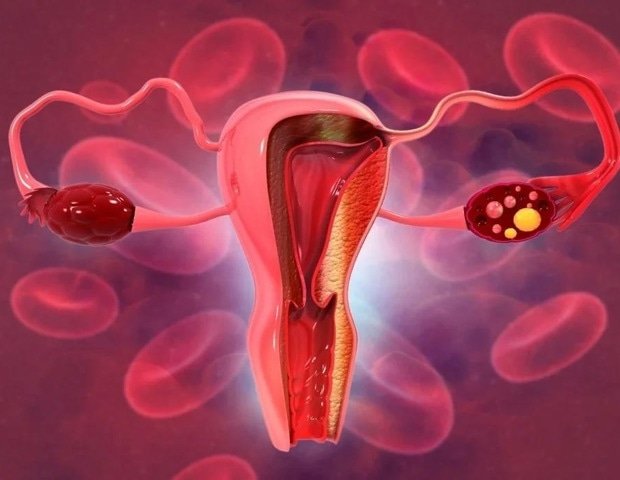
Cervical cancer is the fourth most common cancer for women in the world, with more than 660,000 new cases and nearly 350,000 deaths annually. Now, University of Maryland mathematicians have developed effective strategies to help limit and potentially eliminate the disease. The research was published last week in the journal Bulletin of Mathematical Biologyoffers a new mathematical model that can help public health officials design effective cancer vaccination and screening policies.
“The study provides a clear way to show how science affects policy,” said senior study author Abba Gumel, a distinguished university professor of mathematics at UMD who holds joint appointments at the Institute for Health Computing and the Institute for Physical Science and Technology.
Almost all cases of cervical cancer are caused by the human papillomavirus (HPV), which is considered the most common sexually transmitted infection in the world. HPV, a vaccine-preventable disease, is often asymptomatic and resolves naturally within two years in 90% of cases, but persistent infection in the rest can lead to cancer.
HPV vaccines, which are already offered and recommended in 147 countries, can minimize the spread of the disease and the risk of cancer. UMD researchers developed a new mathematical model to evaluate the effectiveness of various vaccination strategies, which they tested with a case study in South Korea.
Cervical cancer is one of the few cancers that can be effectively prevented by vaccines. It was important to check whether the recent government program to offer vaccines will be enough to effectively control the disease in Korea.”
Soyoung Park, lead author of the study, Ph.D. candidate in applied mathematics & statistics, and in scientific computing at UMD
Create a case study for South Korea
The model presented in the study incorporates previously published demographic and epidemiological data to predict how HPV is transmitted in a population. It stratifies people by sex, vaccination status, HPV infection and cancer progression and was calibrated using South Korean cancer data from 1999 to 2020. The model can be used to test the performance of different vaccination strategies over time.
Model simulations revealed that current South Korean policies are insufficient to eliminate HPV and related cancers in the country. South Korea’s National Immunization Program (NIP), which began in 2016, currently vaccinates about 80% of the country’s girls aged 12-17. Another 30,000 women aged 18-26 receive ‘re-vaccinations’ annually. In addition, the National Cancer Screening Program provides regular Pap smears to detect cancerous lesions for approximately 61% of Korean women over 20 years of age. These existing efforts will reduce the burden of HPV-related cancer over time, the authors found, but will not eliminate the virus.
“It achieves the goal of reducing the incidence of cervical cancer, but it’s not going to eliminate it,” said Gumel, who has worked with the modeling team at Merck Inc., the company that originally developed the HPV vaccine. “The goal is elimination.”
South Korea could eliminate HPV by expanding access to vaccines, researchers find. The authors explored two scenarios where NIP could be improved. The first involved expanding access to vaccines to cover 99% of women. In addition, because the authors found that immunizing boys has a strong secondary effect on protecting females, the second scenario involved maintaining the current vaccination coverage of 80% of females while vaccinating 65% of boys aged 12–17 years. Model simulations suggest that these efforts will eliminate HPV-related cancers in South Korea within 60 and 70 years, respectively.
Both vaccination strategies for expanded coverage are feasible in Korea, given that national coverage for infant vaccinations such as measles under the NIP is close to 98 percent, Park said. He added that the public market for vaccination campaigns is high in South Korea.
“There is very low vaccination hesitancy,” he said.
“Vaccinating boys reduces the pressure of vaccinating a large percentage of females,” added Gumel, who also holds the Michael and Eugenia Brin E-Nnovate Chair in Mathematics. “It makes eradication more realistically possible.”
Applying the model around the world
The two solutions proposed by the researchers would achieve herd immunity, meaning that people who cannot be vaccinated—for example, the elderly or those who are allergic to the vaccine—would be protected from HPV and related cancers.
“The way to protect them is to surround them with a sea of immunity,” Gummel said.
The authors showed that while expanding Pap smear coverage may provide only marginal benefits, strategies that promote safer sexual practices, such as condom use, would be very effective in reducing the burden of HPV and related cancers in communities.
Now, Park is modifying the model to explicitly account for the contact dynamics of men who have sex with men, as well as other high-risk groups such as sex workers.
In a conference speech last year in South Korea, Park connected with researchers who work closely with Korean public health agencies. They showed a strong interest in data sharing and possible use of the study to improve the NIP. He added that the findings apply worldwide, including in the US
“We could use different data to compare the lessons learned on HPV with the US,” Park said. “Can we do the same thing? Will the same set of intervention strategies work effectively here?”
Gumel sees reason to try. He estimates that with the 95% effective Gardisil-9 vaccine offered in the US, about 70% coverage would be sufficient to achieve herd immunity.
“We don’t need to lose 350,000 people worldwide to cervical cancer every year,” Gumel said. “We can see an end to HPV and HPV-related cancers if we improve vaccination coverage.”
UMD mathematics Ph.D. Candidate Hyunah Lim co-authored this article with Gumel and Park.
