The US Food and Drug Administration (FDA) has just approved a new sunscreen ingredient.
And it’s great news because that hasn’t happened in a long time—something new in sunscreen!
You might be wondering: Is this something I should be using now? Is it better than what I had before?
Here at CV Skinlabs, we’re happy you’re using sunscreen to protect your skin. We’ve always recommended zinc oxide and titanium dioxide as the safest options, as these are so-called “natural sunscreens” that sit on top of the skin and protect it without being absorbed too deeply.
Some of our customers, however, have noted that these sunscreens can be a bit chalky or leave a white film on the skin. They may even cause irritation in people with sensitive skin. Formulas are better today than they’ve ever been, but still, we all want to look our best even while protecting our skin, right?
Now we may have a new alternative. It’s all the buzz in the beauty world, so we want to make sure you get the scoop before making any decisions.
What is this new sunscreen ingredient?
The new sunscreen is called bemotrizinol. You may also see it referred to as BEMT, Tinosorb S, PARSOL Shield, or the longer chemical name, Bis-Ethylhexyloxylphenol Methoxyphenyl Triazine.
How’s that for a bite?
So outside the science lab, what is it?
Bemotrizinol is a new type of chemical sunscreen. This means it absorbs UV rays and helps convert their energy into heat, which is then released by the skin.
Typically, we recommend natural or so-called mineral sunscreens (like zinc oxide) over chemical sunscreens because they sit on top of the skin and help block, diffuse, and protect against UV rays without sinking into the skin. Chemical sunscreens have been linked more to issues like hormone disruption and free radical production, so we usually recommend staying away from them.
But bemotrizinol is a little different from most chemical sunscreens. Mainly, it is considered more “stable” than ingredients like avobenzone.
Plus, it provides both UVA and UVB protection, meaning it offers broad-spectrum protection that most other chemical sunscreens don’t do as well. (This is why chemical sunscreens are often combined to achieve broad-spectrum protection.)
How safe is this new sunscreen ingredient?
Bemotrizinol has been used in Europe for decades and the research on it has been encouraging.
Photostable
The FDA’s clinical review describes it as “photostable,” meaning it doesn’t break down easily in sunlight.
Sunscreens are constantly affected by UV rays. Some of our familiar chemical sunscreens do their job for a while, but then they can be weakened by sunlight. Once degraded, they don’t protect as well.
Avobenzone is a good example of this. Protects against UVA rays, but may break down in sunlight unless the formula includes stabilizers.
Bemotrizinol is considered highly photostable and does not need stabilizers. In fact, it can help stabilization of other sunscreen ingredients in a formula.
Even better, unlike older non-metallic sunscreen formulations, bemotrizinol can be combined with zinc oxide to provide strong broad-spectrum protection with less white cast.
Low Absorption
The other good news is that bemotrizinol has a high molecular weight, which helps reduce its ability to penetrate the skin.
The FDA describes it as having “low levels of absorption through the skin into the body,” which is good news for clean beauty enthusiasts. At clinical overviewthe researchers reported that the absorbed dose was found to be less than 2% of the administered dose.
Even when people used a lot of vemotrizinol several times a day, very little entered the bloodstream. Most of it seemed to stay on or near the skin.
According to the Environmental Working Group (EWG), FDA confirms that at concentrations up to 6 percent, vemotrizinol is poorly absorbed through the skin, with average absorption levels below the concentration FDA considers indicative of systemic exposure.
Compare it with oxybenzoneanother sunscreen chemical detected in the blood at 515 times the FDA’s limit of concern after just one weekend of application.
No irritation
For those with sensitive skin, this may also be a sunscreen ingredient to try. Skin irritation tests found that vemotrizinol was not irritating at the permitted concentrations.
Great use of safety track
Bemotrizinol has been widely used in European and Asian sunscreens for decades. The US has stricter sunscreen testing policies than other countries, which is why it took longer for this ingredient to reach our shores.
These many years of use abroad, however, mean that bemotrizinol has more safety data to support it from other chemical sunscreens currently approved in the US
This new sunscreen ingredient might just look better
If you’re a pure beauty lover, you’ve probably opted for zinc oxide and titanium dioxide more often than not. But you may not appreciate the white cast that zinc oxide can leave behind.
New formulas containing bemotrizinol will be transparent on the skin while offering broad-spectrum protection from UVA and UVB rays. This should mean more pleasant, less greasy sunscreen formulas in the near future.

When will this new sunscreen ingredient be available?
Products with bemotrizinol are not yet widely available, as it was only recently approved in June 2026. EWG says that when they do, they will update the “Sunscreen guide” with these products to help you make safe choices.
At that time, you’ll want to look for “bemotrizinol” or “BEMT” in the list of active ingredients or the brand name Parsol Shield on the product packaging. It can also be registered under its other long chemical name mentioned earlier.
In the meantime, zinc oxide and titanium dioxide remain your safest options.
What to do with this information now
Here’s how you can use this news to start taking better care of your skin today.
1. Take a fresh look at your current sunscreen.
Check the label. If it relies heavily on avobenzone with no stabilizer listed, your protection may break down faster than you think. Choose a zinc oxide based mineral option.
2. Make sunscreen the first step in protecting your skin.
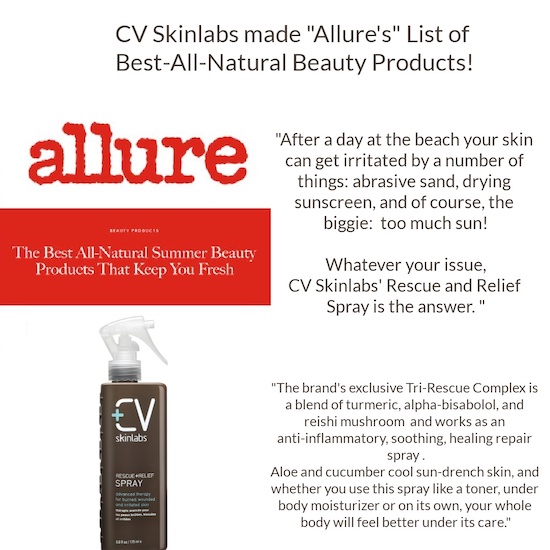
Even the best sunscreen can leave your skin a little dry or stressed by the end of the day. Sensitive skin types may experience skin reactions, irritation, dermatitis, redness and itching. Reach for Rescue + Relief Spray for instant relief from the chill after cleansing, then apply Calming Moisture for recovery.
3. Protect your dam.
Using our Body Repair Lotion in the evening gives your skin the soothing, restorative ingredients it needs to recover from daily sun exposure. Think of it as your sunscreen’s teammate.
4. Don’t skip the sunscreen on cloudy days.
UVA rays—the ones that vemotrizinol is especially good at blocking—don’t require sunny days. They come through the clouds and right through the car windows. Daily protection matters!
5. When the bemotrizinol products arrive, read the labels carefully.
Look for “broad spectrum” and SPF 30 or higher. Just because bemotrizinol is a safe sunscreen does not automatically make a product “clean” in the way we define it. Check the full ingredient list and look for products that use this new ingredient in neat, non-irritating formulations.
6. Use what works for your skin.
By the way, if your current mineral sunscreen is working for you, feel free to keep using it. If your skin does well with zinc oxide, you don’t need to switch to anything new. But if you wanted an alternative, we wanted to let you know what this new ingredient was.
Featured image by Mikhail Nilov via Pexels.