


Hyaluronic acid for skin hydration has become one of the biggest topics in skin care, and for good reason.
When your skin feels tight, dull, or just a little “blah,” moisturizing is usually one of the first things you think of.
Most of us turn to a cream, serum or mist, which makes sense because topical hydration helps. But that’s only part of the story.
The skin is affected not only by what we put on it externally, but also by what we feed it internally. What we eat, how much water we drink and how well the skin barrier works all play a role in how skin looks and feels.
So the question is: Can a “hyaluronic acid diet” really help your skin look and feel more hydrated?
The honest answer is probably, but not magically. Most foods do not contain large amounts of hyaluronic acid. Instead, the best goal is to eat in a way that supports hydrated, healthy skin from the inside, while using topical products that help lock in moisture on the outside.
What is hyaluronic acid for skin hydration?
You’ve probably seen hyaluronic acid on skin care labels. It sounds a little strong because of the word “acid,” but it’s not an exfoliating acid like glycolic or lactic acid. It’s actually a water-loving molecule that your body already makes on its own.
Hyaluronic acid, also called hyaluronic acid or HA, is a substance found naturally in the body. It is in the skin, eyes, joints and connective tissues. In the skin, it helps retain water and keeps the tissue feeling plump, supple and soft.
You can think of hyaluronic acid as a sponge-like molecule. Its main job is to bind with water and hold it. That’s why it appears in so many moisturizing products. It helps bring water to the outer layers of the skin so skin looks smoother and feels more comfortable.
The body produces hyaluronic acid itself through enzymes called hyaluronic synthases. These enzymes help create HA within your tissues. The body also breaks down HA and replaces it over time. This turnover is normal.
But age, UV exposure, pollution, inflammation and oxidative stress can all affect the balance of HA in the skin. Research describes HA as a key molecule involved in skin moisture and has shown that skin aging is associated with loss of skin moisture and changes in HA. A review 2025 He also noted that HA production gradually declines with age, which can contribute to drier, less elastic skin.
This is one reason why you may find it harder to keep your skin hydrated as you get older. The skin just needs more support than it used to.
How topical hyaluronic acid works to hydrate the skin
In skin care, hyaluronic acid is used as a humectant, which is an ingredient that helps attract and retain water. When applied to your skin, HA can help skin feel softer, smoother, and more hydrated.
A clinical study in a topical hyaluronic serum found that regular use resulted in better skin hydration and firmness. Another review of cosmetic products containing HA described topical HA as helpful in improving hydration and visible signs of skin aging, although results depended on the formulation.
A tip: hyaluronic acid works best when the skin already has moisture that HA can grab onto. That’s why we often recommend applying HA products to slightly damp skin, followed by a moisturizing sealing cream. Without this sealing step, especially in a dry climate, the skin may still feel thirsty later.
Can foods support hyaluronic acid for skin hydration?
You may have seen articles or videos about the “hyaluronic diet,” but it’s important to know exactly what we’re talking about.
The research on oral hyaluronic acid supplements is stronger than the research on ordinary foods. A 2023 systematic review and the meta-analysis found that oral YA significantly improved skin hydration after 2 to 8 weeks in both older and younger groups of people. Other clinical studies have also found that ingesting HA can improve dry skin, wrinkles, or skin moisture in some people.
But food is more difficult, as it contains many ingredients, not just one. Bone broth may contain hyaluronic acid because it is made from animal bones, joints, skin and connective tissue. But most plant foods don’t contain HA, exactly. They may provide nutrients or herbal compounds, however, that may support the skin’s own HA production. Some may also help protect HA from breakdown or support the barrier so the skin loses less of the water it has.
Food and Health Studies
For example, single cell study found that magnesium helped increase the expression of hyaluronic acid synthase enzymes in skin cells. This doesn’t prove that magnesium-rich foods will instantly plump your skin, but it does suggest that magnesium may be part of the story of supporting HA.
Vitamin C is another nutrient that supports the skin. It is best known for its contribution to collagen formation and antioxidant protection. A review of vitamin C and skin health notes that vitamin C supports skin barrier function and helps protect against oxidative stress, both of which are important for healthy-looking skin.
Soy is also interesting. A study found that soy isoflavones Genistein and daidzein stimulated hyaluronic acid production in cultured human skin and hairless mouse skin after topical application. This is not the same as saying that eating tofu will directly boost HA in human skin, but it does give us a scientific reason to include soy foods as part of a skin-supporting diet.

5 foods that support hyaluronic acid for skin hydration
1. Bone broth
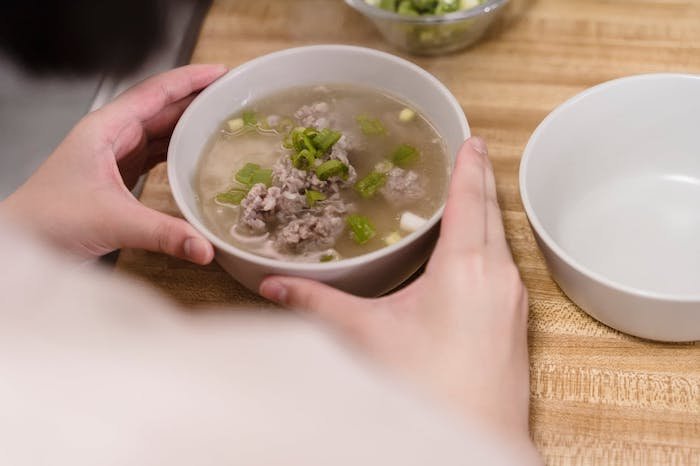
Bone broth is one of the few foods that is often discussed as a direct dietary source of hyaluronic acid because it is made from animal connective tissue. If you eat animal products, bone broth can be an easy way to add HA-related compounds, collagen, amino acids and minerals to your diet.
Use it as a soup base, drink it hot or cook rice or vegetables in it. Choose low-sodium options when possible.
2. Soy foods for hyaluronic acid for skin hydration
Soy foods such as tofu, tempeh, edamame, and soy milk contain isoflavones, including genistein and daizein. Early research suggests that these compounds may affect HA production in skin-related models, although we still need more human dietary studies.
A simple way to start: add edamame to a salad, use tofu in a stir-fry, or blend unsweetened soy milk into a smoothie.
A quick note: soy is not right for everyone. If you take thyroid medication, have a thyroid condition, have a history of hormone-sensitive cancer, or have been advised to limit soy, consult your doctor.
3. Citrus fruits
Oranges, grapefruit, lemons and limes bring vitamin C to the table. Vitamin C helps support collagen formation and protects the skin from oxidative stress, which can help the skin’s barrier retain moisture better.
Try citrus with breakfast, squeeze lemon over greens, or add orange slices to a spinach salad.
4. Foods rich in magnesium
As mentioned above, magnesium may also play a role in HA production. You can get more of this nutrient from pumpkin seeds, almonds, cashews, spinach, black beans and dark chocolate.
5. Animal foods rich in collagen
Fish with skin, chicken with skin, slow-cooked meats, and certain cuts of meat may also provide HA-related compounds as well as amino acids that support skin structure. If you eat meat, you may be getting some help from these foods, although it’s important to remember that the amount of HA can vary.
For those who don’t eat animal products, this is easy to skip. Focus instead on magnesium-rich foods, vitamin C foods, and barrier-supporting skin care.

Hyaluronic acid for skin hydration works best with a strong skin barrier
Eating foods that support healthy skin is one part of the hydration picture. The other helps your skin retain the moisture it already has.
That’s where your skin barrier comes in.
This is the outer layer of the skin. When strong, it helps keep moisture in and irritants out. When stressed or damaged, water can escape more easily through a process called transepidermal water loss, or TEWL. This can make the skin feel tight, dry, rough or more sensitive.
That’s why it’s important to apply the right products to your skin, even if you’re eating all the right foods.
CV Skinlabs products help support hydration and barrier strength, which can help your skin stay soft and calm. Rescue + Relief Spray is a great first step when skin feels hot, tight or tight. Glycerin helps attract water, while aloe, oats, beta-glucan and soothing botanicals help comfort sensitive skin.
Calming Moisture adds a richer layer of hydration with aloe, glycerin, squalane, jojoba oil and shea butter. These help soften and hydrate while supporting the feeling of a healthier barrier.
These products also contain beta-glucan, which is considered more hydrating and supports the skin barrier than hyaluronic acid. It penetrates deep into the skin locking in moisture and providing long-lasting hydration.
Restorative Skin Balm is the ‘seal it in’ step for very dry areas. It creates a soothing moisture-trapping barrier, which makes it especially useful for lips, hands, cuticles and dry patches that need extra protection.

The best hyaluronic acid design for skin hydration: inside and out
The best approach is to combine both your diet and your skin care routine for optimal hydration.
Eat foods that support healthy skin. Drink water. Protect your skin from too much sun and use gentle products that help hydrate and protect the skin’s outer barrier.
For sensitive skin, layer hydration in a simple way. Start with Rescue + Relief Spray when skin feels hot, pressured or tight. Follow with Calming Moisture to add light hydration. Use Restorative Skin Balm on dry patches, lips, hands or areas that need extra protection.
Food helps build the base. Local products help care for the surface. Together, they give your skin a better chance to stay calm, soft and comfortable.
What kind of foods do you like to eat for skin hydration?
Featured image by Annushka Ahuja via Pexels.
