


It’s a cool Tuesday night in Columbia, South Carolina, and fans of the Columbia Fireflies minor league baseball team are letting an opponent named Marcos Torres hear it.
“Mark!” a fan calls.
“Polo!” half a dozen fans respond, imitating the pool game.
The batter swings and misses. The cacophony begins again.
“Mark!”
“Polo!”
Baseball fans have developed a reputation for shouting obscenities in an attempt to rattle players. But there is a dark side to the fight, which worries me as a sports, media and mental health researcher: when fans cross the line from playful taunting to verbal abuse.
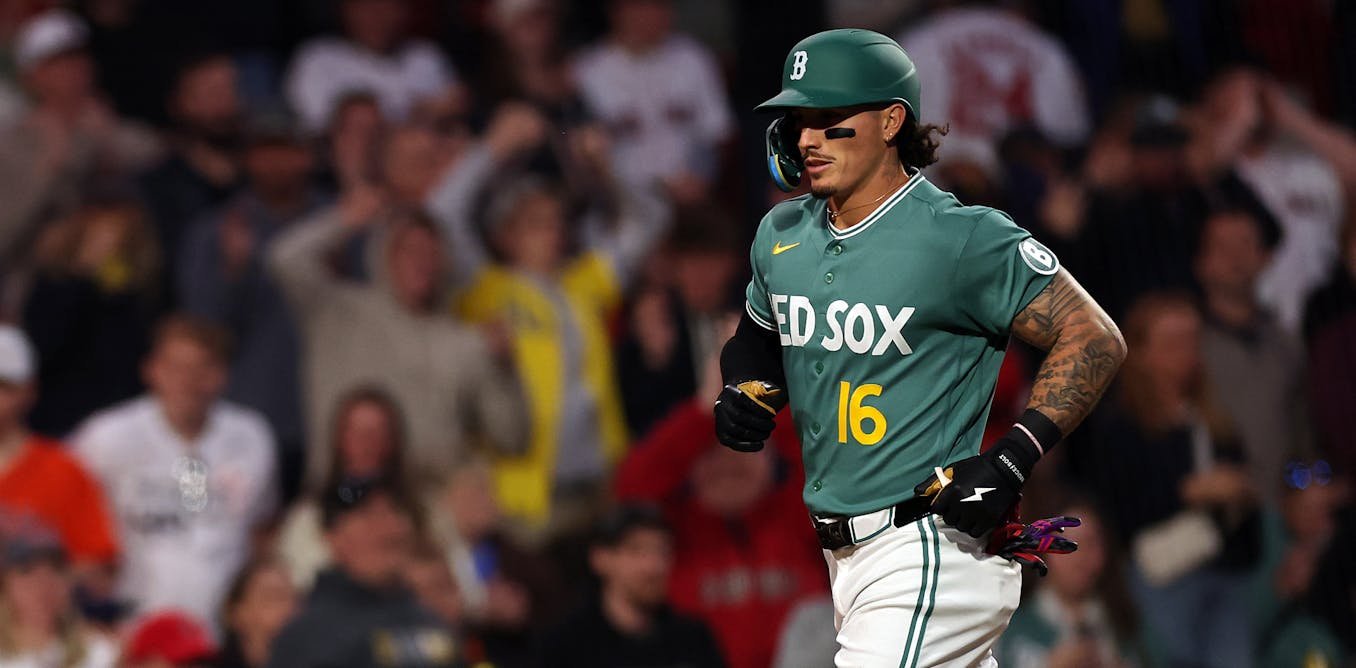
The last publicized incident occurred during a game between the Boston Red Sox and the Minnesota Twins on April 14, 2026. A fan in the stands at Target Field in Minneapolis allegedly told Red Sox outfielder Jarren Duran to kill himself. Duran responded by giving him the finger.
It was at least the second time one fan has used Duran’s mental health as verbal ammunition since the release of the Netflix documentary in 2025, “The Clubhouse: A Year with the Red Sox,” in which Duran described the suicide attempt.
After the game, Duran told reporters, “Honestly, it’s my fault for talking about my mental health, because I kind of brought on the haters.”
American society holds elite athletes in high esteem. they are uniquely trusted and admired. That’s why they appear as spokespeople for everything from car insurance to foot powder. And that’s why so many children they see athletes as role models.
So when someone like Duran is harassed after disclosing a mental illness—and then expresses regret for opening up—an impressionable viewer might decide that talking about his mental health struggles isn’t worth the risk.
Most fans respond positively
Elite sports can be a cauldron of stress. In addition to the pressure to perform, there are the demands of travel, training and relationship management. In this dire environment, your replacement is often waiting for you to stumble. So it’s no wonder that athletes have long felt compelled to hide any signs of perceived weakness or vulnerability, including mental health.
However, standards are changing in sports, perhaps in part because of the changes public attitudes about mental illness. Social media has also given athletes a direct connection with fans, allowing for greater insight into the human behind the hero.
Duran is part of a growing group of athletes who have recently shared their experiences with mental illness to raise awareness and challenge stigma. Since its launch in 2014, The Players’ Tribune has published more than two dozen athletes essays on mental health, including testimonials from NBA player John Wall and WNBA star A’ja Wilson.
Joe Buglewicz/Getty Images
My colleagues and I have studied these revelationspublic response to them and their social impact. We used surveys, experiments and interviews with athletes who have become mental health advocates, such as 23-time Olympic gold medalist Michael Phelps.
The growing number of athlete testimonials coincides with changes in the way professional sports leagues and teams address mental health. Organizations are hiring mental health professionals and advocating on his behalf causes related to mental health in their communities. In a recent analysis, we found that NFL, MLB, and NBA teams made 258 social media posts between 2021 and 2025 that advocated for mental health funding, education, and policy. Every year, the number of posts increased.
When combined with other findings we published in 2020our research suggests that sports fans value athlete testimonials and team-oriented conversations. Their response was overwhelmingly positive. Athletes appear to inspire fans to open up to family, seek therapy and take other steps to enhance their well-being.
Vulnerability comes with risks
However, Duran’s recent experience shows how a minority of fans and sports commentators can threaten that progress.
After the recent incident in Minneapolis, the sports and opinion OutKick described Duran’s behavior as an “act” that “wore thin”. The reaction reminded me of the criticism NBA star Ben Simmons received a few years ago. In 2021, Simmons sat out the season with the Philadelphia 76ers, citing mental health issues. A year later, he returned to play for the Brooklyn Nets. Cynics accused him of “weaponizing mental health” to avoid playing for the 76ers.
Sports fans have targeted other athletes’ mental health issues.
During the 2019 MLB Playoffs, New York Yankees fans caught on on camera mocking Houston Astros pitcher Zack Greinke for taking medication for his social anxiety as Greinke warmed up. Simone Biles, one of the greatest gymnasts of all time, withdrew from competition during the Tokyo Olympics after experiencing “strains”, which The Cleveland Clinic describes as a “dangerous mind-body disconnect” caused by stress and other factors. Some critics showed little sympathy, describing her as resigned.
Prepare for the aftermath
In addition to being exposed to barbs and verbal abuse, athletes who speak out about their mental health can also be expected to take on responsibilities they didn’t necessarily sign up for.
Disclosing a mental health struggle can shift an athlete’s reputation from athlete to advocate. For example, social media users debated whether Duran he owed it to the fans to share his steps towards recovery. Doing so would provide others with guidance while lending legitimacy to Duran’s experience, one side said. None of our business, replied the other side.
The mental illness label can also color people’s judgment of an athlete’s performance. Does throwing a helmet after a strike reflect his mental illness or a brief moment of frustration? Does this recession mean another depression is coming?
Athletes also worry about being judged by teammates and coaches. In 2023, the The NCAA was investigated more than 2,000 college athletes and found that only half would be comfortable seeking help for mental health struggles through campus resources. In addition, only about half believed that teammates took their teammates’ mental health seriously, and about half felt comfortable talking to coaches about their mental health.
For athletes – or anyone – interested in uncovering mental health struggles, a good game plan can help accentuate the positive responses and mitigate the negative ones.
THE National Alliance on Mental Illness recommends that people – whether they’re famous or not – consider the audience, timing and amount of information they’re comfortable sharing. In the meantime, fans, coaches and teammates can do their part by publicly supporting athletes who disclose.
When Duran first shared his experiences in 2025, his manager at the time, Alex Cora, immediately signaled his support.
“It takes a person with courage and openness and genuineness to do that” Cora said. “I hope that’s how we see it – that it will impact others and save lives.”
With stigma, the battle between silence and dialogue can be a back-and-forth contest, similar to a long rally in tennis or a tense overtime in basketball. But sometimes all it takes is one defining moment to change the game – like when Marcos Torres broke a line drive to calm his fans that chilly night in Columbia, South Carolina.
