

Close Menu
Healthtost
  • News
  • Mental Health
  • Men’s Health
  • Women’s Health
  • Skin Care
  • Sexual Health
  • Pregnancy
  • Nutrition
  • Fitness
  • Recommended Essentials
What's Hot

Women who sleep less may experience more irregular menstrual cycles

May 27, 2026

7 Ways Your Mattress Affects Your Sex Life Sex with Emily

May 27, 2026

New study tests vitamin D analog against pancreatic cancer

May 26, 2026
Facebook X (Twitter) Instagram
  • About Us
  • Contact Us
  • Privacy Policy
  • Terms and Conditions
  • Disclaimer
Facebook X (Twitter) Instagram
Healthtost
SUBSCRIBE
  • News

    Women who sleep less may experience more irregular menstrual cycles

    May 27, 2026

    New study tests vitamin D analog against pancreatic cancer

    May 26, 2026

    How smart cities can protect outdoor recreation in a warming world

    May 26, 2026

    Roswell Park scientists present five key cancer studies at clinical meeting

    May 25, 2026

    New AI model detects hidden antibiotic resistance genes beyond standard databases

    May 25, 2026
  • Mental Health

    Healing is where change begins. Habits are…

    May 24, 2026

    The Antidepressant Myth RFK Jr. he wants you to believe

    May 20, 2026

    Are you caught in the cycle of chronic pain? How does Thera…

    May 15, 2026

    Why Menopause Matters in Substance Use Disorder Prevention, Treatment, and Recovery

    May 14, 2026

    because you might be right to leave a party without saying goodbye

    May 14, 2026
  • Men’s Health

    Why Kenya, Ethiopia, Japan and the US stand out in global distance running

    May 26, 2026

    ‘Vas Madness’ shows the power of messaging in men’s contraceptive decisions

    May 26, 2026

    Why men’s mental, emotional and relational health is essential now more than ever

    May 25, 2026

    30 minute bodyweight workout routine for beginners

    May 21, 2026

    Fewer sessions of radiation therapy for prostate cancer have few side effects

    May 19, 2026
  • Women’s Health

    The truth about fasted training for women

    May 26, 2026

    Voting rights are under attack

    May 26, 2026

    “Is exercise medicine?” – Exercise through a cancer diagnosis

    May 25, 2026

    The MIND Diet: A Brain-Health Approach

    May 23, 2026

    6 Major Health Benefits of Beetroot Juice

    May 22, 2026
  • Skin Care

    Spa success starts with Smart Marketing: Know Your Customer

    May 26, 2026

    Is the UltraClear laser resurfacing for you?-SkinCare Physicians

    May 23, 2026

    Ceramides for Skin Barrier: What they are and why your skin needs them

    May 22, 2026

    10 myths about sun care that are damaging your skin

    May 21, 2026

    Non-food Skin Care: What Really Clogs Pores?

    May 18, 2026
  • Sexual Health

    7 Ways Your Mattress Affects Your Sex Life Sex with Emily

    May 27, 2026

    Fildena 50 User Experience and Benefits Review

    May 25, 2026

    PROGRESS OF CREATING EVIDENCE-BASED KNOWLEDGE LOCALLY < SRHM

    May 24, 2026

    Can gonorrhea turn into HIV?

    May 23, 2026

    The new wave of smart sex toys and why sex professionals should care — Sexual Health Alliance

    May 22, 2026
  • Pregnancy

    Does creatine cause hair loss in women? – Pink Stork

    May 24, 2026

    Supporting Women through the Sacred Transitions of Life

    May 22, 2026

    39 gender reveal quotes for the perfect Instagram caption

    May 20, 2026

    Prevention of Hyperemesis Gravidarum (HG) and First Home Birth, Fourth Baby

    May 19, 2026

    Stretchy Wraps Are Magic For Newborns (Until They’re Not)

    May 19, 2026
  • Nutrition

    Does your appetite change in the summer?

    May 25, 2026

    Why I Don’t Count Macros • Kath Eats

    May 24, 2026

    Does less protein increase FGF21 for longevity?

    May 23, 2026

    How to eat to feel grounded

    May 23, 2026

    Dietitian’s Guide to Energy, Gut, Hormones

    May 22, 2026
  • Fitness

    From Social Work to Health Coaching: A Story of AFPA Graduates

    May 26, 2026

    What is Locus of Control? Empowering Customers

    May 24, 2026

    Russell Dickerson Reveals Exact Training Plan That Keeps Him Shredded on Tour

    May 24, 2026

    You walk. This is great. Here’s what you’re still missing.

    May 23, 2026

    Clothes from the last time – The Fitnessista

    May 21, 2026
  • Recommended Essentials
Healthtost
Home»News»Women who sleep less may experience more irregular menstrual cycles
News

Women who sleep less may experience more irregular menstrual cycles

healthtostBy healthtostMay 27, 2026No Comments5 Mins Read
Facebook Twitter Pinterest LinkedIn Tumblr Reddit WhatsApp Email
Women Who Sleep Less May Experience More Irregular Menstrual Cycles
Share
Facebook Twitter LinkedIn Pinterest WhatsApp Email

By tracking 42,759 menstrual cycles with wearable devices, researchers revealed how sleep patterns, age and physiology interact, revealing that even modest sleep disturbances can be linked to measurable changes in menstrual health.

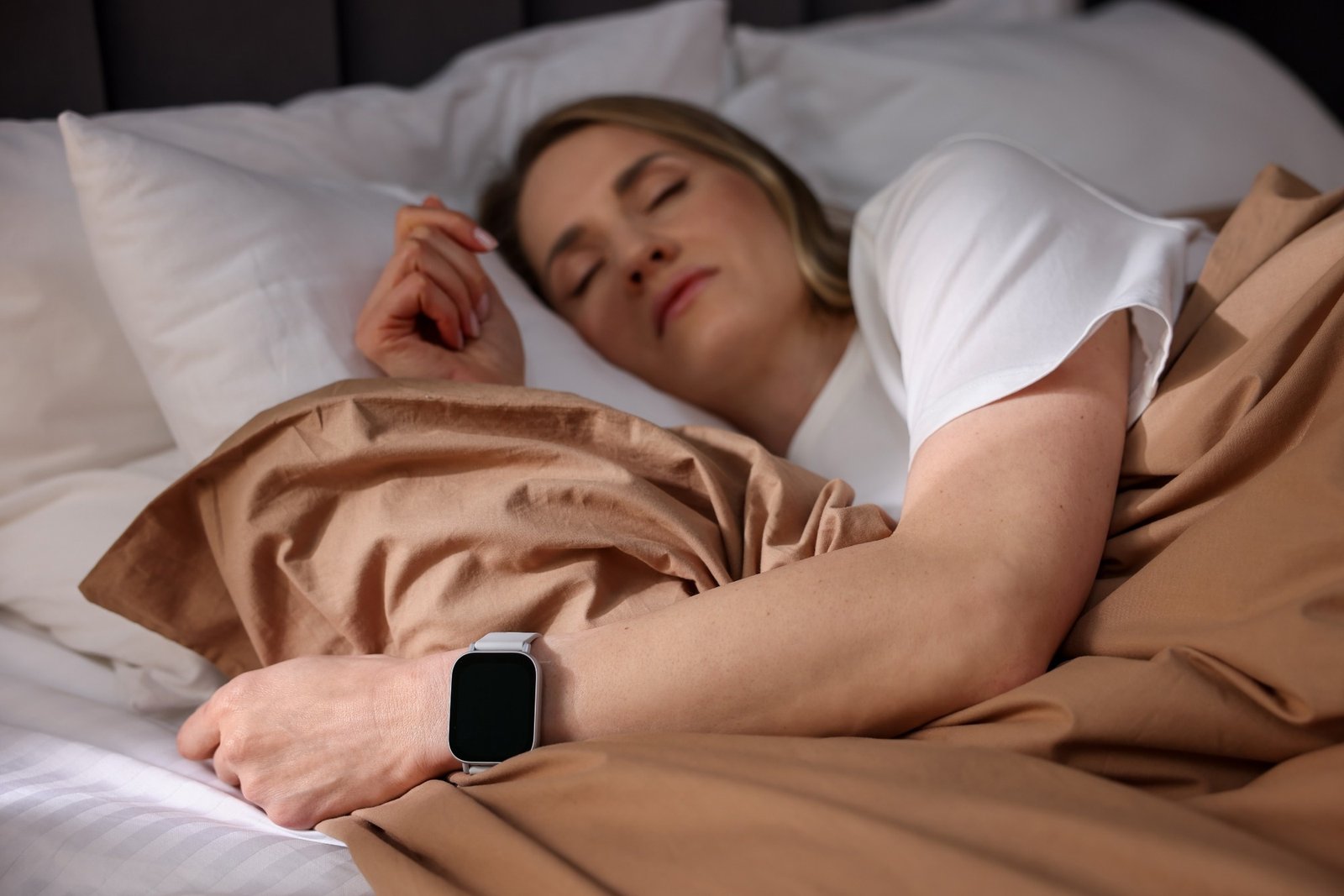
Study: The menstrual cycle through the lens of a wearable device: insights into physiology, sleep and cycle variability. Image credit: New Africa/Shutterstock.com

A recent one NPJ Digital Medicine The study explored how wearable device data can reveal relationships between menstrual cycle phases, sleep patterns and physiological variability in women.

Current understanding and unresolved questions in the physiology of the menstrual cycle

The menstrual cycle involves repeated hormonal, metabolic, and behavioral fluctuations in individuals of reproductive age. Cycle length and variability are key indicators of women’s health, with increased variability and irregularity associated with negative menstrual symptoms and greater risk for long-term conditions such as cancer, diabetes, cardiovascular disease, fractures and premature mortality. In addition, decreased motivation to exercise, increased negative mood, and decreased sleep quality are often reported before or during menstruation.

Measures of physiological state, sleep and performance are known to fluctuate during the menstrual cycle. Digital tools and wearable devices have facilitated large-scale monitoring of menstruation, physiological biometrics, and behaviors such as sleep and physical activity. Biometrics such as skin temperature and resting heart rate show systematic variation throughout the cycle and are affected by age and reproductive status.

Despite these advances, significant research gaps remain. Most studies lack daily analysis biometric data for different ages and cycle lengths, limiting understanding of individual variability. The relationship between behavioral factors, particularly sleep duration, and menstrual cycle characteristics remains poorly defined, especially in real-world settings. These gaps highlight the need for comprehensive, longitudinal research to clarify how behaviors and physiological patterns interact during the menstrual cycle.

Assessing the effects of the menstrual cycle on physiological biometrics and sleep patterns

The current study analyzed data from regular users of WHOOP devices. The devices collected nighttime biometric data, including resting heart rate, respiratory rate, heart rate variability (HRV), skin temperature, and blood oxygen saturation levels, as well as sleep and exercise metrics.

Inclusion criteria required consistent device wear and regular cycles (mean duration 21–35 days). women using hormonal contraceptives, pregnant or with menopausal symptoms were excluded. The final cohort included 2,596 participants, 42,759 cycles, and over 1.29 million days of data. The authors noted that the cohort likely represented individuals who were more active and health conscious than the general population and may not fully reflect broader demographic groups.

Daily time series incorporate menstrual, behavioral, and physiological data, with cycles divided into premenstrual, menstrual, postmenstrual, and other phases. Sleep and exercise measurements were summarized for each day. Some biometric data was unavailable for some participants due to device upgrades.

Biometric time series are interpolated, filtered, and normalized to allow intersubject comparisons. Missing data ≤7 days are linearly interpolated. Larger gaps were filled with the participant’s average for that measurement.

Cycle length was defined as the interval between cycle onsets, with deviations classified as cycles differing by ±3 days from the participant’s median cycle length. Variability of sleep duration was assessed as variance within each cycle. Generalized Estimating Equations (GEE) were used for inference, with cycles as the unit of analysis and covariates including measures of age, BMI, seasonality, sleep and training. Behavioral changes were identified based on consistent sleep averages over three weeks.

Biometric modeling used Generalized Additive Models (GAMs) to disentangle the effects of age and cycle length, with covariates for sleep, exercise, BMI, seasonality, and weekend effects. Temporal relationships between biometrics were investigated using Vector Autoregression (VAR).

The stability of the menstrual cycle is affected by sleep and physiological fluctuations

The mean length of the menstrual cycle was 28.4 days, decreasing from 29.1 days at age 24 to 26.9 days at age 44. Cycle length variability followed a U-shaped pattern, with the smallest variability near age 33.

Shorter and more inconsistent sleep was strongly associated with greater menstrual cycle variability, while mean cycle length remained largely unchanged. Sleeping less than 7.3 hours or irregular sleep was associated with greater cycle irregularity, suggesting a possible role for regular sleep in menstrual cycle stability. A within-participant analysis of 813 subjects confirmed that greater sleep variability within an individual was associated with more variable cycle length.

High-resolution biometric data revealed clear physiological rhythms throughout the menstrual cycle. Most biometrics decreased during menstruation and peaked before the next cycle, except HRV, which showed the opposite pattern. Resting heart rate, HRV and respiratory rate were closely related throughout the cycle.

With age, variations in HRV and resting heart rate decreased, while changes in other biometrics were small. Bigger circles were associated with a greater range of cardiorespiratory biometrics. Blood oxygen saturation showed little circularity. Thus, age and cycle length are key in shaping menstrual physiology.

Population-level biometrics captured the main trends, but individual cycles showed much greater variability. HRV, for example, often fluctuated by nearly half of a participant’s average value in a single cycle. This highlights a substantial within-individual variation beyond population averages.

Although population waveforms are stable, individual cycles reveal considerable variability. Less sleep, especially during the premenstrual week, was associated with increased resting heart rate, decreased HRV, and changes in other physiological measures. This pattern was similar across menstrual phases, highlighting that sleep loss was consistently associated with physiological changes throughout the cycle.

conclusions

This study shows that regular, adequate sleep is closely linked to the stability of the menstrual cycle, with age and cycle length also playing an important role in shaping normal rhythms. Significant individual variability in biometric patterns underscores the need for individualized approaches to menstrual health. Future research should elucidate the mechanisms underlying these associations and assess whether interventions that promote sleep regularity could help improve cycle stability and overall well-being.

Journal Reference:

  • Gonzalez, AJJ et al. (2026). The menstrual cycle through the lens of a wearable device: Insights into physiology, sleep, and cycle variability. Npj Digital Medicine. DOI:

cycles Experience irregular Menstrual Sleep women
bhanuprakash.cg
healthtost
  • Website

Related Posts

New study tests vitamin D analog against pancreatic cancer

May 26, 2026

The truth about fasted training for women

May 26, 2026

How smart cities can protect outdoor recreation in a warming world

May 26, 2026

Leave A Reply Cancel Reply

Don't Miss
News

Women who sleep less may experience more irregular menstrual cycles

By healthtostMay 27, 20260

By tracking 42,759 menstrual cycles with wearable devices, researchers revealed how sleep patterns, age and…

7 Ways Your Mattress Affects Your Sex Life Sex with Emily

May 27, 2026

New study tests vitamin D analog against pancreatic cancer

May 26, 2026

Why Kenya, Ethiopia, Japan and the US stand out in global distance running

May 26, 2026
Stay In Touch
  • Facebook
  • Twitter
  • Pinterest
  • Instagram
  • YouTube
  • Vimeo
TAGS
Baby benefits body brain cancer care Day Diet disease exercise finds Fitness food Guide health healthy heart Improve Life Loss Men mental Natural Nutrition Patients Pregnancy protein research reveals risk routine sex sexual Skin Skincare study Therapy Tips Top Training Treatment ways weight women Workout
About Us
About Us

Welcome to HealthTost, your trusted source for breaking health news, expert insights, and wellness inspiration. At HealthTost, we are committed to delivering accurate, timely, and empowering information to help you make informed decisions about your health and well-being.

Latest Articles

Women who sleep less may experience more irregular menstrual cycles

May 27, 2026

7 Ways Your Mattress Affects Your Sex Life Sex with Emily

May 27, 2026

New study tests vitamin D analog against pancreatic cancer

May 26, 2026
New Comments
    Facebook X (Twitter) Instagram Pinterest
    • About Us
    • Contact Us
    • Privacy Policy
    • Terms and Conditions
    • Disclaimer
    © 2026 HealthTost. All Rights Reserved.

    Type above and press Enter to search. Press Esc to cancel.