


Strength training over 50 is one of the most powerful ways to improve your quality of life, maintain your independence and boost your overall health. A well designed dumbbell strength training program for the over 50’s it’s highly effective because it’s accessible, joint-friendly, and highly adaptable for all fitness levels. Whether you’re just starting out or returning to fitness after years away, dumbbells provide a safe and effective way to build muscle, improve balance and enhance mobility.
This comprehensive guide will walk you through everything you need to know to create and follow a dumbbell strength training program for the over 50s, including benefits, workout structure, weekly schedules and expert advice to maximize results while minimizing the risk of injury.
Why The Strength Training Program Matters After 50
As we age, the body naturally experiences changes such as muscle loss (sarcopenia), decreased bone density and a slower metabolism. Strength training directly combats these effects by preserving lean muscle mass, improving bone health, and boosting metabolic function.
Key Benefits of Dumbbell Training Over 50
- Maintains muscle mass: Helps prevent age-related muscle loss
- Improves bone density: It reduces the risk of osteoporosis
- Enhances joint stability: It supports the knees, hips and shoulders
- Boosts metabolism: Helps maintain a healthy weight
- Improves balance and coordination: Reduces the risk of falling
- Supports functional endurance: Makes everyday tasks easier
Dumbbells are particularly beneficial because they allow for natural movement patterns, helping to reduce joint stress compared to machines or barbells.
Getting started: Safety first
Before beginning any strength training program, it is important to focus on safety and proper preparation.
Basic guidelines
- Consult a healthcare provider if you have pre-existing conditions
- Start with light weights and focus on form
- Warming up before every workout
- Allow adequate rest between sessions
- Listen to your body and avoid pushing through the pain
The best dumbbell exercises for over 50
A well-rounded program should target all major muscle groups while emphasizing functional movements.
Upper body exercises
- Dumbbell chest press
- Seated shoulder press
- Dumbbell biceps curl
- Overhead Tricep Extension
Lower body exercises
- Squat Cup
- Romanian Deadlift
- Step-Ups
- Dumbbell Lunges
Core & stability exercises
- Russian Dumbbell Twists
- Hold plank
- Side Bends
- Farmer’s Carry
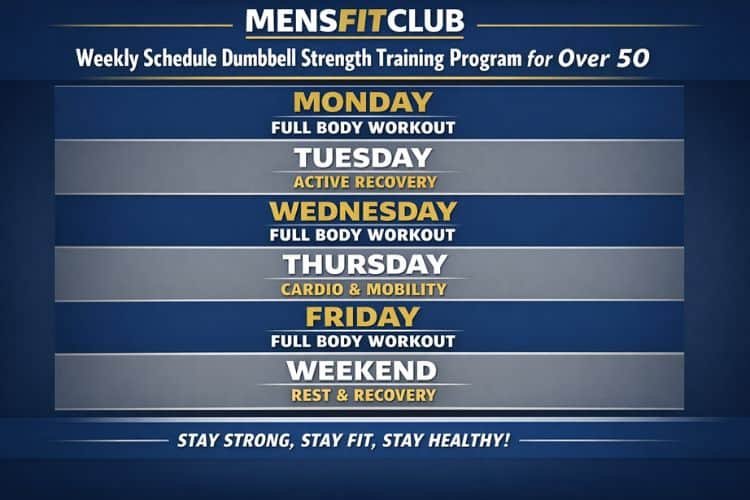
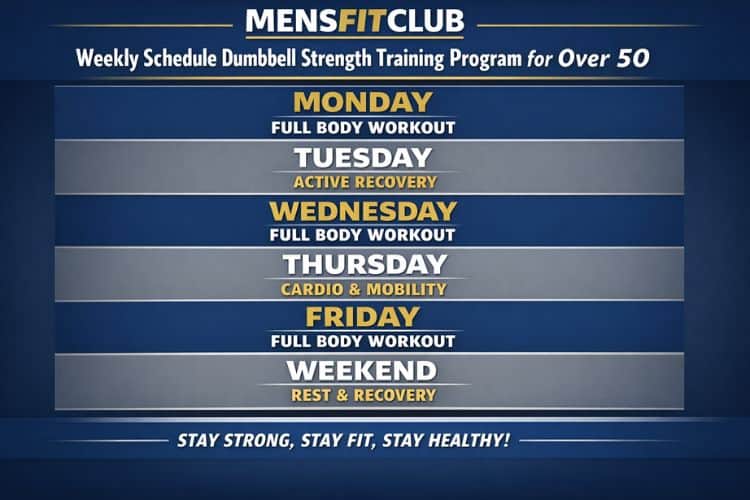
Weekly dumbbell strength training program for over 50
This beginner to intermediate program is designed for 3-4 days a weekallowing recovery time while promoting strength gains.
Training structure
- Warm-up: 5–10 minutes (light cardio + mobility)
- Main training: 30–40 minutes
- Cool: Stretching and breathing
Three-Day Full Body Dumbbell Program
Day 1: Full body strength
- Goblet Squats – 3 sets of 10–12 reps
- Dumbbell Chest Press – 3 sets of 10–12 reps
- Bent-Over Rows – 3 sets of 10 reps
- Shoulder Press – 2–3 sets of 10 reps
- Plank Hold – 3 sets of 20–30 seconds
2: Active recovery or light cardio
- Walk, bike or swim for 20–30 minutes
- Light stretching or yoga
3: Strength and stability
- Romanian Deadlifts – 3 sets of 10 reps
- Step-Ups – 3 sets of 10 reps per leg
- Dumbbell Bicep Curls – 3 sets of 12 reps
- Tricep Extensions – 3 sets of 12 reps
- Farmer’s Carry – 3 rounds of 30 seconds
4: Rest or mobility work
5: Full body circuit
- Dumbbell Lunges – 10 reps per leg
- Chest press – 10 reps
- Rows – 10 repetitions
- Shoulder press – 10 repetitions
- Russian Twists – 15 reps
Repeat the circuit 2-3 times with rest between rounds.
Progress Strategy
Safe progress is the key to long-term success.
How to proceed
- Increase the weight gradually when the repetitions are easy
- Add an additional set after 2-3 weeks
- Improve tempo (slower, controlled movements)
- Increase training frequency if recovery allows
Routine strength training Over 50 programs Mistakes to avoid
- Using too much weight too soon
- Neglecting warm-up and mobility
- Poor form and technique
- Skipping rest days
- Ignoring pain signals
Consistency and proper technique will always beat lifting weights with poor form.
Program Nutrition Tips for Strength Training Over 50
Nutrition plays a vital role in muscle recovery and growth.
Basic Dietary Guidelines
- Protein intake: Aim for lean protein sources (chicken, fish, eggs, legumes)
- Hydration: Drink plenty of water
- Healthy Fat: Support joint and hormone health
- Complex carbohydrates: Give energy for workouts
- Micronutrients: Focus on calcium, vitamin D and magnesium
Over 50 Recovery and Mobility Strength Training Program
Recovery becomes even more important with age.
Best practice recovery program for strength training over 50
- Stretching after training
- Sleep 7-8 hours
- Use foam roller or massage
- Incorporate mobility exercises
- Take rest days seriously
Sample 4 Week Over 50 Progress Strength Training
Week 1–2
- Focus on the right learning
- Use light weights
- Perform 2-3 sets per exercise
Week 3-4
- Increase the weight slightly
- Add another set
- Improve volume and control
Strength Training Program Over 50 Mental Benefits
Strength training doesn’t just improve your body – it strengthens your mind.
- It boosts self-confidence
- It reduces stress and anxiety
- Improves cognitive function
- Improves overall mood
Insider’s guide to continued fitness success
To continue building strength and improving your fitness journey, explore more expert guides at MensFitClub.com:
These resources will help you stay consistent, motivated, and progress toward your fitness goals.
Build Strength for Life
A dumbbell strength training program for over 50 is one of the smartest investments you can make in your health. It’s not about lifting the heaviest weights – it’s about consistency, proper form and gradual progression. With the right approach, you can gain strength, improve mobility, and enjoy a healthier, more active lifestyle well into your later years.
Start where you are, stay consistent and focus on progress – not perfection. Your future self will thank you.
