


Laboratory First Skincare
With Wendy Ouriel, MS Skin science Barrier function
- The effectiveness of retinol depends on controlled oxidation and a supportive pH environment.1
- Stacking retinol with oxidants (eg, some forms of vitamin C), low pH acids, or strong moisturizers without lipid support can increase the risk of irritation and TEWL.2, 3
- A pace of stimulation and recovery, with first barrier care, yields more consistent results in the long run.4
Over the past decade, retinol has become the anchor of many antiaging routines. I found in my research that one of the most questionable items is how to layer retinol, with many websites dedicated to promising to teach the *correct* way to layer retinol with vitamin C, hyaluronic acid, niacinamide, and exfoliating acids. However, I have found that irritation and chronic sensitivity have never been more common. From a biological point of view, this paradox makes sense.
Retinol chemistry: why context matters
Retinol is an unstable molecule that undergoes controlled oxidation to form retinaldehyde and then retinoic acid. Each step takes place within a narrow redox and pH window.1 Ingredients such as ascorbic acid (Vitamin C) can alter the redox balance and antagonize the retinol activation pathway. Strong acids can lower the pH enough to destabilize the retinol on the surface, increasing irritation without improving the downstream signal.2
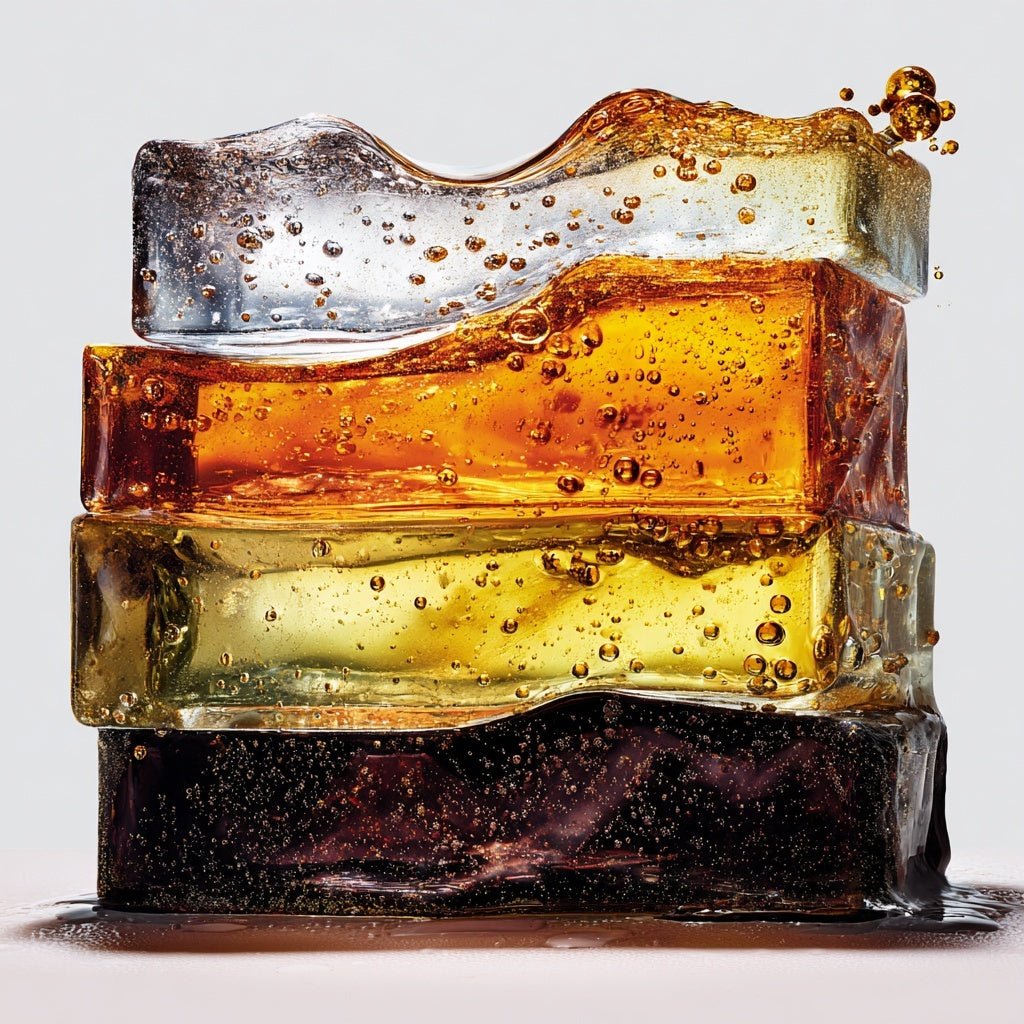
In short, combining multiple powerful active ingredients in a few minutes: often called “layering”, does not lead to more beautiful or younger looking skin. Biology rewards homeostasis, not sheer number of inputs. In this case: more products do not make better skin.
The hydration paradox
Hyaluronic acid is often combined with retinol to counteract dryness. As a humectant, HA attracts water to itself. In the case of skin care, this means that hyaluronic acid will draw water from the nearest source, which is the skin it sits on, increasing transepidermal water loss (TEWL).
TEWL is more pronounced when the skin has thinned, which happens when retinols are used because the stratum corneum thins from excessive cell turnover.3 Practically, this is the biological equivalent of removing the insulation while the heat rises.
For a primer on barrier terminology and routine design, see the Skin and Research Library Guides.
The dam as a living system
The stratum corneum is not a static wall. is a dynamic interface. It senses mechanical and chemical stress and translates these inputs to repair the responses below. Repeated challenge from oxidants, high pH products, scrubs, etc., can maintain low-level inflammation and keep the system in permanent “repair mode,” diverting resources away from collagen homeostasis and normal differentiation.4
Takeaway: Longevity in skin health is not achieved by maximum stimulation, but by regular sustained recovery.
Field observation: UMERE customer case study observational data
In our lab practice, a notable subset of new clients arrived with reactive, sensitized skin after prolonged use of multi-active routines centered around retinol, vitamin C, and hyaluronic acid. During a six-month observation period, participants discontinued these active substances and adopted a minimal OUMERE regimen based on barrier care: lipid restoration, gentle turnover, and comfort-focused support.
- 0-8 weeks: Most reported reductions in persistent redness, tightness and stinging after cleansing.
- ~12–16 weeks: Visible uniformity improved. TEWL trends (via routine keratometer use) were normalized to healthy ranges.
- ~24 weeks: Self-reported frequency of irritation remained low while texture and comfort stabilized.
These observations suggest that the primary improvement came from removing competitive stimuli and restoring lipid architecture—not from adding more active substances. For readers interested in routine design, see non-retinoid, first hurdle examples: Oil Dissolution Theory (cleansing without stripping), No. 9 (controlled PHA turnover), UV-R (anti-redness and support), Serum Bioluminescence (lipid balancing).
Note: Observational data are descriptive. They are consistent with the principles of the barrier and inform OUMERE’s product philosophy.
The myth of “more efficient” layering
Claims that stacking retinol with acids and antioxidants “boost” results assume a linear, additive model of biology. In practice, signaling has ceilings. After a certain point, additional stimulation leads to reduced yields or cellular fatigue. The routine that appears more sophisticated on paper may impose the highest biological cost in vivo.
A controlled approach (practical model)
- Isolate the variable. If you must use retinol, use it short-term for acne and by itself at night, without competing products.
- Protect the dam. Follow with lipid-rich conditioners to support leaf organization and limit TEWL. See: Serum Bioluminelle.
- Distinct redox events. If you use other actives in your skin care, save it for the morning cycle where photo-driven oxidation makes antioxidant support reasonable.
- Prefer pace over stacking. Think in cycles: stimulation followed by recovery: instead of all active in one session. For a gentler route, consider controlled PHAs like No. 9.
Closing thoughts
Retinoids remain valuable in cosmetic science, but context governs results. Their indiscriminate combination with oxidants, low-pH acids, or non-buffering humectants can enhance reactivity and discomfort over time. The limitation here is not opposition. it is respect for the system. In our opinion, the most effective routine is the one that gives a clear signal and allows the skin to fully respond before the next instruction.
It is best to use retinols only for short-term acne treatment and gradual long-term barrier-respecting skin care.
Educational note: Cosmetic information only. not medical advice. For prescriptions, pregnancy or active skin disease, consult your clinician.
Works Cited (selected)
- Kligman AM, Grove GL, Hirose R, Leyden JJ. Topical tretinoin for photoaged skin. J Am Acad Dermatol. 1986;15(4 Pt 2):836–859.
- Baumann L. Skin aging and its treatment. J Pathol. 2007? 211 (2): 241–251.
- Farage MA, Miller KW, Elsner P, Maibach HI. Intrinsic and extrinsic factors in skin aging: a review. Int J Cosmet Sci. 2008? 30 (2): 87–95.
- Rawlings AV, Harding CR. Skin moisturizing and barrier function. In: Cosmetic and Dermatology Problems and Solutions. (Review of chapter widely cited in cosmetic science for hygroscopic/lipid roles).
- Discussions of photostability and surface oxidation appear throughout the cosmetic photobiology literature. Professionals combine retinoids with strict photoprotection even under judicious use.
