

Close Menu
Healthtost
  • News
  • Mental Health
  • Men’s Health
  • Women’s Health
  • Skin Care
  • Sexual Health
  • Pregnancy
  • Nutrition
  • Fitness
  • Recommended Essentials
What's Hot

5-ingredient skillet dinner recipe

February 26, 2026

Inside the OPEX Method Week 5: Anaerobic training, “pain” and when it really makes sense

February 26, 2026

New Mandarin cognitive tests improve dementia diagnosis in Chinese elderly

February 26, 2026
Facebook X (Twitter) Instagram
  • About Us
  • Contact Us
  • Privacy Policy
  • Terms and Conditions
  • Disclaimer
Facebook X (Twitter) Instagram
Healthtost
SUBSCRIBE
  • News

    New Mandarin cognitive tests improve dementia diagnosis in Chinese elderly

    February 26, 2026

    Identification of the key catalyst for muscle energy production

    February 26, 2026

    Superagers show greater neuron growth linked to strong memory

    February 25, 2026

    SolasCure completes Phase II clinical trial, demonstrating accelerated healing with Aurase Wound Gel

    February 25, 2026

    ChatGPT Health fails critical emergency and suicide safety tests

    February 24, 2026
  • Mental Health

    Self-Care Guided Journal For Moms

    February 26, 2026

    Forgiveness isn’t always easy, but studies show it can help you flourish

    February 24, 2026

    50 Inspirational Ways to Navigate Your Life by Susie Hall

    February 22, 2026

    What is medication therapy?

    February 17, 2026

    Why do I have “butterflies in my stomach”?

    February 15, 2026
  • Men’s Health

    40 Minute Lower Body Workout: A leg muscle building session

    February 26, 2026

    Colonoscopy and FIT at age 60 catch colon cancer earlier

    February 24, 2026

    The risk of death due to pregnancy is greatly underestimated

    February 24, 2026

    Can mobile apps change the way we eat?

    February 18, 2026

    Tiny particles, big impact: Toward less invasive brain stimulation

    February 18, 2026
  • Women’s Health

    The connection between mental health and heart health

    February 25, 2026

    Which SPF 50 formula is for you?

    February 23, 2026

    Take the step to enhance your recovery with contrast therapy

    February 22, 2026

    Who can be called a “professional”? Student Loan Policy and the Future of Black Women in Nursing

    February 21, 2026

    Don’t Get Caught in a ‘Web’ of Misinformation – Dos and Don’ts of Doing Your Diagnostic Research Online

    February 21, 2026
  • Skin Care

    The Pharmacist’s Guide to Reversing Cellular

    February 26, 2026

    Sudoku skin care device ⭐️

    February 26, 2026

    Exosome Facelift Facial in NYC: The Advanced Skin Renewal Treatment at

    February 24, 2026

    Say goodbye to Frizz with Banana & Repair Ran – The Natural Wash

    February 23, 2026

    Tropic Ambassadors | Susie Ma

    February 23, 2026
  • Sexual Health

    New type of Mpox diagnosed in England

    February 25, 2026

    Jesse Jackson opened the doors for black women in politics

    February 22, 2026

    Female Genital Mutilation in Africa: Politics of Criminalization

    February 21, 2026

    The alarming rise in bowel cancer rates in young people

    February 21, 2026

    Lessons from retail expert Nicole Leinbach Hoffman — Sexual Health Alliance

    February 20, 2026
  • Pregnancy

    Management of abdominal problems during pregnancy

    February 26, 2026

    10 Ways Second Trimester Moms Can Easily Prepare Your Home

    February 25, 2026

    Mumma Bear: Supporting families with love, innovation and care

    February 24, 2026

    Labor and Delivery Schedule: Dreading Birth?

    February 23, 2026

    Why Chromosomally Normal Embryos Still Fail to Implant: New IVF Research Explains

    February 21, 2026
  • Nutrition

    5-ingredient skillet dinner recipe

    February 26, 2026

    Slow Cooker Gochujang Chicken Sandwich (Mild and Family Friendly)

    February 26, 2026

    Purified vs. Reconstructed Water – Which is Better?

    February 25, 2026

    Top nutrients and vitamins for skin health (supported by nutrition)

    February 23, 2026

    5 Walking Routines to Lose Body Fat and Burn More Calories

    February 22, 2026
  • Fitness

    Inside the OPEX Method Week 5: Anaerobic training, “pain” and when it really makes sense

    February 26, 2026

    Exercise, prevention and modern therapy for healthy circulation

    February 26, 2026

    Creatine for Women Over 50: My Honest Review

    February 25, 2026

    Are We Just *Modern Zoo Animals*? The Ancestral Mismatch (Part 3) – Ben Greenfield Life

    February 24, 2026

    Adding Meditation to Daily Life

    February 24, 2026
  • Recommended Essentials
Healthtost
Home»Mental Health»Improving Firearm Safety in Pediatric Primary Care
Mental Health

Improving Firearm Safety in Pediatric Primary Care

healthtostBy healthtostDecember 13, 2024No Comments5 Mins Read
Facebook Twitter Pinterest LinkedIn Tumblr Reddit WhatsApp Email
Improving Firearm Safety In Pediatric Primary Care
Share
Facebook Twitter LinkedIn Pinterest WhatsApp Email

December 12, 2024
• Research Highlights

Firearm injuries and deaths among youth are a major public health concern. While safe storage is a proven safety measure, less than 30% of homes with children report storing firearms locked and unloaded; . In a new study funded by the National Institute of Mental Health, researchers aimed to address this gap by testing the effectiveness of two scalable approaches to promoting safe firearm storage when used during routine well-child visits.

What is the Safe Firearms Storage Program?

Multiple medical societies and the US Office of the Surgeon General endorse clinicians as a critical source of firearms safety guidance. Pediatricians are trusted messengers who regularly discuss safety issues with parents and other caregivers, and both parents and clinicians believe it is appropriate to include firearm storage alongside other safety discussions. Teaching parents how to store firearms safely can help save lives, with studies showing that clinicians who talk to parents about firearm safety improve home storage practices.

With this in mind, a team of researchers and clinicians (in collaboration with health leaders, firearms safety experts, and caregivers) developed a firearms safe storage program called SAFE (Suicide and Accident Prevention through Family Education) Firearm .
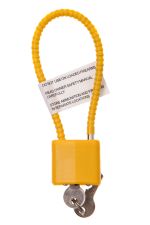
A yellow cable lock with key attached and safety instructions.

Credit: SolidMax.

Pediatric clinicians deliver the program during well-child visits. It consists of a short conversation with parents about the importance of safe firearm storage and offering them a free cable lock. The program is easy to implement and takes less than a minute during well-child visits. In one previous clinical trial parents who received the original SAFE Firearm program were twice as likely to store firearms safely at home. However, the program has not been widely implemented and this study attempted to make it easier.

What did the researchers do in the study?

The research team, led by Rinad Beidas, Ph.D. at Northwestern University Feinberg School of Medicine, tested two approaches to implementing the SAFE Firearm program in pediatric primary care.

Clinicians saw more than 47,300 children ages 5 to 17 for well-child visits during the study. Visits were conducted in 30 pediatric clinics in two large and diverse health care systems in Michigan and Colorado. Participating clinics were part of it Mental Health Research Network a consortium of research centers located in health care systems dedicated to improving the mental health of patients.

The researchers randomly assigned clinics to use one of two simple support strategies and compared the effectiveness of the strategies in promoting delivery of the firearms program:

  • Nudge: Clinicians were reminded to deliver the program via an automatic reminder in patients’ electronic health records.
  • Nudge+: Clinicians received the reminder plus 1 year of facilitation to implement the program (examples of facilitation included guidance on talking with parents, assistance with implementation barriers, and feedback on clinic performance).

What did the study find?

Before the study, about 2% of pediatric clinicians reported offering advice on safe storage and cord locks during well-child visits. After using Nudge or Nudge+, the number of clinicians engaging in these behaviors increased significantly.
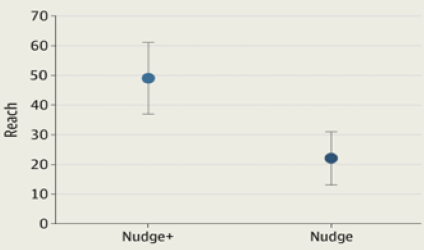
Results graph showing Reach on the y-axis and intervention groups (Nudge+ and Nudge) on the x-axis. The chart shows that the Nudge+ group had a significantly higher reach than the Nudge group.

Reach (percentage of parents who received both components of the firearm storage program) when clinicians used Nudge+ or Nudge. Reprinted from “Implementation of a Safe Firearm Storage Program in Pediatric Primary Care: A Cluster Randomized Trial,” by RS Beidas et al., 2024, JAMA Pediatrics, 178(11), p. 1104–1113. Copyright 2024 Beidas RS et al.

Although both strategies resulted in an increase in provision of the two components of safe firearm storage, the Nudge+ strategy (reminder and facilitation) proved to be much more effective. Significantly more clinicians who received Nudge+ performed the intervention (49%) compared to those who received only the Nudge reminder (22%).

Not only did the additional support increase program delivery, but it did not require many additional resources or effort. Nudge+ clinics received only 8.7 hours of additional support per clinic each year, which came mostly from email or chat.

What do the results mean?

This is one of the first and largest studies in the United States to focus on implementing universal safe storage of firearms as a routine and regular part of well-child visits. Findings demonstrate the large positive impact of using low-burden and relatively inexpensive support strategies to deliver a safe firearms storage program during pediatric primary care. Combined with results from a previous study funded by NIMH demonstrating high support among clinicians for working with parents on firearms storage safety provides compelling insight into how best to support clinicians and clinics in working with parents on this life-saving topic.

The study had several strengths, including diverse participants, a randomized study design, and an evidence-based approach. However, it also had some limitations. For example, there was no control group that provided care as usual. There are also the limitations of electronic health records: The data do not indicate how long and to what extent clinicians discussed firearm storage with parents, nor is it guaranteed that clinicians always documented these conversations. Additionally, the study only focused on cable locks, and there may be other methods of securing firearms that are more effective or more acceptable to parents.

Next steps for the researchers include analyzing data from surveys conducted with parents throughout the study to determine whether receiving the gun safe storage program improved actual home safety practices. The researchers also plan to test these strategies for delivering the program in other youth-serving settings, such as community centers, after-school programs, and faith-based organizations.

Reference

Beidas, RS, Linn, KA, Boggs, JM, Marcus, SC, Hoskins, K., Jager-Hyman, S., Johnson, C., Maye, M., Quintana, L., Wolk, CB, Wright, L. ., Pappas, C., Beck, A., Bedjeti, K., Buttenheim, AM, Daley, MF, Elias, M., Lyons, J., Martin, ML, … Ahmedani, BK (2024). Implementation of a safe firearm storage program in pediatric primary care: A cluster-randomized trial. JAMA Pediatrics, 178(11), 1104–1113. https://www.doi.org/10.1001/jamapediatrics.2024.3274

Financing

care Firearm improving Pediatric primary safety
bhanuprakash.cg
healthtost
  • Website

Related Posts

Self-Care Guided Journal For Moms

February 26, 2026

Sudoku skin care device ⭐️

February 26, 2026

ChatGPT Health fails critical emergency and suicide safety tests

February 24, 2026

Leave A Reply Cancel Reply

Don't Miss
Nutrition

5-ingredient skillet dinner recipe

By healthtostFebruary 26, 20260

Make dinner fast with the 5-Ingredient Dinner Pan Recipe: choose a meat, seasonings, vegetables, sauce…

Inside the OPEX Method Week 5: Anaerobic training, “pain” and when it really makes sense

February 26, 2026

New Mandarin cognitive tests improve dementia diagnosis in Chinese elderly

February 26, 2026

Self-Care Guided Journal For Moms

February 26, 2026
Stay In Touch
  • Facebook
  • Twitter
  • Pinterest
  • Instagram
  • YouTube
  • Vimeo
TAGS
Baby benefits body brain cancer care Day Diet disease exercise finds Fitness food Guide health healthy heart Improve Life Loss Men mental Natural Nutrition Patients People Pregnancy protein research reveals risk routine sex sexual Skin study Therapy Tips Top Training Treatment ways weight women Workout
About Us
About Us

Welcome to HealthTost, your trusted source for breaking health news, expert insights, and wellness inspiration. At HealthTost, we are committed to delivering accurate, timely, and empowering information to help you make informed decisions about your health and well-being.

Latest Articles

5-ingredient skillet dinner recipe

February 26, 2026

Inside the OPEX Method Week 5: Anaerobic training, “pain” and when it really makes sense

February 26, 2026

New Mandarin cognitive tests improve dementia diagnosis in Chinese elderly

February 26, 2026
New Comments
    Facebook X (Twitter) Instagram Pinterest
    • About Us
    • Contact Us
    • Privacy Policy
    • Terms and Conditions
    • Disclaimer
    © 2026 HealthTost. All Rights Reserved.

    Type above and press Enter to search. Press Esc to cancel.