Is your skin stressed?
You might not be sure, but here’s a clue: if you’re stressed, your skin probably is too!
So what does this mean for how your skin looks and feels?
Let’s check it out.
What is Stress-Out Skin?
Scientists have discovered a very clear connection between psychological stress and skin reactions.
Board Certified dermatologist Keira Barr MD, FAAD, states: “Our brain and skin are intimately connected and communicate with each other. This means that when we experience chronic stress from work, relationships or current events, the skin is both a target and a source of stress hormones, which can make the skin more vulnerable to itching, inflammation, irritation and infection.”
We must remember that the skin is an organ, like the heart, lungs and kidneys. When we experience stress, the body releases stress hormones such as adrenaline and cortisone. As long as the stress subsides quickly enough, the skin will do just fine. But during periods of chronic stress—when the stress just won’t go away—these stress hormones can break down collagen and elastin in the skin, while also hindering the repair process.
The result? Premature Aging. Signs include more noticeable fine lines and wrinkles, sagging and bagging.
Stress hormones are also known to increase inflammation. In a recent studythe scientists noted that cortisol and other related hormones “have been shown to increase skin inflammation, increase itching, impair skin barrier function, impair wound healing, and suppress immunity.”
Results include:
- Increased acne breakouts
- Dryness and dullness of the skin
- More reactive, sensitive skin
- Wounds that take longer to heal
- Increased susceptibility to infection
Finally, stress can worsen any skin conditions you may already have. An increase in inflammation usually causes flare-ups of eczema, rosacea, and psoriasis, and can trigger allergic reactions more easily.
Let’s look at the three main types of stressed skin and how you can help your skin deal with it.
Photo by Karolina Grabowska via Pexels.
Stressed skin 1: Acne
If your skin is already prone to acne, stress will make it worse. Hormones released during stressful periods increase oil production and increase inflammation—the perfect combination for breakouts.
What to do?
Use a cleansing cleanser
Look for a gentle yet cleansing cleanser to help get rid of dirt and grime, then wash twice a day. Avoid excessive washing or harsh scrubbing, both of which can disturb the skin enough to cause it to react and produce more oil.
Tuna without alcohol
It’s still important to use a balancing toner on your skin to prep it for your moisturizer. If you use our Rescue + Relief Spray, you’ll get anti-inflammatory benefits along with balancing benefits to help your skin recover and look its best. Avoid toners with alcohol as they are too drying and can make your skin look worse.
Moisturize lightly
Choose a light moisturizer that won’t clog your pores—but still moisturize your skin twice a day. Even stressed, oily skin needs moisture to help calm and relax. Our Calming Moisture has anti-inflammatory properties to help, but absorbs quickly and doesn’t clog pores. It will leave your skin with a healthy glow!
Spot Treat
Avoid pressing your skin, as oils and dirt on your fingers can make your breakouts worse. Choose a spot treatment with salicylic acid to cover blemishes.
Stress Out Skin 2: Redness
Redness is a common sign that your skin is stressed. It’s often directly related to inflammation, or if you’re prone to rosacea, it can signal a flare-up.
What to do?
Get rid of any products that cause irritation
Review your current skincare routine and see if you have any products that may be irritating your stressed skin. Now is the time to put them aside until your skin recovers. Potential irritants include antiaging serums, retinols, acid-containing products, harsh cleansers, and certain makeup products.
Moisturize with anti-inflammatory formula
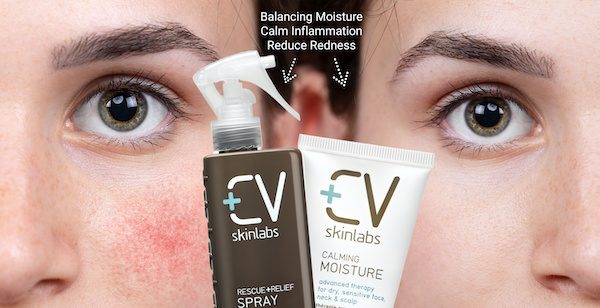
Your main job is to reduce inflammation, so make sure your moisturizer contains ingredients to help with that. Our Calming Moisture is made to reduce inflammation. Contains aloe, beta-glucan, vitamin E and ginger to speed healing and reduce redness and itching.
Calm skin throughout the day
Skin suffering from redness can benefit from frequent treatment with Rescue + Relief’s soothing, cooling spray. You can apply it at any time during the day and immediately experience its cooling effects. Clinical-strength ingredients help target and combat skin stress, while water lily cleanses and clears heat.
Stressed Out Skin 3: Dry Skin
While some people may experience oilier, acne-prone skin when they’re stressed, others will find that their skin is dry and tight. The effects of stress dehydrate the skin, stripping it of moisture. Stress hormones also damage the skin’s outer barrier so it can’t hold on to the moisture it has as well.
What to do?
Switch to a creamy cleanser
Cleansing can easily dry out the skin if not done properly. Make sure you use a gentle, moisturizing, creamy cleanser that is pH balanced and leaves your skin feeling soft and smooth. If your skin feels tight after cleansing, you have the wrong product.
Tone immediately after cleansing
With dry skin, you don’t want to wait to apply toner. Simply pat dry and spray Rescue + Relief Spray for instant cooling and gentle hydration that preps your skin for your moisturizer.
Use a quality moisturizer
You can apply some creams and your skin feels dry half an hour later. These creams lack the ingredients you need to really hydrate your skin. Try Calming Moisture, as it contains lipids (fatty acids) and ceramides that help renew and hydrate the skin. Over time, it will also help restore the skin barrier so the skin can retain more of the moisture it has.
Use a humidifier
You want to fight dryness every step of the way when dealing with dry, stressed skin. If you live in a dry climate, try adding a humidifier to your room. It will put moisture back into the air, which will help you wake up with softer, more supple skin.
Exfoliate gently
Dry, flaky skin could use a gentle exfoliating treatment. Just be careful not to be too harsh. You can try using a soft skin brush in a circular motion to loosen the peeling or use a gentle acid exfoliator. Look for ones with salicylic, malic and glycolic acids.
Tips for all types of stressed skin
Regardless of what your skin may be doing in response to stress, the following tips will help you reduce stress so your skin can recover.
- Meditation— Helps calm the mind and the body’s response to stress.
- Deep breath-produces an immediate relaxing effect on your entire system.
- Excercise-Exercise is a known stress reliever. Try going for a walk.
- Yoga and Tai Chi-These forms of exercise involve deep breathing and relaxation in various postures and are known to help relieve stress.
- Acupuncture-If you need help managing your stress, an acupuncture treatment can do the trick.
- Sleep-Getting 7-8 hours of sleep a night helps your body recover and repair itself.
- Counseling-Talking to someone about what’s bothering you can make a big difference.
- Eat healthy-Getting the nutrients your body and skin needs can help you cope better with stressful times.
How do you deal with stressed skin?
Featured image courtesy of Yan Krukau via Pexels.