


If your moisturizer isn’t working like it used to, or your skin still feels tight no matter how much you apply, there may be a science-backed reason. You’ve probably heard the term “moisturizers” in skin care whenever someone talks about hydration. However, another class of ingredients, called “osmolytes,” is starting to make waves. So what exactly are they, how do they differ, and which one does your skin really need? This article breaks down the differences between hygroscopics and osmolytes, two hydration aids that sound similar but work in very different ways. In the end, you’ll know which one delivers what your skin craves.
What are moisturizers?
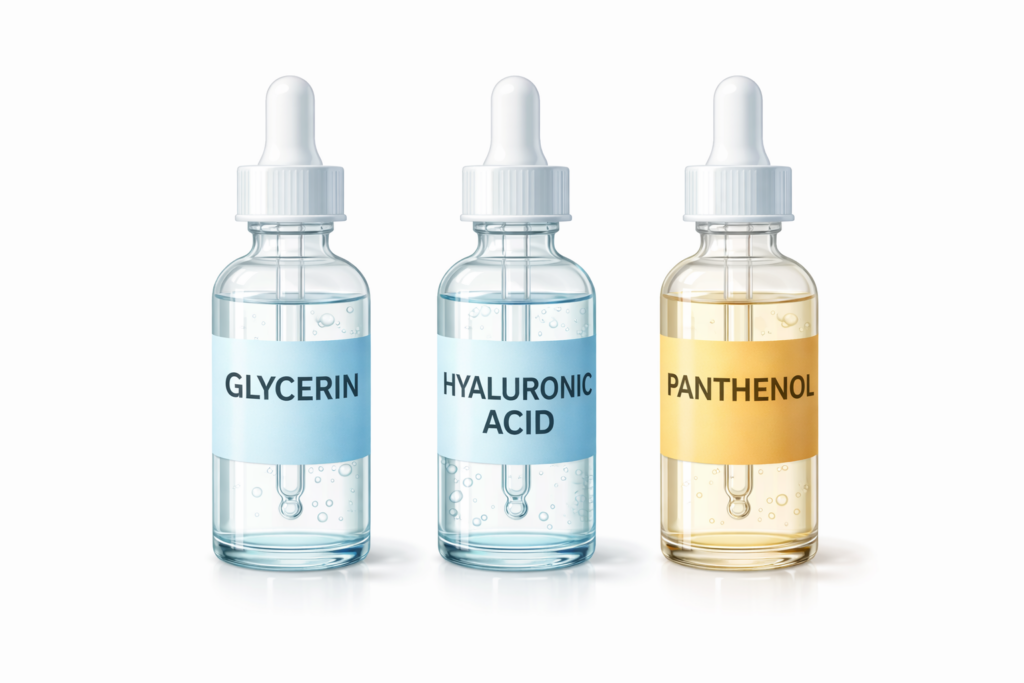
Humectants are ingredients that attract water and help draw moisture to the skin. Think of them as hydration magnets. Common examples include glycerin and hyaluronic acid.
When applied topically, moisturizers draw water from two main sources and a third that is commonly cited but not fully scientifically proven:
- The most established way that hygroscopics grab water molecules is from excess water in the products.
- The second most established way that hygroscopics grab water molecules is from the surrounding environment when the air is humid and there is a lot of free moisture.
- And the third, which is often discussed but doesn’t have much scientific support, is the deeper layers of your skin (called the dermis) when there’s a moisture imbalance.
By attracting water to the outer layer (stratum corneum), they temporarily plump and smooth the skin. This is why humectants are essential ingredients in all skin care products, but especially moisturizing serums and moisturizers. Humectants are ideal for enhancing surface hydration, softening dry patches and giving the skin a dewy appearance, especially in humid climates.
What are osmolytes?
Osmolytes are small molecules that help skin cells maintain their water balance and resist stress. Unlike humectants, which work outside the cells, osmolytes work inside them.
They act like tiny bodyguards, helping skin cells survive:
- Changes in temperature
- Dehydration
- Pollution or oxidative stress
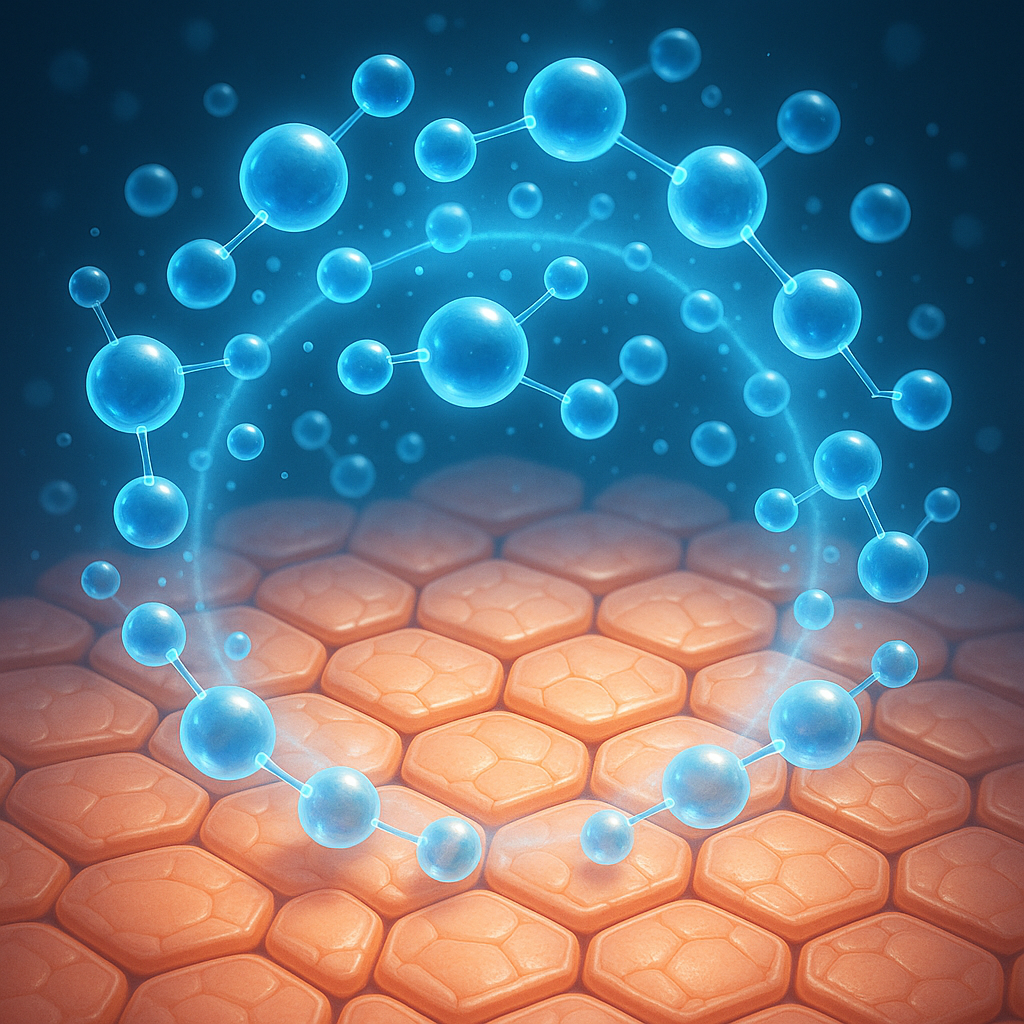
Examples include ectoine, taurine and betaine. These ingredients stabilize proteins and membranes within cells, supporting the skin’s natural defenses and reducing inflammation. Osmolytes are a great addition to your skincare routine if you have sensitive, sensitized, stressed or mature skin that needs internal hydration support, not just surface moisture.
Humectants vs. Osmolytes: A Side-by-Side Comparison
Let’s break it down now with basic criteria so you can see how humectants and osmolytes stack up when the two are compared to each other.
1. Mechanism of Action
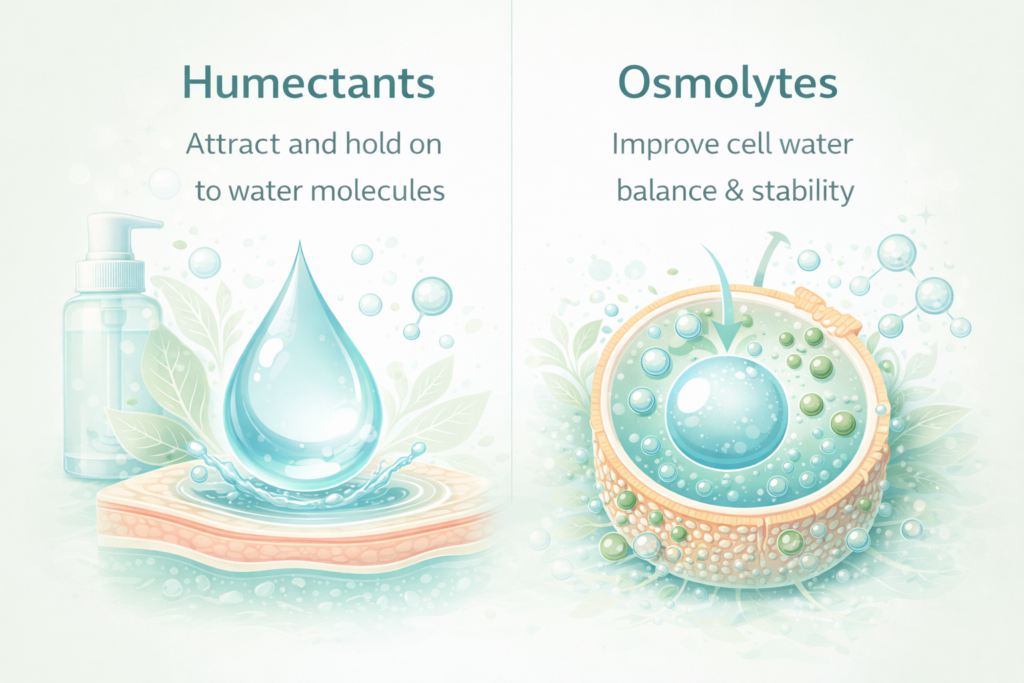
- Moisturizers: Attract water molecules and hold them. They will absorb any free moisture they can find, either from excess water in your skin care products or free moisture in the environment.
- Osmolytes: Not only do they attract and hold water molecules, but they also facilitate the way water moves across the cell membrane. They help cells retain water and stay balanced under stress. Work at the cellular level to protect internal structures.
Think of moisturizers as water magnets. Osmolytes are more like water managers.
2. Where They Work
- Moisturizers: It acts mainly on the outer layer of the skin (stratum corneum).
- Osmolytes: These are very small molecules so they can penetrate the skin cells (keratinocytes and fibroblasts), helping them work better under harsh conditions.
Some smaller hygroscopics penetrate through the upper layer of the skin, such as glycerin, but do not interact with cells like osmolytes.
3. Primary Benefits
- Moisturizers: Fast hydration, smoother texture, temporarily firm skin.
- Osmolytes: Long-term durability, less irritation, better water balance within the skin barrier.
4. Performance in difficult conditions
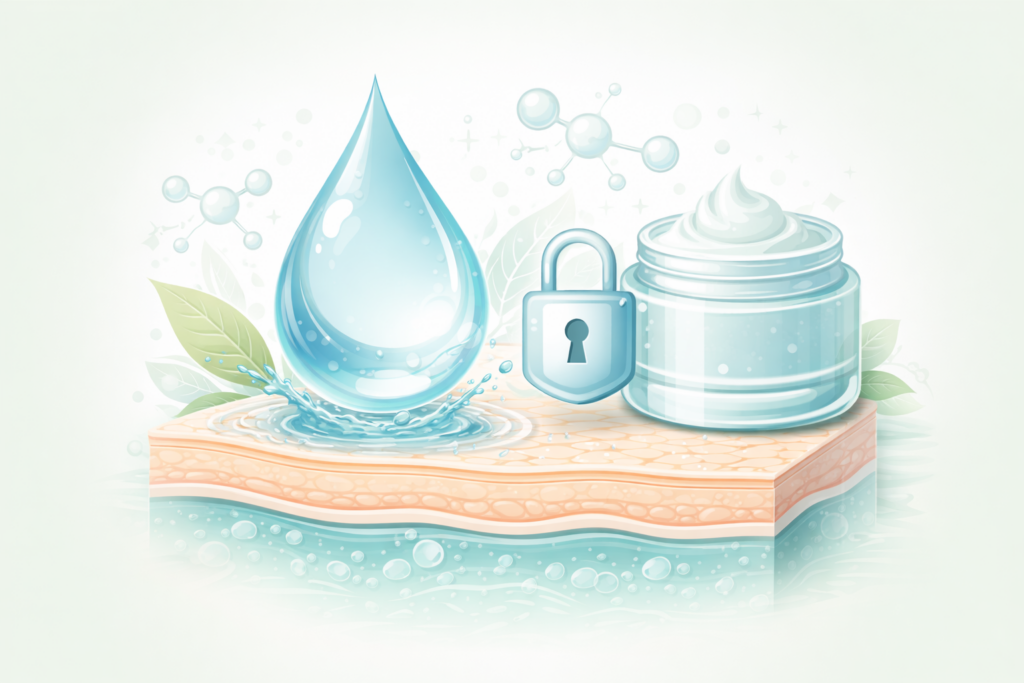
- Moisturizers: May fail in dry climates. they can draw water from the skin if there isn’t enough in your products or in the air.
- Osmolytes: Shine in extreme environments (heat, cold, dry air) by helping skin cells adapt and protect.
If your skin feels drier after using a moisturizer-heavy product in the winter, this is likely why.
5. Ideal skin types
- Moisturizers: Normal to oily skin in humid environments. useful in layering routines.
- Osmolytes: Sensitive, aged, dehydrated or degraded skin, especially in dry or polluted areas.
6. Compatibility with other ingredients
- Moisturizers: Pair well with concealers and conditioners for a complete hydration routine.
- Osmolytes: Work synergistically with antioxidants, barrier repair agents and even some moisturizers to boost overall skin resilience.
Which one should you use?
Both humectants and osmolytes play valuable roles in skin care, but they are not interchangeable.
- If you want instant wetness and thicknessmoisturizers are your friend.
- If you need deep hydration and protection at the cellular levelespecially in dry or stressful environments, osmolytes are worth the hype.
In fact, many modern skincare formulas now include both to deliver multi-layered benefits, humectants for immediate hydration and osmolytes for long-lasting skin resilience.
Final Thoughts
“Humectants vs. osmolytes” is not a battle. it’s a balance. Each serves a different purpose and together, they can transform the way your skin handles hydration and stress.
So the next time you scan an ingredient list, look beyond hyaluronic acid. Spotting terms like ectoine or taurine? This is the indication that the osmolytes are working behind the scenes to keep your skin calm, balanced and beautifully supple.
