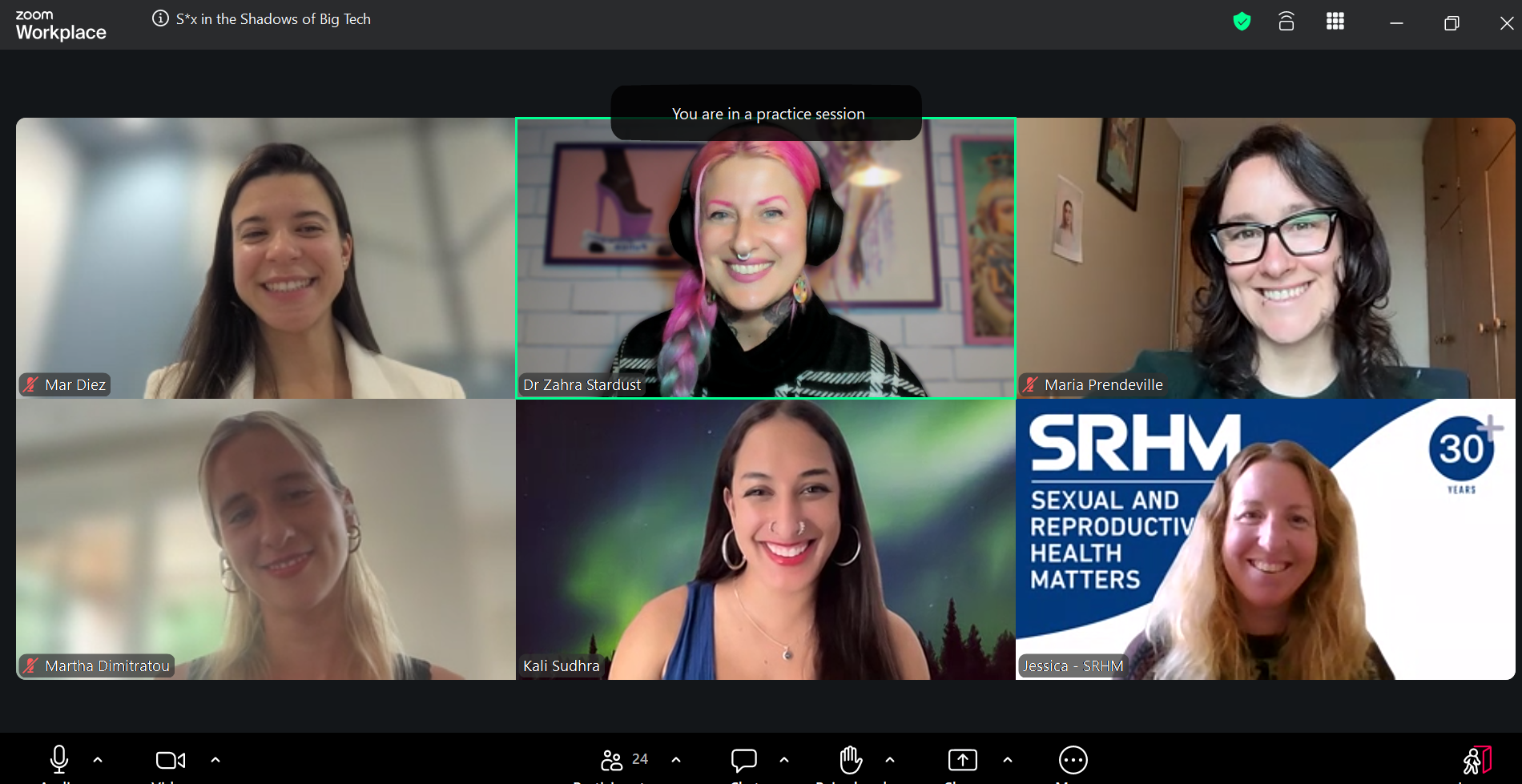
What does it mean to organize, advocate and build community in increasingly silencing, censoring and exclusionary digital spaces?
In light of the cancellation of RightsCon 2026, Sexual and Reproductive Health Matters (SRHM), in partnership with Queensland University of Technology, supported Repro Uncensored, the European Sex Workers’ Rights Alliance (ESWA) and other partner organizations to host this session, which was originally scheduled to take place at this important debate.
This recording is also available on the SRHM Podcast. Find it here Apple Podcasts and Spotify or wherever you find your podcasts.
Mediator:
- Dr. Zahra Stardust: Australian Research Council DECRA Fellow researching how digital platforms can better protect sexual and reproductive rights online. Co-Chair of the Sexual Rights Committee of the World Association for Sexual Health and participates in the Advisory Group on Sexual Health and Well-Being of the World Health Organization.
Speakers:
- Kali Sudra: Executive Director at the European Alliance for Sex Workers’ Rights
- Mar Diz: Cybersecurity and privacy legal advisor and digital rights advocate. Co-founder of Espacio Seguro LGBTQIA+ Burgos
- Maria Predevil: Content marketing and email marketing for femtech, sex positive and women’s health brands
- Martha Dimitratou: Founder and CEO of Repro Uncensored
The discussion offered a powerful and, at times, frustrating reflection on the reality of navigating Big Tech platforms. The speakers described widespread experiences of shadowbanning, content removal and algorithmic suppression, particularly affecting sex workers, LGBTQI+ communities, immigrants and others already marginalized offline. These forms of digital control are not random. They are part of wider systems of surveillance, stigmatization and inequality that shape who can be seen, who can speak and who is marginalized.
However, the discussion did not stop at criticism. Instead, he moved toward resistance.
A recurring theme was the importance of collective strategies. While individual solutions such as “algospeak,” multiple accounts, and platform migration can help people survive online censorship, speakers emphasized that meaningful change requires coalition building. Drawing on long histories of feminist and social justice organizing, participants emphasized the need to build alliances between movements, even where tensions or differences exist. As one speaker noted, solidarity does not require sameness. It requires a shared commitment to justice.
Labor and human rights emerged as a key framework. Recognizing sex workers and other marginalized groups as workers is essential to challenging both online and offline exploitation. Exclusion from labor movements weakens collective power, while inclusive organizing strengthens it. In this context, digital rights cannot be separated from economic justice.
The debate also highlighted the emotional and social toll of platform addiction. Leaving or disengagement from major platforms can be an act of resistance, but it can also lead to isolation, particularly for those who rely on digital spaces for income, community or security. This tension reflects a wider dilemma. Big Tech platforms are both necessary and harmful, connecting and limiting at the same time.
So what can be done?
Speakers highlighted a number of strategies. Documenting damages and “preserving evidence” can help reveal patterns of censorship and support advocacy efforts. Legal approaches, including coordinated litigation and policy engagement, offer a path to accountability. Cultural strategies, from creative campaigns to community-led storytelling, play a critical role in shifting narratives. Education and public awareness are equally vital, especially in reaching out to activists who may be unaware of how these issues affect them.
Importantly, resistance is not only defensive. It is also imaginative.
The webinar closed with reflections on what a more just digital future could look like. Participants envisioned platforms built by and for communities, based on transparency, accountability and collective ownership. In these spaces, discussions of sexual and reproductive health, pleasure, and bodily autonomy would be recognized as legitimate knowledge rather than risk. Security would not depend on invisibility, and participation would not require sacrificing privacy or livelihood.
These visions extend beyond technology. They are about reclaiming connection, caring and community. From peer-to-peer networks to personal organizing, from newsletters to magazines, speakers highlighted the importance of creating alternative infrastructures that don’t rely solely on corporate platforms.
Underneath it all was a clear message. Today’s digital landscape is not inevitable. It has been built in ways that prioritize profit over people, but it can be replicated.
As the discussion continues, participants are working on a new manifesto, with a tentative title Breaking Up With Big Tech: A Manifesto for Sexual and Reproductive Justice. It requires a shift in focus away from platforms that harm, to movements that sustain and nurture.
In an age marked by increasing censorship, surveillance, and inequality, this webinar reminds us that resistance is already happening. It is collective, creative and based on the belief that another digital world is possible.
And its construction is already underway.
Resources: