


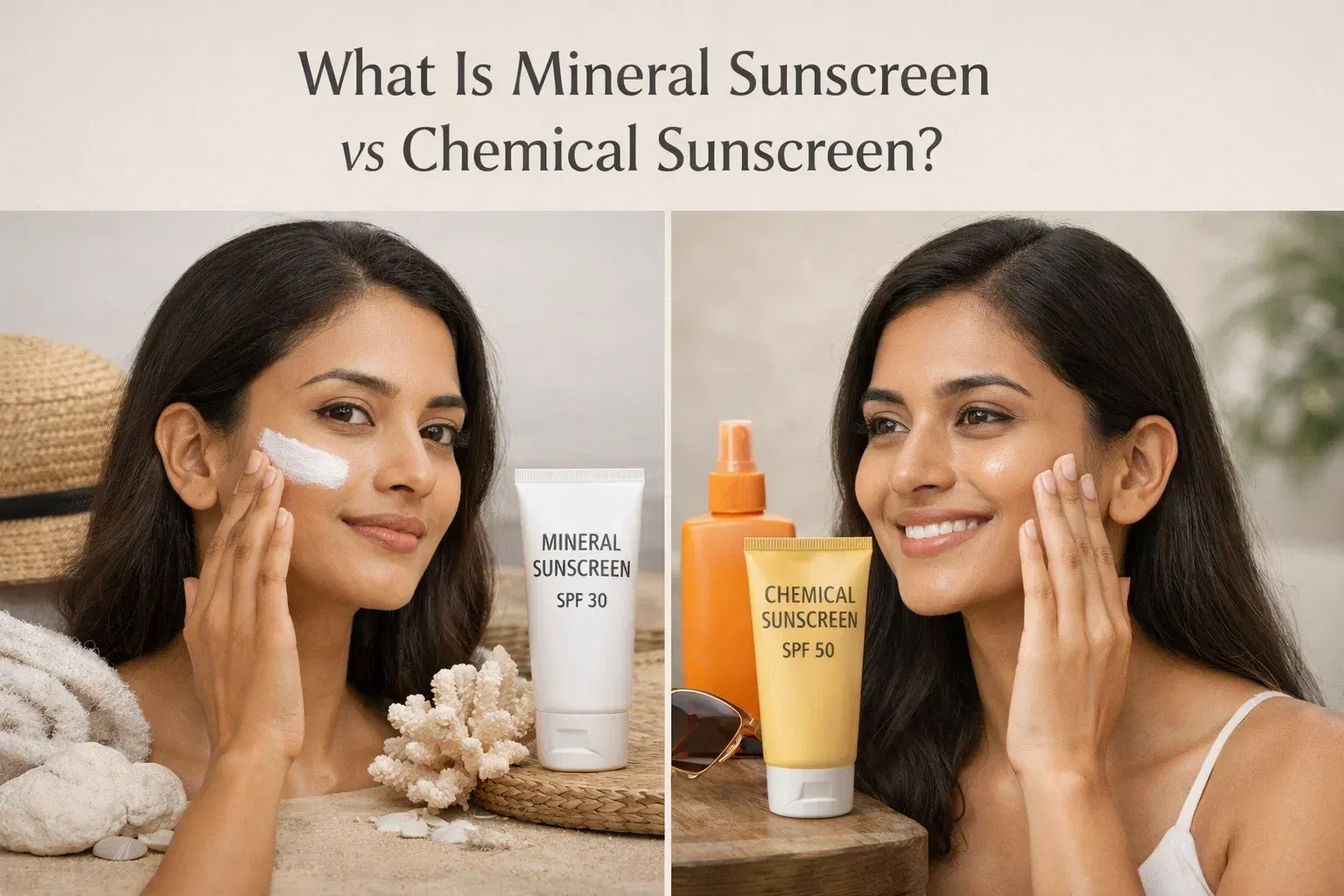
The sunscreen aisle has two fundamentally different types of products – and they work in completely different ways. Most people choose one without knowing the distinction. Here’s exactly how each works, who they’re for, and what to look for when choosing.
How chemical sunscreens work
Chemical sunscreens contain organic (carbon-based) compounds – such as avobenzone, octinoxate or oxybenzone – that absorb UV radiation and convert it into heat, which is then released by the skin.
Think of it as a UV sponge: the filters absorb the radiation before it reaches the deeper layers of the skin.
Key features:
- Generally light and invisible on the skin
- You usually don’t leave white plaster
- It needs to be applied 20-30 minutes before sun exposure to be effective
- May cause irritation to sensitive skin types
- Some chemical filters have raised safety questions about endocrine disruption – although there are now certified tests to verify this
Be Bodywise- Telehealth Platform for Women’s Health and Wellness
Here is a list of all our products at Be Bodywise. Happy shopping! Get free online advice from our team of women’s health and wellness doctors and choose from a variety of products to suit your skincare, hair and nutritional needs.
How do metallic sunscreens work?
Mineral sunscreens use natural UV filters – zinc oxide and titanium dioxide – that sit on the surface of the skin and reflect UV rays away, like tiny mirrors.
They are not absorbed into the skin like chemical filters. This is what makes them the preferred choice for sensitive, pregnant or reactive skin.
Key features:
- Work immediately after application – no waiting period required
- It is considered safe for pregnant and lactating women
- Less likely to cause irritation or allergic reactions
- Traditionally, leave a white cast (although newer formulations using micro-encapsulated mineral filters greatly minimize this)
- Slightly thicker texture than chemical options
The key differences – Side by side
| Feature | Chemical sunscreen | Mineral sunscreen |
|---|---|---|
| How it works | Absorbs UV radiation, turns into heat | Reflects UV radiation on the surface of the skin |
| Ingredients | Avobenzone, octinoxate, etc. | Zinc oxide, titanium dioxide |
| White cast | Usually none | Can it happen? few newer versions |
| Skin compatibility | May irritate sensitive skin | Gentler for sensitive skin |
| Pregnancy safety | Some filters under control | Generally considered safe |
| Wait before you go out | 20–30 minutes | It works instantly |
| Acne prone skin | It depends on the formula | Generally non-foodogenic |
Which type is right for your skin?
Choose a mineral sunscreen if:
- You have sensitive, reactive or easily irritated skin
- She is pregnant or breastfeeding
- You have active acne-prone or acne-prone skin
- Prefer ingredients with a longer history of safety
- They use it on children
Chemical sunscreens may suit you better if:
- Have normal to oily skin without sensitivity
- Prioritize a completely invisible, lightweight finish
- Find mineral sunscreens extra thick for everyday use
The good news: newer metal formulations have improved dramatically. Micro-encapsulated zinc oxide and titanium dioxide are now blended into Indian skin tones without the chalky white cast that older mineral sunscreens were known for.
What about “hybrid” sunscreens?
Some sunscreens combine both metal and chemical filters to get the benefits of both – lighter texture than chemical filters, improved safety profile than mineral filters. These are increasingly common and work well for most skin types.
Endocrine disruptors: What you need to know
Some older chemical UV filters—specifically oxybenzone, octinoxate, and homosalate—have raised concerns about hormone disruption in studies. That’s not to say that all chemical sunscreens aren’t safe, but it pays to know what’s in your formula.
The practical approach: look for sunscreens that have been independently certified as free of harmful endocrine disruptors. This is a legitimate differentiation between products.
How to choose – What to really look for
- Check the active ingredients – zinc oxide and/or titanium dioxide = mineral. names of organic compounds = chemist
- Look for PA++++ along with SPF 50 – this confirms broad-spectrum protection from both UVA and UVB
- For sensitive or pregnant skin – mineral filters with micro-encapsulated formula to reduce white cast
- Check for endocrine disruptor-free certification – not all brands disclose this. those that do are worth noting
- No fragrance – Both mineral and chemical sunscreens should be fragrance-free for daily facial use
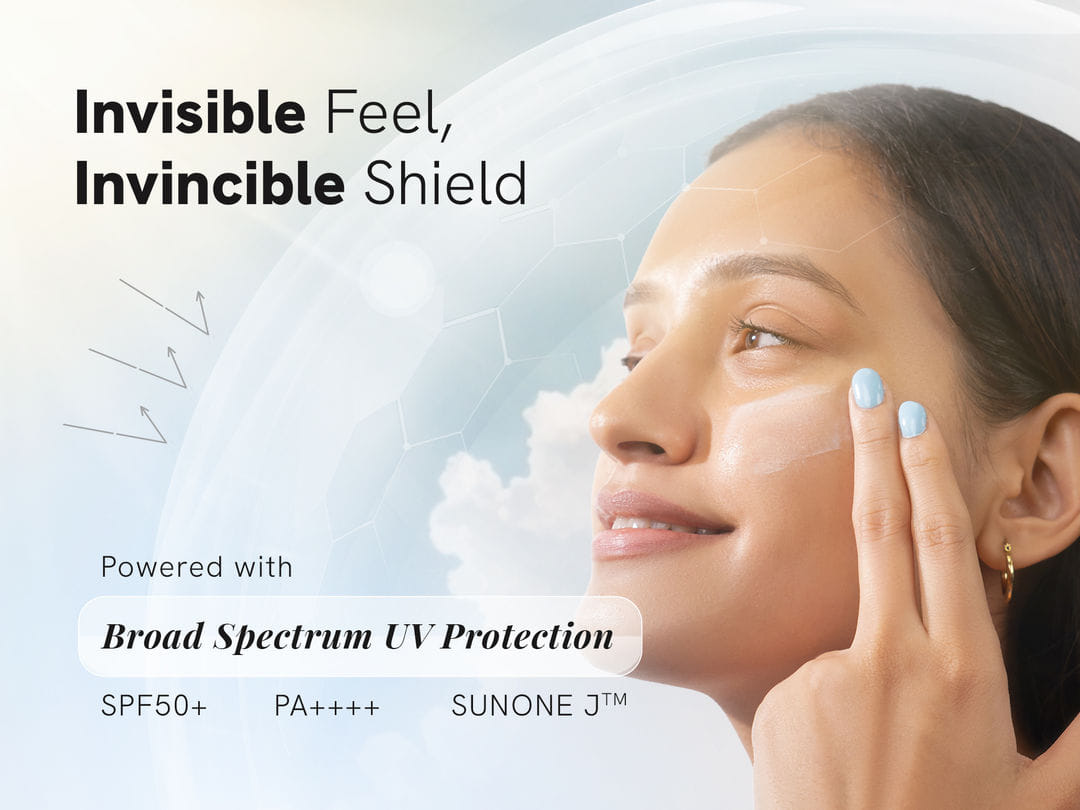
Especially for sensitive or pregnancy-safe sunscreen, Be Bodywise’s Lightest Mineral Sunscreen SPF50+ uses micro-encapsulated zinc oxide and titanium dioxide with Pollufence™ technology to protect against pollution, is fragrance-free, dermatologist-tested and certified parabens and alcohol-free suitable for breastfeeding women and alcohol – For daily use of chemical sunscreens on prone skin acne, Ultra Light Sunscreen SPF50+ is certified hormone-disrupting-free and tested In Vivo. Compare filter type, test claims and PA rating before choosing.
FAQ
Q: Is mineral sunscreen always better than chemical?
Not always – it depends on your skin type and your concern. Mineral is safer for pregnancy and sensitive skin. Chemical can be lighter and more aesthetically pleasing for everyday use on normal skin.
Q: Does mineral sunscreen cause white cast on Indian skin tones?
Traditional mineral sunscreens do. Newer formulations using micro-encapsulated metal filters are designed to minimize this for deeper skin tones.
Q: Can I use mineral sunscreen on my face every day?
Yes – mineral sunscreens are generally non-greasy and mild enough for daily use on the face.
Q: Is chemical sunscreen safe during pregnancy?
Some chemical UV filters have raised concerns. Mineral sunscreens (zinc oxide, titanium dioxide) are widely considered the safest choice during pregnancy. Consult your doctor for specific instructions.
Q: How long does mineral sunscreen last on the skin?
Like all sunscreens, minerals should be reapplied every 2 hours during outdoor exposure or after sweating or swimming.
Q: Does mineral sunscreen protect against both UVA and UVB rays?
Yes – both zinc oxide and titanium dioxide offer broad-spectrum protection when prescribed correctly. Check for PA++++ rating to confirm UVA coverage.
If you’re looking for a sunscreen suitable for sensitive or pregnancy needs, or a light chemical option for everyday use, explore formulations made specifically for women’s skin at bebodywise.com.
