

Close Menu
Healthtost
  • News
  • Mental Health
  • Men’s Health
  • Women’s Health
  • Skin Care
  • Sexual Health
  • Pregnancy
  • Nutrition
  • Fitness
  • Recommended Essentials
What's Hot

The microbiome and therapeutic carbohydrate restriction

February 18, 2026

Polyploidy-induced senescence may affect aging and cancer risk

February 18, 2026

Can mobile apps change the way we eat?

February 18, 2026
Facebook X (Twitter) Instagram
  • About Us
  • Contact Us
  • Privacy Policy
  • Terms and Conditions
  • Disclaimer
Facebook X (Twitter) Instagram
Healthtost
SUBSCRIBE
  • News

    Polyploidy-induced senescence may affect aging and cancer risk

    February 18, 2026

    Researchers develop new score to predict liver cancer risk

    February 18, 2026

    Fred Hutch scientists reach critical milestone in blocking Epstein Barr virus

    February 17, 2026

    Study links microbial-rich diets to better insulin and cholesterol markers

    February 17, 2026

    Infant bifidobacteria may protect against childhood allergies

    February 16, 2026
  • Mental Health

    What is medication therapy?

    February 17, 2026

    Why do I have “butterflies in my stomach”?

    February 15, 2026

    Bipolar Disorder: Why It Happens (and How to Snap It Off)

    February 12, 2026

    Exercise may be as effective as drugs for depression and anxiety – new study

    February 11, 2026

    Advancing the Future of Behavioral Health Data Exchange

    February 7, 2026
  • Men’s Health

    Can mobile apps change the way we eat?

    February 18, 2026

    Tiny particles, big impact: Toward less invasive brain stimulation

    February 18, 2026

    How to sauna: All frequently asked questions

    February 17, 2026

    The power of sprint-based exercise

    February 12, 2026

    Why Biohack? Acceptance of our Mortality

    February 11, 2026
  • Women’s Health

    Make your workouts more functional

    February 18, 2026

    Facts about Lupus and Reproductive Health

    February 17, 2026

    199: Perimenopause, Nervous System Health & How Stress Affects Your Hormones

    February 16, 2026

    Why you should avoid empty calories in 2026

    February 14, 2026

    Beyond hot flashes: Why menopause symptoms are a heart health problem

    February 13, 2026
  • Skin Care

    How to protect your hair from chlorine (and help it recover after

    February 18, 2026

    How often should you exfoliate your skin? Health experts’ instructions

    February 18, 2026

    Clear + Brilliant in New York: The facial laser for glow, pores and even T

    February 16, 2026

    Non-toxic beauty products for a safer Valentine’s Day

    February 16, 2026

    Ultimate Winter Perfume Guide | Warm and long-lasting scents – The natural wash

    February 15, 2026
  • Sexual Health

    ACS publishes new guidelines for cervical cancer screening

    February 17, 2026

    Why I masturbate on Valentine’s Day

    February 14, 2026

    The global Gage rule expanded

    February 14, 2026

    Can cystitis be caused by stress?

    February 13, 2026

    Sex doesn’t have to end when it’s over

    February 12, 2026
  • Pregnancy

    Labor & Pregnancy? the untold truths of labor during pregnancy

    February 17, 2026

    Why investing in one step can save your pelvic floor

    February 16, 2026

    Signs of labor every mom-to-be should know

    February 13, 2026

    Because the second trimester is like a deep breath

    February 11, 2026

    18 places to get free baby products, samples and gear in 2026

    February 8, 2026
  • Nutrition

    The microbiome and therapeutic carbohydrate restriction

    February 18, 2026

    What every woman should know

    February 16, 2026

    Air Fryer Flank Steak Tacos (15 Minutes, Weeknight Family Dinner)

    February 16, 2026

    What to eat during GLP-1 weeks 5–12: stable, balanced, sustainable | glp-1, weight loss, weight loss and more

    February 14, 2026

    Why is the food pyramid being discussed (again).

    February 12, 2026
  • Fitness

    Three unique ways to improve your functional strength

    February 17, 2026

    How to support clients without medical nutrition therapy

    February 17, 2026

    Over 1 year of actual use

    February 16, 2026

    The essential role of sleep in recovery and better health

    February 15, 2026

    Fitness helped Dane Carter beat addiction and reclaim his purpose

    February 15, 2026
  • Recommended Essentials
Healthtost
Home»Nutrition»The microbiome and therapeutic carbohydrate restriction
Nutrition

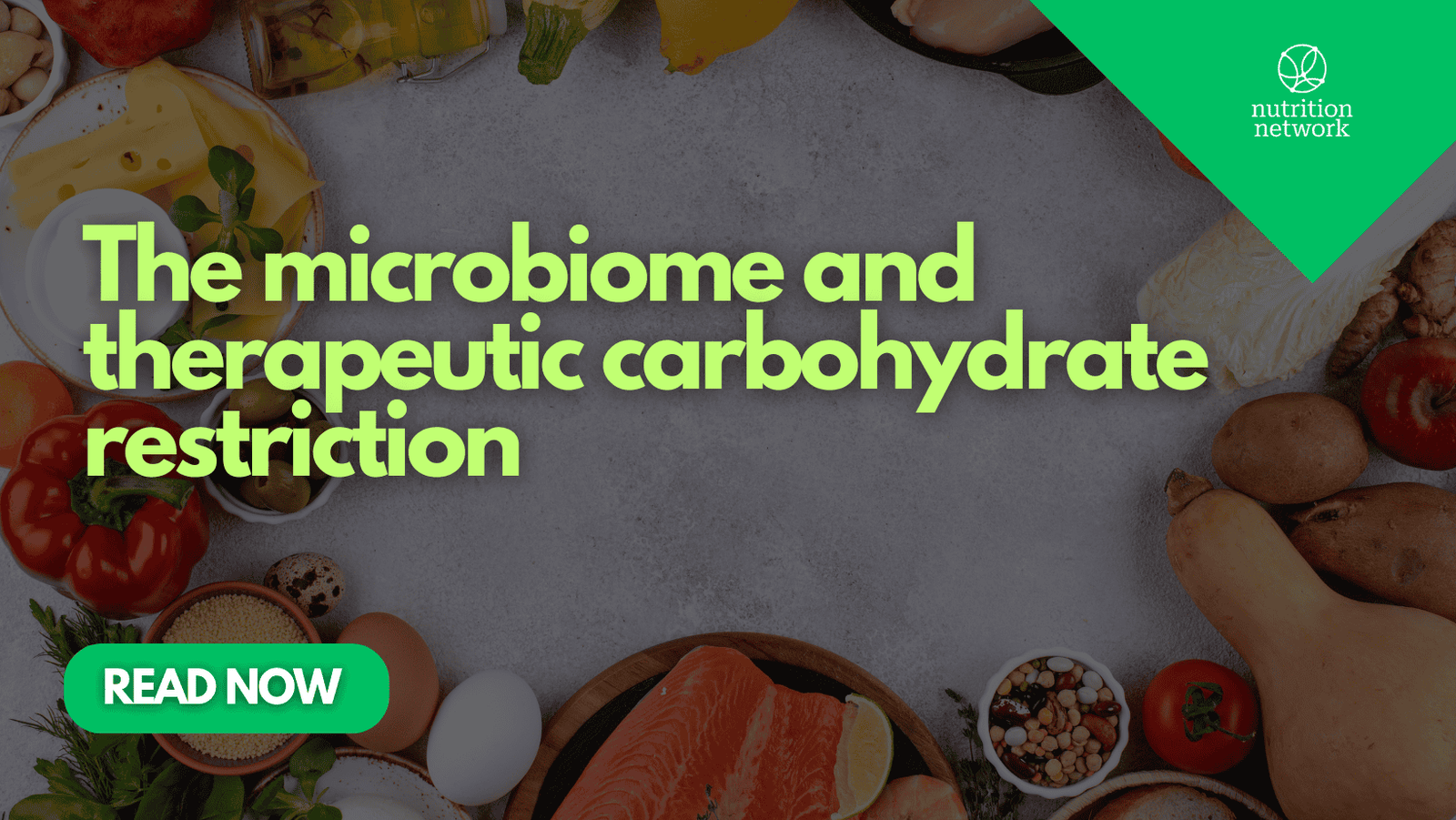
The microbiome and therapeutic carbohydrate restriction

healthtostBy healthtostFebruary 18, 2026No Comments5 Mins Read
Facebook Twitter Pinterest LinkedIn Tumblr Reddit WhatsApp Email
The Microbiome And Therapeutic Carbohydrate Restriction
Share
Facebook Twitter LinkedIn Pinterest WhatsApp Email

Sarah Rice BSc. (Hons), MCOptom (UK), MHP, NNP

It is not surprising that the gastrointestinal tract (GIT) and microbiota are attracting considerable interest in the research field. As the primary interface with the outside world, the GIT is a central hub for nutrient and immune signaling that has bidirectional effects on all body systems. The microbiome consists of approximately 100 trillion microorganisms that inhabit the human gut. These microorganisms, along with the metabolites they generate, interact with human physiology and can affect a wide range of conditions. Commentary on various conditions and their relationship to the microbiome is widespread in the literature and spans metabolic, inflammatory, neurological, and endocrine domains (1, 3).

The microbiome is difficult to study because of its ability to be influenced by a number of factors, which include diet, stress, exercise, age, genetics, and environmental factors (2). Factors that influence the development of a healthy microbiome begin in infancy, and this complexity makes it difficult to define the determinants of a healthy microbiome, although trends are emerging (2). A key feature is that these complex communities, which include bacteria, fungi, protozoa and viruses, interact in a balanced manner, promoting homeostasis (2). Gut dysbiosis, on the other hand, reflects altered populations, which appear to be associated with disease.

One area under investigation is the interaction between ketogenic diet therapy and the microbiome in the treatment of epilepsy. The ketogenic diet has a 100-year history as an effective treatment for epilepsy, and there are a number of mechanisms by which it can exert therapeutic effects. The gut-brain axis is one way in which the microbiome and metabolites found in patients with epilepsy link dysbiosis and seizures. Changes in GABA synthesis and other characteristics of neurotransmission may contribute to lowering the seizure threshold (3). Antibiotics, probiotics, gastroenteritis, and gastroesophageal reflux disease (GERD) have all been associated with seizure episodes, with reductions seen in those taking antibiotics and probiotics (3).

People with epilepsy have been shown to have differences in microbiome characteristics compared to controls, but there is some heterogeneity among the findings. Common themes and proposed pathways emerge from studies showing that the ketogenic diet can improve dysbiosis, increase Bacteroidetes to Firmicutes proportion and increase of groups of bacteria associated with GABA production, mainly Bacteroides, Parabacteroidesand Escherichia (3).

In patients with drug-resistant epilepsy (DRE), the microbiome appears to mediate dietary effects. In a small study, children with DRE showed changes in their microbiome and metabolites that were linked to fewer seizures, particularly an increase in plasmagen-producing bacteria. Plasmagons affect membrane function and associated signaling. they are the main phospholipids in the gray and white matter of the frontal and parietal cortex (4).

By itself, the ketogenic diet will reshape the microbiome, with drug interactions also playing a role in its overall impact on this adaptable community. Two-way signals create layers of complexity. Untangling these issues is an ongoing challenge, and it may take some time before we fully understand their interactions. What we do know is that the Western diet has many features that can promote dysbiosis and affect function, including a tendency to increase levels of endotoxin-producing bacteria. Food processing provides acellular nutrients that affect absorption, and food additives such as emulsifiers can affect the human (host) microbiome and physiology (5).

Finally, the human gut has been shown to be inherently flexible, able to adapt to a wide range of foods, and flexibility may be an indicator of gut health (6). Higher-fat diets, such as the ketogenic diet, rapidly produce adaptations in the microbiome that complement the dietary change. The reduction in complex carbohydrates that gut bacteria metabolize to produce short-chain fatty acids (such as acetate, propionate, and butyrate) may be compensated by the production of a similar metabolite, isobutyrate, as well as differences due to ketone body metabolism. Focusing on a real food or whole food approach remains an important feature of therapeutic carbohydrate reduction. Improvements in gut health often coincide with the orchestra of metabolic changes that occur with this dietary change.

A whole foods, reduced carb approach can work with a range of eating patterns and gut sensitivities. Removing processed foods and replacing them with whole, lower-carb foods allows the two-way pathways of metabolism and gut to work together to improve health. Well-formulated ketogenic diets can provide additional benefits through ketone body metabolism, immune regulation, and gut-brain signaling. Microbiome research remains an exciting but complex field to navigate, with many unanswered questions driving continued research.

The Nutrition Network is launching a new training course: Gut Health: The Microbiome, Metabolism, and Modern Disease. This training examines how industrialized food systems, environmental changes, metabolic dysfunction and modern lifestyles have profoundly altered the ecology of the human gut. Practical frameworks guide clinicians in restoring gut health and promote a deeper understanding of gut-metabolism pathways.

  1. Mu, C., Rho, JM and Shearer, J. (2025) ‘The interaction between the gut and the ketogenic diet in health and disease’, Advanced Science, 12(36), pp. e04249. Available in:
  2. Campbell-McBride, N., Rice, SM and Murphy, T. (2023) ‘Chapter 8 – Gastrointestinal health and therapeutic carbohydrate restriction’, in TD Noakes et al. (ed.) Ketogenic. Academic Press, pp. 383–413. Available in:
  3. Kowalcze, K. et al. (2026) ‘Modulation of Gut Microbiome and Metabolome as One of the Potential Mechanisms of Ketogenic Diet Effect in the Treatment of Epilepsy’, Nutrients, 18(1), p 31. Available at:
  4. Dahlin, M., Wheelock, CE and Prast-Nielsen, S. (2024) ‘Association between seizure reduction during ketogenic diet treatment of epilepsy and changes in circulating metabolites and gut microbial composition’, eBioMedicine, 109, pp. 105400. Available at:
  5. Zinöcker, MK and Lindseth, IA (2018) ‘The Western diet-microbe-host interaction and its role in metabolic disease’, Nutrients, 10(3), p 365. Available at: https://doi.org/10.3390/nu10030365.
  6. Sholl, J., Mailing, LJ and Wood, TR (2021) ‘Reframing Nutritional Microbiota Studies To Reflect an Inherent Metabolic Flexibility of the Human Gut: a Narrative Review Focusing on High-Fat Diets’, mBio, 12(2). Available in:
carbohydrate microbiome restriction therapeutic
bhanuprakash.cg
healthtost
  • Website

Related Posts

What every woman should know

February 16, 2026

Air Fryer Flank Steak Tacos (15 Minutes, Weeknight Family Dinner)

February 16, 2026

Large breakfast study reveals protein curbs appetite, but fiber offers stronger benefits to gut microbiome

February 16, 2026

Leave A Reply Cancel Reply

Don't Miss
Nutrition

The microbiome and therapeutic carbohydrate restriction

By healthtostFebruary 18, 20260

Sarah Rice BSc. (Hons), MCOptom (UK), MHP, NNP It is not surprising that the gastrointestinal…

Polyploidy-induced senescence may affect aging and cancer risk

February 18, 2026

Can mobile apps change the way we eat?

February 18, 2026

Make your workouts more functional

February 18, 2026
Stay In Touch
  • Facebook
  • Twitter
  • Pinterest
  • Instagram
  • YouTube
  • Vimeo
TAGS
Baby benefits body brain cancer care Day Diet disease exercise finds Fitness food Guide health healthy heart Improve Life Loss Men mental Natural Nutrition Patients People Pregnancy protein research reveals risk routine sex sexual Skin study Therapy Tips Top Training Treatment ways weight women Workout
About Us
About Us

Welcome to HealthTost, your trusted source for breaking health news, expert insights, and wellness inspiration. At HealthTost, we are committed to delivering accurate, timely, and empowering information to help you make informed decisions about your health and well-being.

Latest Articles

The microbiome and therapeutic carbohydrate restriction

February 18, 2026

Polyploidy-induced senescence may affect aging and cancer risk

February 18, 2026

Can mobile apps change the way we eat?

February 18, 2026
New Comments
    Facebook X (Twitter) Instagram Pinterest
    • About Us
    • Contact Us
    • Privacy Policy
    • Terms and Conditions
    • Disclaimer
    © 2026 HealthTost. All Rights Reserved.

    Type above and press Enter to search. Press Esc to cancel.