


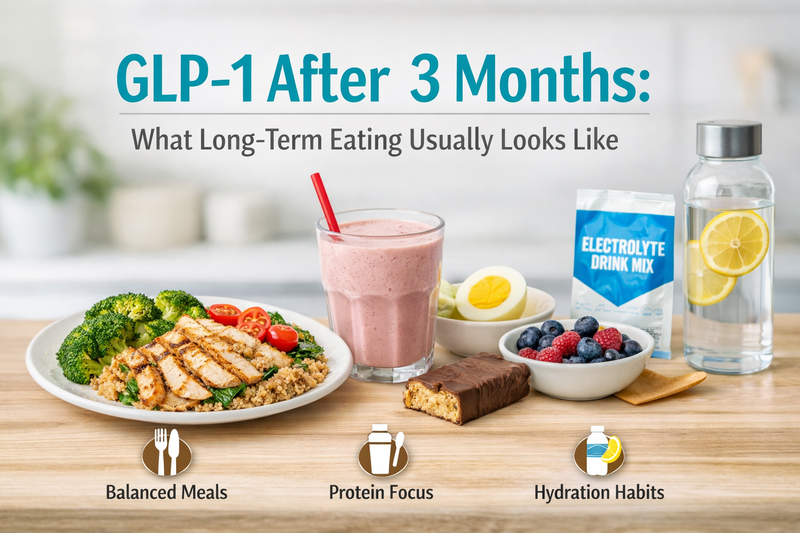
Last update: February 2026
Quick answer: If you’re in weeks 5-12 on a GLP-1 journey, eating often starts to seem more predictable. Many people notice more consistent appetite cues, fewer portion surprises, and a routine that’s easier to repeat. In this guide, you’ll get a simple daily routine, protein food ideas, and practical meal categories that you can rotate in to stay consistent without overthinking it.
This phase is often less about “adjusting” and more about building habits you can maintain. Many people do best with protein choices, simple planning, and hydration between meals.
In weeks 5-12, your routine may feel more stable. Meals may be less experimental and food decisions may require less mental effort. This phase works best when you repeat what already works and keep the meals simple enough to follow on busy days.
Because weeks 5-12 benefit from a steady pace
In this phase, consistency often matters more than variety. Many people find that a repetitive rhythm supports comfort, energy and continuity. The goal is not perfection. The goal is a structure that looks realistic.
What many people notice in weeks 5-12
Experiences vary, but frequently discussed patterns include:
- Clearer signs of hunger and fullness
- More predictable portions
- More consistent energy throughout the day
- Less decision fatigue about food choices
- Better tolerance for a wider range of textures over time
This often happens when routines start to become automatic.
How to eat during GLP-1 weeks 5-12
Keep the protein first
Many people continue to make protein-based meals and then add sides as convenience allows. Options like protein shakes, protein bars, and portion-controlled meals can make it easier to stay consistent when life gets busy.
Use a simple daily rhythm
Many people do better with a loose structure rather than a strict schedule. The goal is to make eating feel predictable without forcing food when you’re not ready for it.
Hydration between meals
Drinking fluids between meals rather than during meals can help save space in the stomach for food. Many people keep electrolyte hydration options available for active days, travel, or days when intake is lower than expected.
Keep meals simple and then add variety
Many people find it easier to rotate through a small list of reliable breakfasts, lunches and snacks and then add variety slowly. Repeating foods that you tolerate well can reduce overeating and help you stay stable.
A simple daily rate for GLP-1 weeks 5–12
Use this as a flexible framework rather than a strict plan. Repeat the structure daily and alternate foods as tolerated.
Note: This rhythm is meant to be repeated. Many people prefer to have a small mix of shakes, soups, meals and snacks available so that options are easy on busy days.
Protein food options (easy categories to switch)
Breakfast options (light but structured)
| Food category | How people often use it | Pluggable category |
|---|---|---|
| Protein shake | Low effort, easy start when appetite is moderate | It shakes |
| Breakfast based on eggs | Simple, familiar protein with flexible portions | Eggs & omelets |
| Soft protein snack | Soft texture option when chewing is excessive | Puddings & jellies |
Lunch options (most important meal)
| Food category | How people often use it | Pluggable category |
|---|---|---|
| Portion-controlled entry | Balanced, predictable meal without guesswork | Meals & tickets |
| Protein soup | A choice with a focus on comfort, lower volume | Soups & bouillons |
| Protein shake (as a meal) | Useful when solids feel heavy but still need structure | It shakes |
Afternoon options (support without full meal)
| Food category | How people often use it | Pluggable category |
|---|---|---|
| Protein bar | Portion-controlled snack | Bar |
| Pudding or gelatin | Soft texture, easy choice when appetite is low | Puddings & jellies |
Evening options (lighter closing)
| Food category | How people often use it | Pluggable category |
|---|---|---|
| Soup based meal | Warm, lighter option that still looks complete | Soups & bouillons |
| Small entree portion | Anticipated dinner option without a large plate | Meals & tickets |
| Protein shake (backup option) | Useful when appetite is minimal but you still want structure | It shakes |
Focus on simple purchases for weeks 5-12
Tips to stay consistent in weeks 5-12
- Keep a short list of reliable meals that you can repeat
- Use portion-controlled options on busy days
- Eat slowly and stop at a comfortable fullness
- Keep hydration consistent between meals
- Focus on consistency over perfection
These are supportive habits, not fixes. It’s normal to adjust as you learn what works best for you.
Frequently Asked Questions GLP-1 Weeks 5–12
Many people continue to prefer smaller protein meals because they are convenient and easy to repeat. Portions often become more natural during this phase, but a smaller structure can help you stay consistent on busy days.
Daily changes in appetite are common. Many people use a flexible pacing: choose a smaller protein option when appetite is low and a more balanced meal when appetite is stronger, while keeping hydration consistent between meals.
Many people keep the structure the same and only change one part at a time, such as changing the flavor of a shake, switching up a soup, or changing the snack category. This keeps meals predictable while reducing boredom.
Many people find that hydration affects how they feel every day. Drinking fluids between meals can help save stomach space for food, and some people use electrolyte options for extra support on days when they are active or when intake is lower.
If you have ongoing concerns, feel unsure about what is right for your needs, or want personal guidance, talking with your healthcare provider can help. They can advise you based on your health history and goals.
Sources and further reading
This content is for general information and support only and is not a substitute for medical advice. Always talk to your healthcare provider about what is right for you. Nashua Nutrition does not employ medical professionals and does not provide clinical care.
← Previous post
