


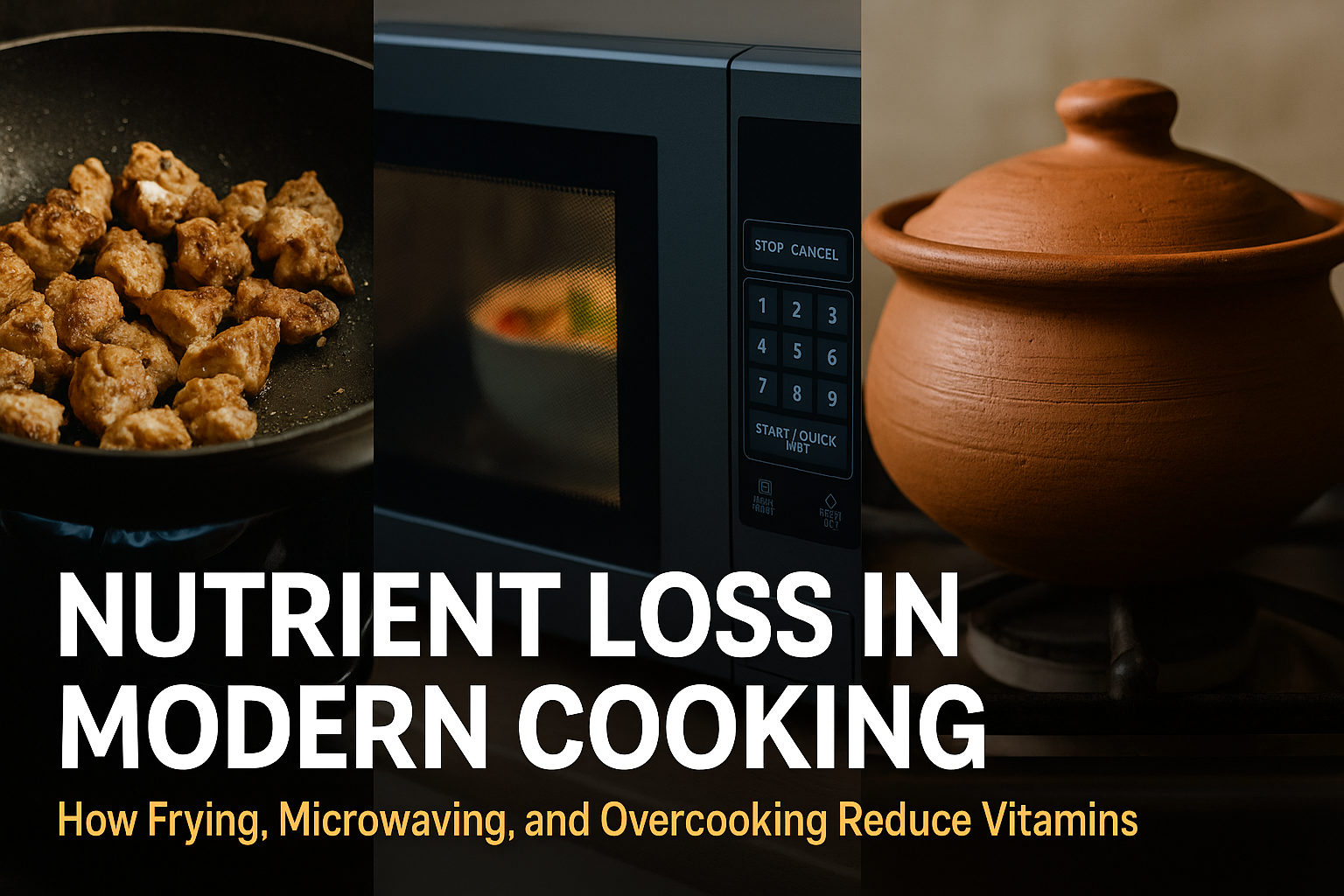
Food isn’t just about filling hunger – it’s about fueling life. Every spoonful you eat carries vitamins, minerals and antioxidants that your body needs to fight disease, boost energy and stay healthy. However, in today’s fast-paced kitchens, we often unknowingly cook these vital nutrients.
From the crisp Punjabi pakoras to reheat curries in the microwave and simmering pots niharicooking methods play a huge role in how much nutrition actually ends up on our plate. Vitamin C, B complex and antioxidants they are very sensitive to heat and cooking style and the wrong method can ruin up to 50–90% of these nutrients.
This article reveals it science of nutrient loss in cookingexplains how frying, microwaving and overcooking affect your food and your offerings smarter cooking alternatives rooted in both modern nutritional research and traditional wisdom.
🔥 Frying: Crispy taste, hidden nutrient damage
In Pakistan, frying is almost a cultural identity — be it samosas during Ramadan, parathas at breakfastor fried chicken on the weekends. The aroma is irresistible, but here’s the hidden truth: frying can turn nutrient-dense foods into calorie-dense, nutrient-poor meals.
The science of nutrient loss in frying
Vitamin breakdown – Vitamins such as Vitamin C (important for immunity) and B-vitamins (necessary for energy and brain health) are water soluble and extremely sensitive to heat. At frying temperatures (160–190°C), they decompose rapidly.
Mineral retention versus oil absorption – While minerals such as iron and calcium survive better, they are overshadowed by the oil absorptionwhich increases the fat and calorie content.
Toxic Compounds – Continuous oil reheating leads to trans fats and acrylamideslinked to cardiovascular risks and inflammation.
Real life example
I reflect baingan (eggplant) pancakes.. Raw baingan is rich in antioxidants such as nasuninbut when fried, much of this antioxidant is broken down and the eggplant absorbs large amounts of oil. What should have been a nutrient-dense side dish becomes a greasy calorie bomb.
Healthier alternatives to frying
Shallow Frying – Cook with minimal oil in a heavy-bottomed pan to reduce nutrient damage.
Air frying – Keeps the food crispy without drowning it in oil.
Correct choice of oil – Usage mustard oil or olive oil for high heat stability. For a traditional taste, desi ghee in moderation it is much better than repeatedly reused cooking oil.
⚡ Microwave: Fast but not always nutrient friendly
Microwaves have become the most useful appliance for busy Pakistani families. From reheating leftover daal to defrosting chicken, they are quick and convenient. But do microwaves destroy the nutrients in your food? The answer is subtle.

The Science of Microwaving and Nutrients
Short bursts preserve nutrients – Microwaving for a short time actually preserves more nutrients than boiling because less water is used and the cooking time is shorter.
Reheating hazards – Continuous reheating, especially of vegetables, reduces antioxidants such as flavonoids and polyphenols that protect against chronic diseases.
Container security – Microwaving food in plastic containers can release harmful phthalates and BPAthat mimic hormones in the body and can cause long-term health risks.
Real life example
Remains chicken curry Reheating in the microwave once is generally safe, but reheating it three times in two days means repeated vitamin breakdown and possible bacterial growth if not properly refrigerated.
Healthier alternatives to the microwave
Use glass or ceramic dishesnever thin plastics.
Microwave with a splash of water and cover the food to trap the steam — this helps preserve the nutrients.
Avoid reheating the same dish more than once. Instead, reheat only the portion you will eat.
🍲 Overcooking: The Silent Nutrient Killer
Desi cuisine is famous for its slow-cooked richness — from haleem in karachi to paya in Lahore. While flavors intensify, overcooking robs your meal of its nutritional power.

The Science of Overcooking
Vitamin C reduction – Found in green chilies, tomatoes and coriander, vitamin C begins to break down after just 10 minutes of continuous heat. Long hours of cooking destroy it almost completely.
Loss of polyphenols – Vegetables like spinach, okra and beans lose out polyphenols (plant antioxidants) when boiled or overcooked.
Texture-Nutrition Trade-Off – Soft textures appeal to taste, but nutrients are washed away, especially in the cooking water that is often drained.
Real life example
Think of daal simmering for hours until creamy. While the flavor deepens, a lot B-vitamins they dissolve in water and prolonged heat destroys them further. If the liquid is not consumed, most of the vitamins are gone.
Healthier alternatives
Pressure cooking – Reduces cooking time while retaining more vitamins.
Add vegetables last – Throw in spinach, cilantro or peas at the end to lock in their nutrition.
Gentle Simmer – Keep the flame low and avoid over-stirring to preserve structure and nutrients.
🌿 Smarter cooking techniques that preserve nutrition
Pakistani cuisines don’t have to sacrifice nutrition for taste. Traditional methods already offer healthier approaches:

Piping hot – Best for vegetables like carrots, cauliflower and beans. Locks in vitamin C and antioxidants while maintaining crunch.
Cooking in a Clay Pot – A method of inheritance still used in villages. The clay distributes the heat evenly and cooks slowly at lower temperatures, protecting the delicate vitamins.
Stir-Frying – Quick cooking over high heat with a little oil. Perfect for chicken vegetable mix or mix okrakeeping the diet intact.
Pressure cooking – Reduces cooking time, reduces exposure to water and preserves the B complex of vitamins in dal and meats.
Bleaching – Briefly boiling and then cooling the vegetables keeps the colors vibrant and the nutrients intact, making them ideal for salads and side dishes.
🍛 Practical advice for every home kitchen

Do not over exfoliate – Potato and cucumber skins contain fiber and minerals.
Use Less Water – Cook rice, daal or vegetables with minimal water to prevent nutrients from being washed away.
Cook small batches – Fresh foods retain more vitamins than refrigerated, reheated meals.
Herbs at the end – Garnish with fresh mint, coriander and curry leaves adds flavor and preserved antioxidants.
Balance tradition with science – It’s okay to indulge in fried samosas occasionally — just balance them out with steamed samosas or a fresh salad.
🌟 Final word: Cooking that heals, not just fills

Our food culture is rich and diverse, but modern cooking shortcuts and excessive use of oil and heat are silently destroying the very nutrients that make food life-giving. Moving to smarter methods — less frying, careful microwaving and avoiding overcooking — we can keep both taste and nutritional value alive in our kitchens.
At Nutric Food Fairour mission is to help every Pakistani household rediscover their joy cooking that heals, not just fills. After all, a stronger nation begins with stronger kitchens.
