


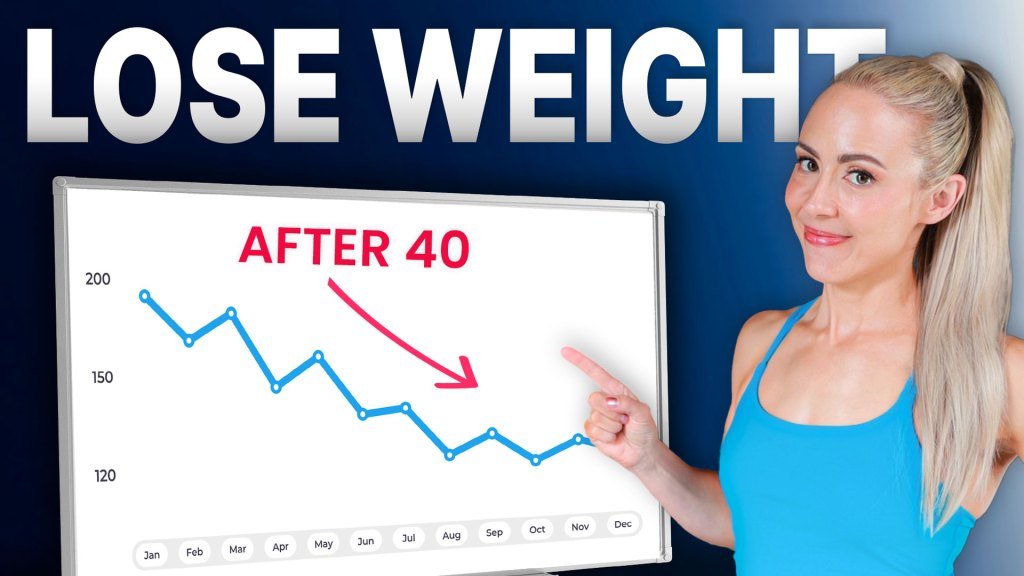
If you’re struggling to lose weight after 40 — if you feel like what used to work suddenly doesn’t work anymore — you’re not alone.
In fact, this is one of the most common things I hear from women:I eat clean… exercise… but the scale hasn’t budged.“
OR: “I used to lose weight so easily. Now I feel like I’m doing everything right and nothing happens.”
You can’t imagine it. Losing weight is more difficult in middle age. Hormones shift. Muscle mass decreases. The stress is greater. And our bodies don’t respond the same way they do at 25.
But here’s the part they never tell most women: it’s not impossible and it’s not even as hard as you think. You don’t need extreme diets or intimidating workouts. You just need a program that aligns with how your body works now.
Today, I cut through all the noise and give it to you three things that matter most for weight loss 40’s and beyond. These are the principles I’ve used with thousands of women over the past decade, and they’re backed by research and stories of real transformation from women just like you.
1. Losing weight after 40 requires a calorie deficit – but you don’t have to suffer
To lose weight at any age, your body must be in a caloric deficit – you need to burn a little more than you take in. You can’t bypass it. It’s just how human physiology works.
But this does not mean extreme restriction or starvation. The calorie deficit should be mild and fit into your lifestyle. It can be done in a balanced, empowering way without cutting out food groups or feeling deprived.
There is a sweet spot for weight loss:
- too aggressive → lose muscle, plateau faster, feel exhausted, rebound harder
- too soft → you won’t see progress and get discouraged
Calorie counting helps you find that sweet spot so you can lose weight without sacrificing a lot of muscle—the key to looking toned and staying healthy as you age. You don’t have to watch forever, and you don’t even have to watch perfectly. But it’s a powerful tool to help you learn what your body needs.
A great starting point: aim for a 200–300 calorie deficit below your maintenance calories (the amount you would eat to maintain your current weight). This small but steady reduction helps you lose fat while maintaining as much muscle as possible.
Why I prefer counting calories for weight loss
Calorie counting is just a tool – not a punishment, not a rigid diet, and not something to stick to. When used correctly, it is actually less restrictive from meal plans or rule-based approaches like low-carb or “sugar-free” because it leaves room for the foods you actually enjoy.
Tracking gives you clarity. Most women find that some days they were unknowingly overeating and other days they were undereating – a huge reason they feel stuck. Once you see the patterns clearly, correcting them becomes easy.
Many women are surprised by the release of calorie counting because:
- It takes the guesswork out and gets results, often fast.
- It gives you objective information about your body and learn what really works for you and your lifestyle.
- It helps you create a way of eating that you can maintain in the long term.
And, above all, it avoids the extremes in which women are often trapped:
- thinking calorie count = suffer
- bouncing between “all in” dieting or “forget it” binge eating
- or avoiding any structure or calorie tracking altogether leads to frustration.
If you don’t know how many calories you’re keeping, you can’t know how big a deficit you need – or if you’re eating too little, too much or just inconsistently. Without that clarity, you’re just guessing… andguesswork rarely leads to results after 40.
2. Losing weight after 40 requires consistency and patience
Losing weight after 40 is possible if you choose a plan you can stick with long-term – and then trust the process and actually stick with it! One of the biggest reasons women in their 40s struggle with weight loss isn’t that they’re doing things wrong— it’s that they give up too early. Most women expect that weight loss will be quick and that week after week the scale will come down steadily.
But in reality, weight loss is more like this – with peaks and valleys but an overall downward trend. I have created so many of these charts for my clients and they all look like this – everyone will have peaks and valleys along the way. This is an actual weight loss chart from one of my clients that shows how it works:

Water retention, stress, sleep, your menstrual cycle (even in menopause), sodium, hydration, strength training – these all affect the scale. So you will see:
That’s why I recommend weighing yourself daily and looking at the trend, not the day number. Most women need to change their mindset about the scale – just like counting calories. It is another tool that helps you monitor your body. It’s not stressful and it’s certainly not punishment. If you don’t weigh yourself daily, it’s hard to see this trend and you may decide it’s not working and stop. In reality, you should expect high days – but if you are consistent and follow a good plan, you should expect low days and downtrends as well.
Why “Slow” is the best way to lose weight
Losing weight fast is all the rage right now, and it’s hard to resist when you hear from a friend that she lost 10 pounds in just a few weeks on the latest fad diet. But it comes with disadvantages that matter even more in middle age:
- you lose more muscle
- your metabolism slows down
- you regain weight more easily
- you burn out faster and you can’t stick it.
If you want to look and feel good – and stay strong and healthy into your 50s, 60s and beyond – your goal isn’t just to lose weight. Your goal is to lose fat while maintaining muscle. Inevitably, when you lose weight, you lose muscle (except for some beginners in the first few months of a program). So you need to think very carefully about weight loss because at this age, we want to do everything we can to maintain muscle mass and strength – as well as avoid negative metabolic adjustments after 40 from being too extreme.
And this requires:
- a small calorie deficit (ie 200 calories below maintenance)
- high protein (about 1g per kg of ideal body weight)
- strength training.
If you focus on these things, you will get much better results. Remember, it’s not just about losing weight. It’s to lose it proper way that creates a better shape, builds strength and promotes longevity.
Learn more about the science behind why weight loss gets harder after 40, why most diets fail, and the smartest, slowest, long-term strategy for weight loss over 40 in this video:
3. You need support and accountability for losing weight after 40
This is the part that women underestimate the most.
Losing weight isn’t just about eating and exercising. It’s a matter of mindset. It’s a matter of consistency. The point is to get through those weeks where you’re doing everything right and the scale still won’t budge.
And that’s where support makes all the difference.
Research shows that people who check in with someone – a coach, support group or accountability partner – are more successful at losing weight and more likely to keep it off. When you have support, you have someone who can:
- spot patterns you can’t see
- they keep you grounded when emotions run high
- I remind you that fluctuations are normal
- help you deal with problems
- reduce the urge to quit
- Keep things simple when you’re feeling overwhelmed
- helps you stay consistent even when life gets busy.
But I don’t need research to know that. I have seen this with thousands of women over the past decade.
Magen’s weight loss story
Magen is one of my most successful clients – you can read her full transformation story here. She lost a large amount of weight and kept it off long term, but halfway through her journey, she almost gave up.
He had stopped seeing progress despite the fact that he thought he was doing everything right. And she was frustrated and ready to quit, even though she had already lost a significant amount of weight.
During her check-in, I could see what she couldn’t: she had just stopped being consistent without realizing it. At first he was offended because he thought he was consistent. The beauty of my app and process is that we track calories and weight so I can easily point out gaps in her data and get her back on track.
Once we made small adjustments, the weight started to come off again. Without support, she would have given up, which would have been a shame because she ended up losing over 50 pounds. She has also kept that weight off and trained with me for 5+ years inspiring and mentoring other ladies.
Sarah’s weight loss story
Sarah is another example of a weight loss success story after 40. She lost over 35 pounds – and kept it off – because she didn’t just focus on diet and exercise. Sarah knew she would only be successful with her weight loss if she also worked on herself. Sarah was successful because:
- checked every week for almost a year
- I completed my mindset programs – Pivot Challenge and Mind & Muscle
- recorded every day
- she focused on rebuilding her habits when times got tough
- she regularly reminded herself of her powerful “why.”
And because of it, she didn’t just lose weight – she became a much stronger, more confident version of herself.
These 3 things work for successful weight loss over 40
When you combine a mild calorie deficit, consistency and support, your body responds – even if nothing has worked for years.
Women in middle age are often told that weight gain is inevitable. That their metabolism is slow. That hormones make it hopeless.
None of this is true.
What is true is that you need a different strategy than the one you used in your 20s. It may be more difficult but it is certainly not impossible. Women over 40 can have incredible transformations. Youyou just need the right approach for your stage of life and the confidence to trust the process even when it feels slow.
If you are feeling stuck or frustrated right now, I hope this gives you clarity and hope. Because you can definitely do it and it’s not too late. In fact, with the right approach, this can be the strongest, healthiest, most powerful chapter of your life

