


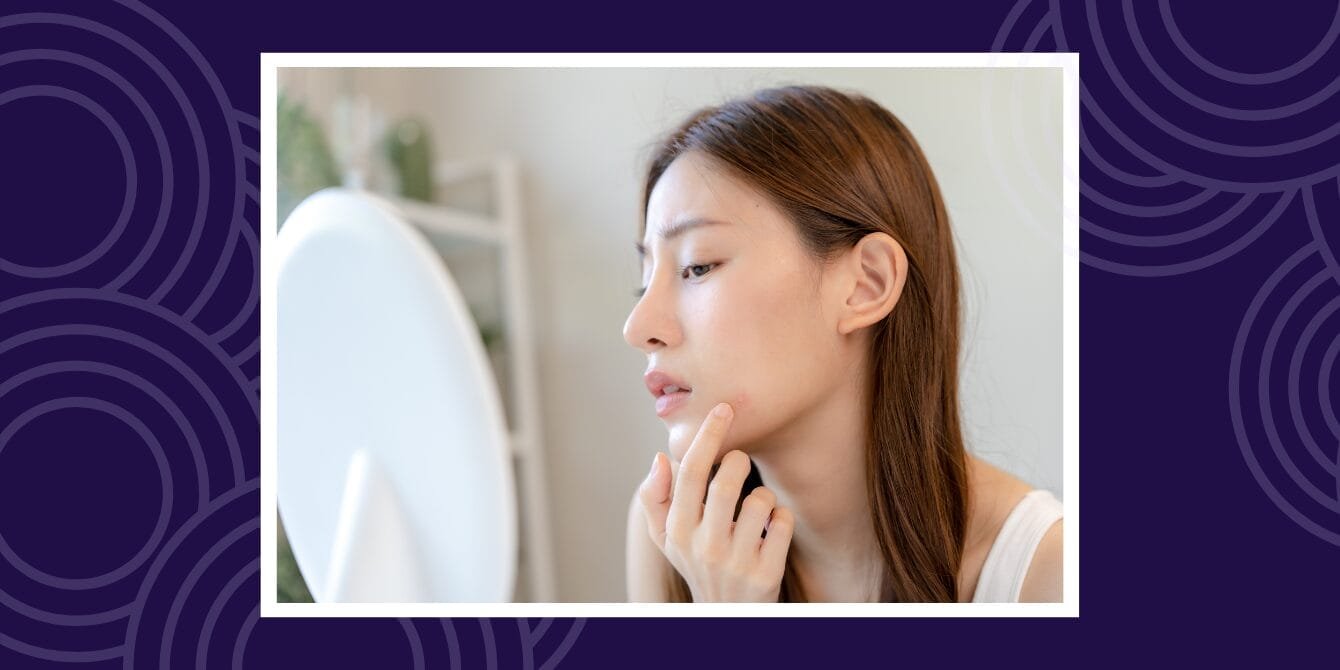
So you’re growing a whole person, and your skin has decided that now is the perfect time to throw up a full-on rebellion. Cool, cool, cool. If pregnancy acne has you looking sideways in every mirror and wondering what fresh hell this is, you’re definitely not alone. Up to 43% of pregnant women experience acne during pregnancy and for many, it’s not just a few stray pimples – we’re talking painful, under-the-skin breakouts that seem like a cruel cosmic joke.
The good news? According to Aegean H. Chan, MD, FAADdual board certified dermatologist and dermatopathologist, you don’t have to grin and bear it until your hormones decide to relax after giving birth. There are safe, effective options that can help. It’s just a matter of knowing what really works.
Why pregnancy acne strikes differently
Here’s what’s going on behind the scenes: Your body is basically swimming in progesterone right now. While this hormone is busy doing the important work of supporting your pregnancy, it’s also moonlighting as a skin saboteur.
“Pregnancy acne is mainly due to an increase in androgens such as progesterone,” explains Dr. Chan. “These hormones stimulate the sebaceous glands, which means more oil production and a greater chance of clogged pores and inflammation.” This excess oil combines with dead skin cells and bacteria and erupts—you get breakouts.
Research confirms that progesterone levels rise dramatically during pregnancy, particularly in the first trimester, stimulating increased sebum production that can trigger acne breakouts. And if you’ve dealt with hormonal acne in the past, especially along your jawline or lower face, your sebaceous glands are already primed to overreact to these hormonal changes.
When does pregnancy acne start (and when can it get better)
“The first trimester is when the endocrine changes of pregnancy accelerate,” says Dr. Chan. “Progesterone and human chorionic gonadotropin (hCG) rise rapidly and estrogen fluctuates before stabilizing later in pregnancy.” Translation: Your hormones are doing the right thing when you’re already dealing with morning sickness and exhaustion. Fantastic timing, body.
Breakouts tend to be most active during the first and second trimesters, although some people notice an improvement by the third trimester as hormone levels begin to rise. But – and this is important – it really varies from person to person. Some people’s skin calms down as pregnancy progresses, while others struggle with breakouts throughout.
Studies show that pregnancy acne is more common in women with a history of acne. Indeed, a study was found 90% of pregnant women who experienced breakouts had acne before pregnancy. And here’s something that might make you feel slightly better: for some lucky people, acne actually improves during pregnancy, likely thanks to changes in immune balance and estrogen levels.
What pregnancy acne really looks like
If you notice deep, painful bumps under your skin rather than typical superficial spots, this is classic pregnancy acne. “Since acne during pregnancy is fueled by androgen hormones like progesterone, it’s more common to have bumps below the skin’s surface, lower facial congestion and congestion, and deeper nodules or tender cysts,” notes Dr.
And pregnancy acne isn’t always limited to your face. Many pregnant women find that pimples spread to places they’ve never experienced acne before—on your chest, back, shoulders, even your bump. The lower face, especially around the chin and jawline, tends to be a hotspot, as this is where hormonal acne usually occurs. But honestly? Pregnancy acne is an equal opportunity nuisance and can appear almost anywhere you have sebaceous glands.
What Really Works (and What’s Safe)
The sad reality is that many acne treatments are off limits during pregnancy. But Dr. Chan is clear: “One of the biggest myths I hear is that you just have to ‘wait it out’ and there’s nothing you can safely do about acne during pregnancy. That’s just not true.”
Her top recommendations for pregnancy-safe acne fighters:
Azelaic acid
“Azelaic acid is my favorite for pregnancy acne,” says Dr. Chan. “It fights inflammation and bacteria and is one of the safest options we have.” It also helps with post-inflammatory hyperpigmentation (those pesky blackheads that remain after rashes heal) and is gentle enough for sensitive pregnancy skin. You can get it over the counter or get a stronger prescription from your dermatologist.
Mild acids
Lactic acid, mandelic acid, and PHAs are all great choices because they help unclog pores and smooth texture without irritating your skin. “I personally used The Ordinary’s 10% Lactic Acid + HA in all my pregnancies, about 2-3 times a week,” shares Dr. Chan. Low-concentration glycolic acid (less than 10%) is also considered safe. Just remember that many people notice increased skin sensitivity during pregnancy, so don’t overdo it.
Cleansers with benzoyl peroxide and salicylic acid
When used in cleanser form (which you obviously rinse off), they are considered low risk during pregnancy and can be good additions to your routine.
Sulfur
This ancient ingredient has natural antibacterial and anti-inflammatory properties. “It helps absorb excess oil without being harsh or irritating,” says Dr. Chan. You can use it as a spot treatment or in a daily cleanser. Yes, it can smell a little funky, but many newer formulas have minimized the characteristic rotten egg scent.
For serious cases
Some oral antibiotics such as erythromycin are safe during pregnancy for more widespread or deep inflammatory acne. Dr. Chan also notes that painful cystic lesions can be treated in the office with low-dose corticosteroid injections—a rapid, localized treatment that reduces inflammation without significant systemic absorption.
What you should absolutely avoid
Let’s be clear about what’s off the table:
Retinoids
All topical and oral retinoids are contraindicated during pregnancy because of the potential for birth defects. This includes tretinoin, adapalene, isotretinoin (Accutane), and tazarotene.
Certain antibiotics
Tetracyclines (including doxycycline and minocycline) are avoided because they can affect fetal bone and tooth development.
Anti-androgen drugs
Spironolactone and similar hormone blockers cross the placenta and can disrupt normal fetal development.
High strength chemical peels
Peels with more than 20% salicylic acid or trichloroacetic acid should wait until delivery.
Bakuchiol
This trendy “natural retinol alternative” does not actually work by the same pathways as retinoids, and there is no reliable safety data for use in pregnancy. “It’s structurally different from vitamin A, so it’s probably low risk, but that’s based on assumptions rather than evidence,” explains Dr. Chan. I don’t personally recommend it for acne during pregnancy, as there isn’t enough evidence to show that it’s more effective than proven safe options.
A simple pregnancy-safe routine
The routine of Dr. Chan is refreshingly simple:
Morning: Benzoyl Peroxide or Salicylic Acid Hydrating Cleanser, followed by Azelaic Acid, then Moisturizer, Finish with Broad Spectrum Sunscreen.
Afternoon: Gentle cleanser (medicated or moisturizing, depending on sensitivity), an AHA or PHA exfoliant that leaves the skin, then moisturizer.
“It doesn’t really have to be complicated,” says Dr. Chan. “So many people feel they need to ‘dry out’ or be aggressive with acne, but in reality, consistency with the right active ingredients is much more effective and won’t disrupt the skin barrier in the process.”
The emotional part also matters
There’s no doubt that struggling with your skin while your body is already going through massive changes can be really hard. “Your body and hormones change so much, and when your skin doesn’t feel like your own, it can really take a toll emotionally,” acknowledges Dr. Chan.
Her advice? Don’t go it alone. “I see so many women feeling like they have to deal with problems on their own, trying product after product, spending months and so much money, when they could have gotten early relief from a dermatologist.” Having a dermatologist in your corner who understands safe pregnancy options can make all the difference—both for your skin and your peace of mind.
The essence
Pregnancy acne is common, it’s frustrating, and it can make you want to live in a cave until your hormones normalize. But you don’t have to accept it as an inevitable part of pregnancy.
“Just because your body is changing doesn’t mean you have to accept breakouts as inevitable,” says Dr. Chan. “With the right guidance, pregnancy acne is something we can manage safely and effectively.”
And honestly? This is just the kind of reassurance you need when you’re already dealing with everything else pregnancy throws at you.
