

Close Menu
Healthtost
  • News
  • Mental Health
  • Men’s Health
  • Women’s Health
  • Skin Care
  • Sexual Health
  • Pregnancy
  • Nutrition
  • Fitness
  • Recommended Essentials
What's Hot

How sugar affects your microbes

February 10, 2026

The health benefits of walking at any age

February 10, 2026

‘Partial reprogramming’ of engram neurons restores memory performance in mice

February 10, 2026
Facebook X (Twitter) Instagram
  • About Us
  • Contact Us
  • Privacy Policy
  • Terms and Conditions
  • Disclaimer
Facebook X (Twitter) Instagram
Healthtost
SUBSCRIBE
  • News

    ‘Partial reprogramming’ of engram neurons restores memory performance in mice

    February 10, 2026

    SPT Labtech and Bellbrook Labs Introduce High-Throughput Screening Platform for Cancer Research

    February 10, 2026

    The nervous system actively promotes precancerous lesions of the pancreas

    February 9, 2026

    UK Ambulance Intensive Care Expands But Unequal Access Still Limits Life-Saving Treatment

    February 9, 2026

    New neuroprotective drug improves recovery after acute ischemic stroke

    February 8, 2026
  • Mental Health

    Advancing the Future of Behavioral Health Data Exchange

    February 7, 2026

    How to avoid watching disturbing videos on social media and protect your peace of mind

    February 6, 2026

    Mental Health in the Black Community: Addressing…

    February 3, 2026

    Some people gain confidence when they think things through, others lose it – new research

    February 2, 2026

    3 practical ways to improve a writer’s mental health

    January 31, 2026
  • Men’s Health

    Air conditioning in nursing homes reduces heat-related risk

    February 6, 2026

    Analysis: What it’s like to have non-verbal autism and what helped me

    February 5, 2026

    Testicular cancer self-examination and why it could save your life

    February 2, 2026

    25-Minute Bodyweight Functional Training Program for Beginners

    February 1, 2026

    Turning everyday eggs into powerful nutrient delivery systems

    January 30, 2026
  • Women’s Health

    Perimenopause symptoms to watch out for in your 30s and 40s

    February 9, 2026

    Breast reduction surgery saved my life

    February 9, 2026

    2.6 Friday Faves – The Fitnessista

    February 7, 2026

    Enjoying Endorphins: How to Spoil Your Mood with Feel-Good Hormones

    February 5, 2026

    A critical maternal health data system is at risk

    February 5, 2026
  • Skin Care

    5 Signs Your Skin Needs a Drink (And What to Do About It)

    February 10, 2026

    Fraxel Laser in Philadelphia | About Facial Aesthetics

    February 10, 2026

    Complete serum that works: The nighttime routine for real results

    February 8, 2026

    How to avoid shaving irritation: 7 myths that keep your skin angry

    February 7, 2026

    TNW Rich Cream for Soft, Smooth Skin – The natural wash

    February 7, 2026
  • Sexual Health

    Australia is closer to ending cervical cancer

    February 9, 2026

    Adventurous intimacy is more common than you think — Alliance for Sexual Health

    February 5, 2026

    A guide to a comfortable cervical check with Dr. Unsworth

    February 1, 2026

    How “Bridgerton” and the Other Romances Evolved in Their Depictions of Consent

    January 30, 2026

    Extraction, gold mining and SRHR in Kenya

    January 29, 2026
  • Pregnancy

    18 places to get free baby products, samples and gear in 2026

    February 8, 2026

    Pregnant on Chhath Puja? Hydration and nutrition tips

    February 6, 2026

    The second trimester sweet spot is real. Here’s how to get the most out of it

    February 4, 2026

    Is it safe to drink milk during pregnancy? What to know

    January 31, 2026

    12 Expert Answers to Your Pregnancy Yoga Questions

    January 29, 2026
  • Nutrition

    How sugar affects your microbes

    February 10, 2026

    Stress and weight in midlife

    February 9, 2026

    Nutrient Loss in Modern Cooking: How Frying, Microwaving and Overcooking Deplete Vitamins

    February 9, 2026

    Intuitive Eating 101: It’s More Than ‘Eating When You’re Hungry’

    February 8, 2026

    The gut is not a tube

    February 8, 2026
  • Fitness

    The health benefits of walking at any age

    February 10, 2026

    The Orthopedic suggested cardio exercises that are easy on your joints

    February 8, 2026

    The Best Travel Products for Women Over 50 (Comfort and Convenience)

    February 8, 2026

    Ben Greenfield Weekly Update: January 30th

    February 7, 2026

    Smart Shoulder Solutions: An Evidence-based Approach

    February 7, 2026
  • Recommended Essentials
Healthtost
Home»News»Study reveals that removing skin bacteria enhances the brain’s attention signals
News

Study reveals that removing skin bacteria enhances the brain’s attention signals

healthtostBy healthtostApril 4, 2024No Comments4 Mins Read
Facebook Twitter Pinterest LinkedIn Tumblr Reddit WhatsApp Email
Study Reveals That Removing Skin Bacteria Enhances The Brain's Attention
Share
Facebook Twitter LinkedIn Pinterest WhatsApp Email

Scientists at the National Central University of Taiwan investigated the relationship between skin microflora and cognitive brain functions using electroencephalography and machine learning methods.

The study is published in the journal Scientific Reports.

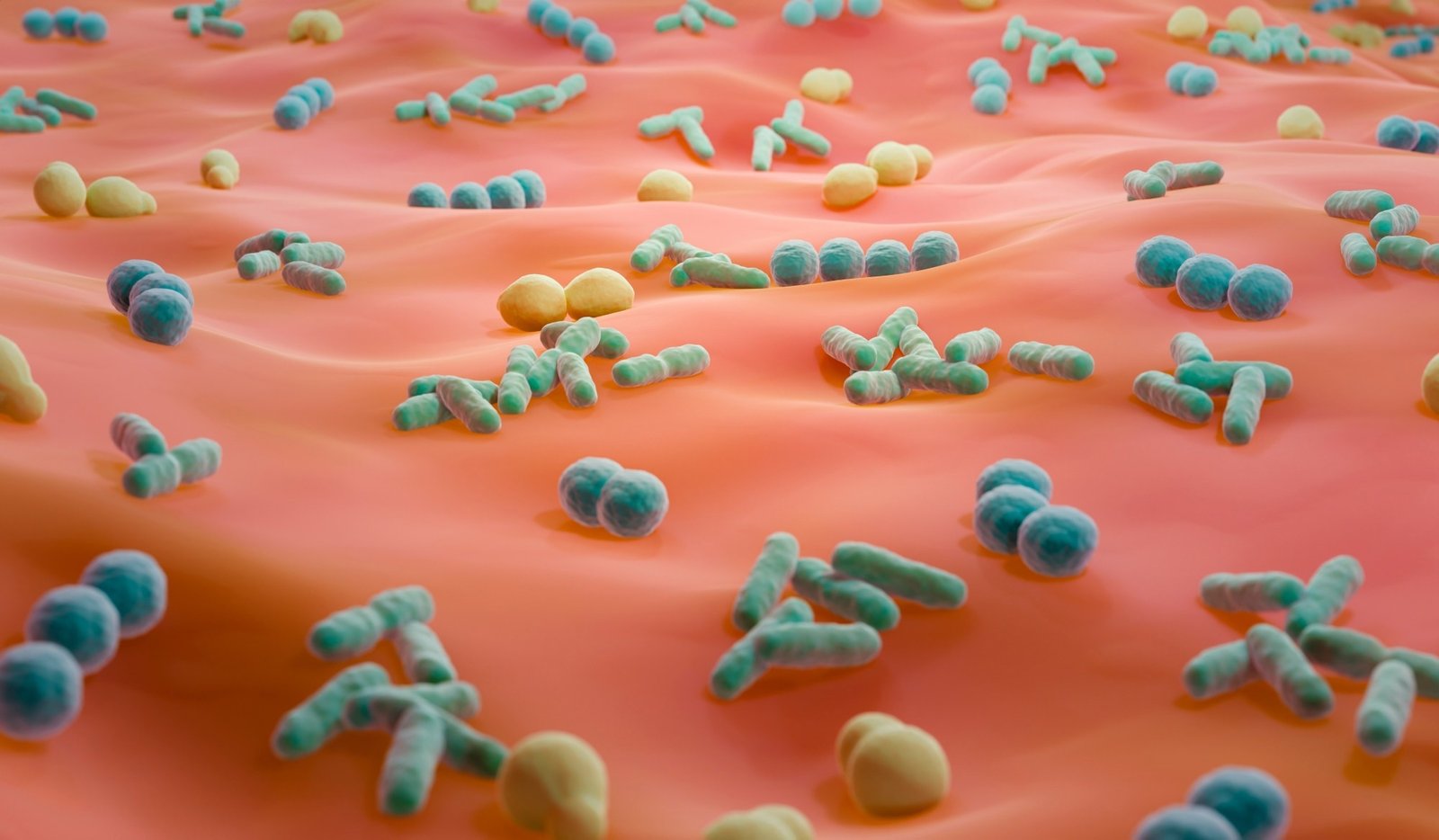
Study: Exploring the potential relationship between the skin microbiome and cognitive brain functions: a pilot EEG study. Image credit: ART-ur / Shutterstock

Record

The human microbiota is defined as a vast pool of heterogeneous microorganisms found primarily in the gastrointestinal tract (gut microbiota) and skin (skin microbiota).

The gut microbiota is known to play essential roles in regulating many physiological functions by producing short-chain fatty acids and other metabolites. In addition to maintaining intestinal homeostasis and regulating metabolic and immune functions, the gut microbiota plays a critical role in regulating vital brain functions through the bidirectional gut-brain axis.

Like the gastrointestinal tract, skin-inhabiting microorganisms are vital for maintaining skin homeostasis, preventing foreign invaders (pathogens and chemicals) from entering the body, regulating immune functions, and degrading natural products. These functions are exerted by short-chain fatty acids produced by the microflora of the skin.

The growth of bacteria on human skin depends on several factors, such as the skin microenvironment, age, sebum level, hormonal level and sweat production. An imbalance in the microbial composition and diversity of the skin (dysbiosis) can lead to various skin conditions, such as atopic dermatitis, wounds, psoriasis, acne vulgaris, diabetic foot ulcer or Pityriasis Versicolor.

In this study, scientists evaluated interactions between skin microbiota and brain signals related to cognition in healthy individuals.

Study design

The study was conducted on a total of 20 healthy subjects. Each participant’s level of attention (cognitive function) was measured using a classical monosphere task involving an odd and a standard stimulus with different frequencies presented in a random order.

Each participant’s electrical brain activities were measured during the oddball task using electroencephalography (EEG) under three different conditions of bacterial population manipulation on the participant’s forehead.

Bacterial populations were subjected to alcohol, glycerin and water manipulations to investigate the effect of skin microbiota on brain cognitive functions. Alcohol, glycerin, and water manipulations were applied to eliminate skin bacteria, increase skin bacterial growth, and mimic natural skin bacterial growth.

EEG changes (event-related potentials, ERPs) were analyzed using statistical and machine learning methods to detect the impact of skin microbiota manipulations on attention-related brain activities.
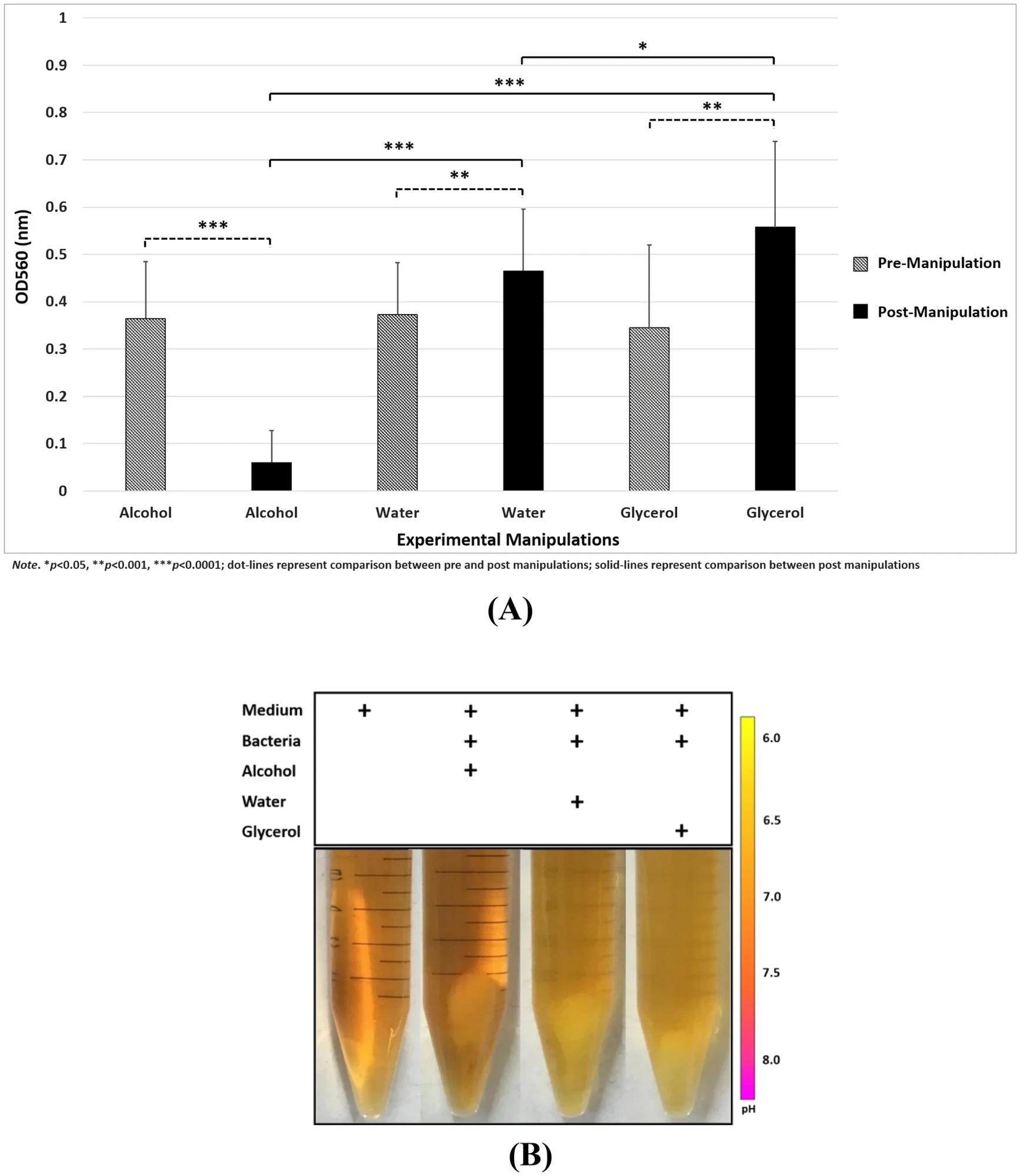
(A) Significant effects of the experimental manipulations on the bacterial population.  (B) Color changes after experimental manipulations indicated bacterial fermentation.(ONE) Significant effects of the experimental manipulations on the bacterial population. (si) Color changes after experimental manipulations indicated bacterial fermentation.

Important observations

Optical density measurements of bacterial populations under three experimental manipulations revealed significantly increased bacterial growth under water and glycerin conditions compared to that under alcohol conditions.

Participants’ levels of cognitive processes were determined by measuring ERPs of N200 (negative peak at 200 milliseconds) and P300 (a positive peal at 300 milliseconds) in response to experimental stimuli.

According to the available literature, increased N200 amplitudes are indicative of selective allocation of spatial attention, novelty or mismatch detection, and cognitive control. Similarly, enhanced P300 amplitudes are associated with selective attention.

Effective implementation of the oddball task was determined by examining ERPs under the water manipulation condition. Findings revealed significantly higher P300 amplitudes in the central-parietal region in response to the monosphere stimulus compared to that for the standard stimulus. This indicates efficient execution of the work.

ERP measurements under experimental manipulations revealed that alcohol manipulation (bacteria removal) induces a significant induction in P300 amplitudes in response to a single-shot stimulus alone compared to water and glycerol conditions (increased bacterial growth). These observations suggest that removing bacteria from the skin increases participants’ level of attention.

However, despite significant variation in bacterial growth under water and glycerol conditions, these two experimental manipulations observed no significant differences in P300 amplitudes.

This observation indicates that the effect of skin bacterial population on the P300 signal is not proportional to the number of bacteria. Conversely, it can be assumed that the increased bacterial population does not degrade brain signals.

Based on pre-existing evidence, the scientists hypothesized that glycerin may increase the growth of certain but not all bacteria, and that not all bacteria can affect brain signals. They further hypothesized that the decrease in P300 amplitude under water and glycerol conditions may be due to an imbalance in the concentration of short-chain fatty acids in the skin due to bacterial overgrowth.

Important study

The study finds that removing the skin’s bacterial population can significantly increase P300 amplitudes along the midline channels, suggesting a significant improvement in attention level.

The study also finds that machine learning classifiers can separate each experimental manipulation using EEG data with greater than 88% accuracy.

attention bacteria Brains enhances removing reveals signals Skin study
bhanuprakash.cg
healthtost
  • Website

Related Posts

‘Partial reprogramming’ of engram neurons restores memory performance in mice

February 10, 2026

5 Signs Your Skin Needs a Drink (And What to Do About It)

February 10, 2026

SPT Labtech and Bellbrook Labs Introduce High-Throughput Screening Platform for Cancer Research

February 10, 2026

Leave A Reply Cancel Reply

Don't Miss
Nutrition

How sugar affects your microbes

By healthtostFebruary 10, 20260

Understanding how added sugar shapes your gut microbiome and why balance mattersAuthor: Megan XipolitosWhen we…

The health benefits of walking at any age

February 10, 2026

‘Partial reprogramming’ of engram neurons restores memory performance in mice

February 10, 2026

5 Signs Your Skin Needs a Drink (And What to Do About It)

February 10, 2026
Stay In Touch
  • Facebook
  • Twitter
  • Pinterest
  • Instagram
  • YouTube
  • Vimeo
TAGS
Baby benefits body brain cancer care Day Diet disease exercise finds Fitness food Guide health healthy heart Improve Life Loss Men mental Natural Nutrition Patients People Pregnancy protein research reveals risk routine sex sexual Skin study Therapy Tips Top Training Treatment ways weight women Workout
About Us
About Us

Welcome to HealthTost, your trusted source for breaking health news, expert insights, and wellness inspiration. At HealthTost, we are committed to delivering accurate, timely, and empowering information to help you make informed decisions about your health and well-being.

Latest Articles

How sugar affects your microbes

February 10, 2026

The health benefits of walking at any age

February 10, 2026

‘Partial reprogramming’ of engram neurons restores memory performance in mice

February 10, 2026
New Comments
    Facebook X (Twitter) Instagram Pinterest
    • About Us
    • Contact Us
    • Privacy Policy
    • Terms and Conditions
    • Disclaimer
    © 2026 HealthTost. All Rights Reserved.

    Type above and press Enter to search. Press Esc to cancel.