


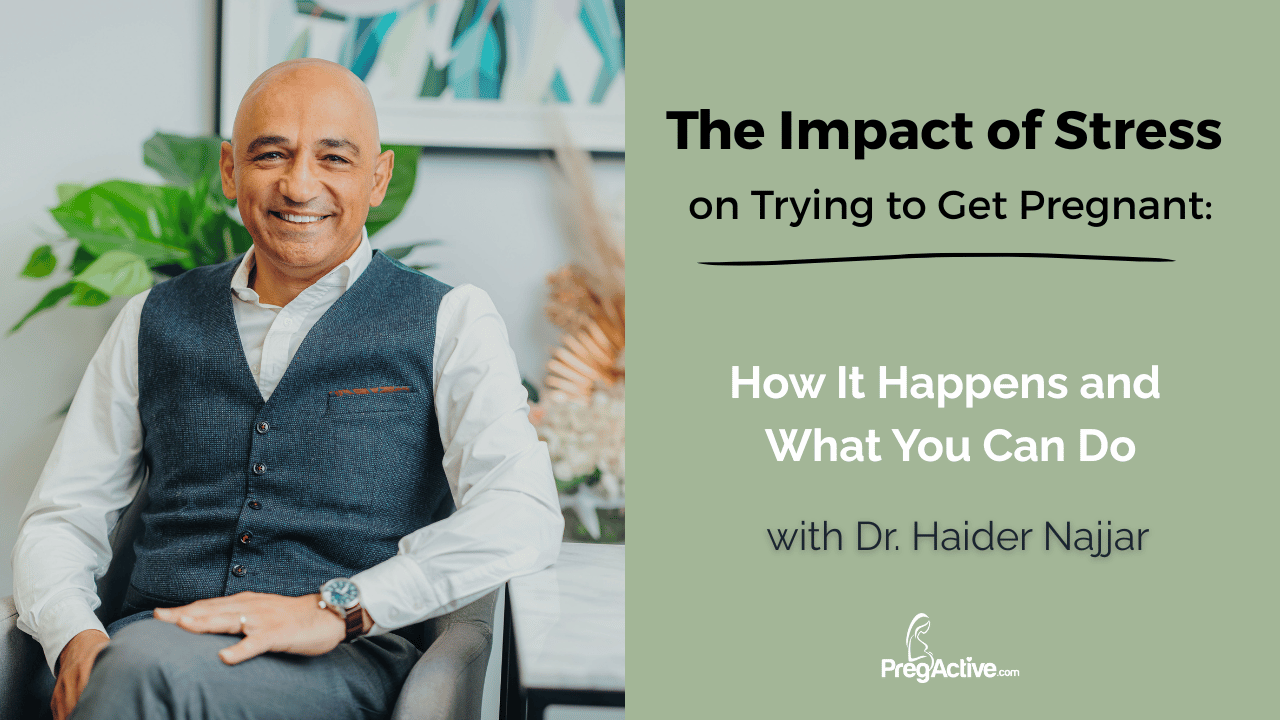
How it happens and what you can do. From Dr. Haider Najjar, MBChB, FRANZCOG, Fertility Specialist and Co-Founder, Create Fertility and Create Health and
Kerryn Boyle, BExSci, Prenatal Exercise Specialist and Women’s Health Specialist, Co-Founder of PregActive.
In today’s busy world – with jobs, family, money worries and everything else – stress is something that almost everyone feels.
As people who help women (and couples) on their fertility and pregnancy paths, we see how constant stress can really hinder trying to conceive. It’s not the only factor, but it’s a big one that’s easy to overlook.
Dr. Najjar puts it simply:
“Fertility is not just about eggs and sperm. it’s about taking care of your whole self. Calm the stress and your body often responds positively.“
Let’s break down in everyday terms how stress affects fertility for both women and men, then share some simple ways to reduce it and support your chances.
How stress messes up your body’s baby-making signals
When you are very stressed, your body pumps out more cortisol (the main stress hormone). In small doses, it’s useful for quick “fight or flight” moments. But when it’s high for weeks or months, it starts to interfere with the hormones that control reproduction.
For women:
High cortisol can throw off signals from your brain to your ovaries. This can make periods irregular, delay or skip ovulation (no egg is released), or shorten the time after ovulation when pregnancy is possible.
For men:
It can lower testosterone levels and cause more damage to sperm from things like extra inflammation or “wear and tear” in the body.
This often means a lower sperm count, poorer motility or lower quality.
This can be very difficult if something like PCOS already exists in women, where stress worsens hormonal imbalances.
Stress can also harm eggs, sperm and the chance of implantation
In addition to hormones, long-term stress creates additional “damage” to cells through inflammation and unstable molecules (oxidative stress).
For the eggs:
It can damage the tiny power centers inside developing eggs, leading to fewer good quality eggs or higher chances of problems in early embryo development (especially noticeable in IVF).
For semen:
Constant stress can break the DNA in sperm. When the damage is high (above about 30%), the natural chances of pregnancy can be greatly reduced.
For the uterus
Stress hormones can make the lining less hospitable for an embryo to attach, increasing inflammation and reducing the “stickiness” needed for implantation.
Studies show that women with higher stress levels may have a 30-40% lower chance of getting pregnant each month naturally. In men, stress can reduce the success of treatments such as IVF by around 10-15%.
Stress during fertility treatments such as IVF
Going through IVF or similar treatments is stressful in itself – it often feels as big as other major health challenges.
Higher anxiety around egg collection or embryo transfer can sometimes be associated with lower quality embryos or a higher risk of early loss. Things like endometriosis in women or work pressures in men can add to it.
Simple, practical ways to reduce stress and support fertility
The good news?
Small, achievable changes in everyday life can make a real difference. These are safe ideas backed by guidance from experts like RANDSKOG.
You don’t have to do everything at once – pick one thing to start with, build from there and most people notice improvements in 6-8 weeks.
Calm your mind
Try 10 minutes of mindfulness or deep breathing every day – use it for free PregActive app in the morning or before bed.
Consider talk therapy such as CBT (often covered by a doctor’s referral).
Jot down three small positive things each day to shift the focus.
Eat for better balance
Add antioxidant-rich foods such as berries, nuts or vegetables daily. Include omega-3 sources like salmon or discuss fish oil with a fertility dietitian.
Prioritize sleep Aim for 7-9 hours. Create a routine that turns off the lights by 10 p.m., if possible. Try blue light blocking glasses after 8pm. or do gentle stretches such as 5-minute walking-on-the-wall pose to relax.
Move your body gently
Go for a brisk 30-minute walk 3 times a week. Add simple strength sessions 2x/week, e.g PregActive Fertility Stream routine (body weight, easy at home);
Additional useful options
Acupuncture: One or two sessions in the second half of your cycle or around transfer.
Restorative yoga: 10 minutes of supported poses in the evening or one class per week.
Keep track of how you’re doing
Take the free online Perceived Stress Scale (PSS-10) today. Check back every 4 weeks – aim to lower your score by 5-10 points.
Start small:
Choose one change this week, add another next week. Be kind to yourself – no one does everything perfectly and adding pressure to ‘fix’ stress can backfire.
Just pause right now:
Take a deep breath, hold it for a second, then let it out slowly. Do this two more times. Notice how your body feels calmer even for a moment.
A positive way forward stress isn’t ‘all in your head’ – it creates real changes in your body that can affect fertility.
But by making some gentle lifestyle changes along with any medical treatment, many people improve their chances and feel better overall.
As Dr. Najjar tells his patients: “Your body reacts to a tight deadline the same way it reacts to real danger. Teach it to feel safe and calm and things often start to fall into place.”
Dr. Haider Najjar is a leading fertility specialist and surgeon, co-founder of Create Fertility, focusing on advanced care and IVF in Melbourne.
Kerryn Boyle brings over 20 years to women’s health as a prenatal/postnatal exercise specialist and co-founder of PregActive, helping movement and wellness support fertility and pregnancy.
