


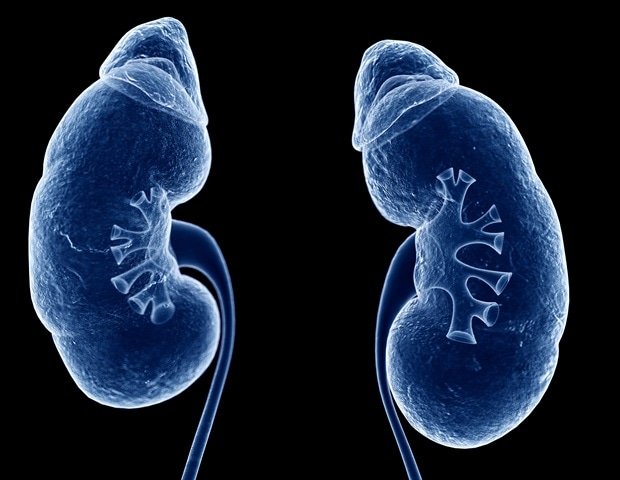
A new study offers hope that kidney transplant patients could one day have a monthly treatment instead of multiple pills each day. The new treatment may also reduce side effects and increase the lifespan of the donor organ.
Currently, kidney transplant patients must take a cocktail of pills every day for the rest of their lives. These standard immunosuppressants prevent the immune system from attacking the new organ, but over time they can damage kidney function and become less effective.
Standard immunosuppressants are also associated with diabetes, hypertension, high cholesterol and cause side effects that lead most transplant patients to skip doses, noted study first author Flavio Vincenti, MD, professor of medicine and surgery in the Department of Nephrology at UC San Francisco. Other side effects include fatigue, muscle weakness, sexual dysfunction, hair loss and insomnia.
In the Phase 2 pilot study, 23 patients received infusions of belatacept and dazodalibep, proteins that disrupt the immune system’s attack on the new organ but do not affect non-immune cells the way standard treatment does.
Kidney function improved in all patients who completed the study and was similar for those who experienced organ rejection. No patient experienced rejection due to antibodies produced by the immune system, which is the main cause of transplant failure. The results were published on February 3 at American Journal of Transplantation.
We hope to see better medication compliance with the new regimen as it does not involve taking multiple medications every day.”
Flavio Vincenti, MD, professor of medicine and surgery, Division of Nephrology, UC San Francisco
Study patients received standard immunosuppressants at baseline, but these were discontinued on day 28 in favor of infusions for the remainder of the 48-week study.
Two of the first three patients experienced organ rejection, which was effectively treated and the rejection reversed. Drug frequency and dosage were revised in response to the remaining patients, 13 of whom completed the study. Seven patients withdrew due to acute renal rejection, adverse events, or unspecified reasons.
The next phase of the study will determine whether these early findings are replicated in a large cohort of patients, said senior author Allan D. Kirk, MD, PhD, professor of surgery at Duke University School of Medicine.
“We hope that most patients can escape the toxic effects of immunosuppressants, which will be reserved for those with certain high-risk factors,” Kirk said.
Source:
Journal Reference:
