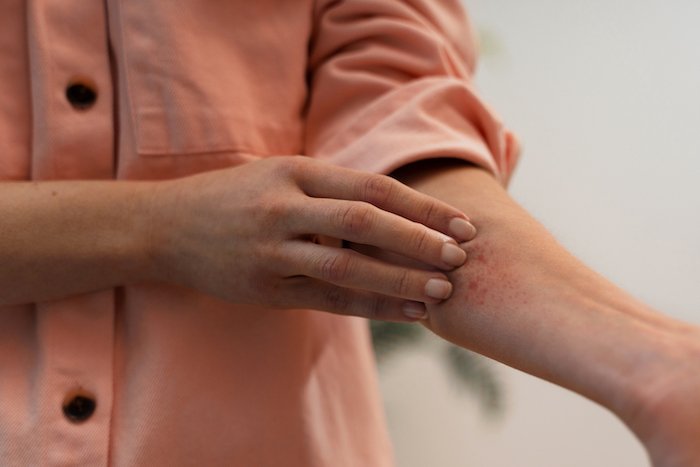
If you’re dealing with eczema, you know how frustrating it can be—just when you think your eczema skin barrier is finally healing, another flare-up occurs.
The itching, redness, and dry patches that crack and weep are exhausting.
Here’s something you might not know: a big part of what goes on in your skin involves tiny living things that you can’t even see. We are talking about the good and bad bacteria that live on the surface of the skin.
Before you get fooled, understand that these are part of everyone’s skin and together are called the skin microbiome. If the balance between good and bad bacteria gets out of whack, your eczema can get much worse.
A recent study published in Allergy, Asthma & Immunology Research found that people with atopic dermatitis (the medical term for eczema) have much less diversity in their skin microbiome compared to healthy skin. This means that there are not enough different types of bacteria to keep the skin healthy.
Researchers have also found that skin with eczema has an overgrowth of harmful (bad) bacteria such as Staphylococcus aureus in the affected areas. Even more interestingly, they found that beneficial (good) bacteria like it Staphylococcus epidermidis and Roseomonas mucosa can protect the skin by inhibiting harmful bacteria and helping to regulate immune responses.
In other words, when you have more “good bugs” on your skin, they help keep the “bad bugs” in check. When the balance is tipped the other way, the skin barrier weakens and eczema flares up.
Here’s what you need to know about it and how you can use this awareness to reduce eczema flare-ups in the future.
What researchers have discovered about the skin barrier from eczema
Scientists have discovered that bad bacteria S. aureus lives in skin with eczema—both in red, itchy patches and in skin that looks normal. These bad bacteria intimidate the good bacteria, pushing them out and taking over the space.
While there, these bad bacteria release toxic substances that poke holes in your skin’s protective barrier, which increases inflammation and makes skin infections more likely.
Your skin is your first line of defense against the outside world, fending off germs, chemicals, allergens and more. But if you have eczema, your skin barrier can become weakened in this way, leading to a cycle of uncomfortable dryness, irritation and inflammation, symptoms which, in themselves, can contribute to further degradation of the skin barrier, making the problem worse.
Meanwhile, some good bacteria (S. epidermidis and R. mucosa) try to fight the bad bacteria. You can think of them as your skin’s security guards. Scientists are now looking at whether putting more of these helpful bacteria on eczema skin could work as a treatment. This would be similar to how we take beneficial bacteria in pill form or in food to help improve the balance of bacteria in the gut.
The researchers also discovered that when the microbiome gets out of balance, the skin stops producing enough of certain protective chemicals called short-chain fatty acids. These chemicals help keep your skin slightly acidic, which is a good thing, as it serves as a kind of force field against bad bacteria. Without enough of these chemicals, the skin becomes less acidic, which makes your skin much more receptive to bad bacteria.
The bottom line? Your skin is like a garden. When lots of beneficial bacteria thrive, they crowd out weeds (harmful bacteria) and help maintain a strong, healthy barrier. When that diversity is gone, weeds take over and your eczema gets worse.
What disrupts the skin barrier from eczema?
So what causes these bad bacteria to proliferate in the first place? There are many possibilities:
Overwashing and harsh soaps
When you use aggressive cleansers, they remove not only the dirt, but also the beneficial bacteria and natural oils that support the skin.
Antibacterial products
Overuse of antibacterial soaps and sanitizers can kill the good bacteria along with the bad, leaving room for the harmful species to take over.
Scratching
When you scratch at these irritating eczema patches, you break down the skin barrier, making it easier for bad bacteria to enter and harder for good bacteria to survive.
Exposure to allergens and irritants
Dry air, dust, pet dander, pollen, smoke, certain chemicals and irritants in skin care and personal care products, fragrances, and even fabrics like wool and polyester can trigger an eczema flare-up which in turn weakens the skin barrier. This is where the cycle of disrupted skin barrier to worsening symptoms begins. The more the skin barrier is weakened, the more irritants invade to cause problems.
Environmental factors
Pollution and certain skin treatments can further disrupt the microbiome by interfering with the skin’s natural processes. Dry indoor air is another culprit, as when humidity drops too low, moisture evaporates faster from the surface, which can destabilize the microbiome.
Stress
Hormonal and immune changes associated with stress can alter the balance between good and bad bacteria on your skin. A study found that stress, anxiety and other psychological conditions could disrupt the skin’s microbiome, leading to dermatitis and poor barrier function.
Genetics
Some people have genetic factors that weaken the skin barrier and make it easier for harmful bacteria to multiply and take over.

How to naturally strengthen the skin barrier from eczema
The good news is that you can do something about this skin imbalance. The key is to take steps that support a healthier, more balanced microbiome.
1. Be gentle with cleaning
Skip harsh cleansers and opt for gentle, pH-balanced options. Look for products that cleanse without disrupting the skin’s natural acid mantle.
2. Moisturize to strengthen your eczema skin barrier
A hydrated barrier is always a stronger barrier as it provides the right environment for beneficial bacteria to grow. Use rich, nourishing moisturizers that support barrier repair.
CV Skinlabs Calming Moisture is specially formulated for sensitive, eczema-prone skin and is hypoallergenic and fragrance-free. It also contains ingredients that help restore and protect the skin barrier without disrupting the microbiome. It is clinically proven to calm immune responses such as inflammation, irritation and redness with non-irritating and non-toxic ingredients.
3. Avoid over-sanitizing
Unless you are in a medical setting or handling food, you do not need to use antibacterial products regularly. Regular gentle washing with water and a mild cleanser will be enough to clean your skin without wiping out the beneficial bacteria. If you must wash frequently, use a creamy, moisturizing soap and apply moisturizer immediately after each wash.
4. Think about your diet
Research shows a connection between gut bacteria and skin health through what scientists call the “gut-skin axis.” Eating high-fiber and fermented foods can promote beneficial bacteria in your gut, which can indirectly support your skin microbiome. Foods rich in omega-3s like salmon, flaxseed, and walnuts, along with fermented foods that contain probiotics, can help your body produce beneficial compounds that reduce inflammation and support skin hydration.
5. Don’t scratch if you can help it!
It’s hard to resist, but scratching damages the skin barrier and disrupts the bacterial balance. When you get the urge to scratch, try applying a cold compress or spritzing some Rescue + Relief moisturizing and soothing spray on the area. Either will help calm the itch, and our spray contains ingredients made to soothe itch.
6. Be careful with topical treatments
While medications like topical steroids have their place in managing severe eczema flare-ups, overuse can affect your skin’s microbiome. Work with your dermatologist to find the right balance and consider microbiome-friendly skin care products like CV Skinlabs for daily maintenance between breakouts.
7. Try a humidifier
If you live in a dry climate, a humidifier can go a long way in reducing your breakouts. Use at least one in your bedroom so your skin doesn’t have to fight dryness while it tries to heal overnight. Keep indoor air at around 40-50% to make a difference to your skin.

Why supporting your microbiome heals the skin barrier from eczema
Eczema isn’t just about dry skin, it’s also about a lack of germs. By nurturing your skin’s vibrant ecosystem through gentle care, balanced hydration and barrier-safe products, you can gradually rebuild this invisible defense layer. Over time, see if you notice less frequent breakouts and more hydrated skin. If you do, it means you are taking the right steps.
Did you know that your eczema is linked to good and bad bacteria?
Featured image from Freepik.