


Is it possible to get visible abs?
If you’re feeling frustrated with your midsection – you’re not alone. For many women it can feel like no matter how well they eat or how hard they work out, the stomach area doesn’t change – especially with age. Online, it can seem like everyone else has a lean, defined stomach… which just adds to the pressure.
The truth? Visible abs are strong, but they they come at a cost that most of us are unwilling to pay. The body fat level required can be difficult to achieve and not realistic – or even healthy – to maintain long term.
In this article (and video), I’ll share the body fat percentages women typically need to see abs, what that means for you, and the real trade-offs you need to consider before you start cutting calories and increasing your exercise to get abs.
I’ve also put everything in one video if that’s your style:
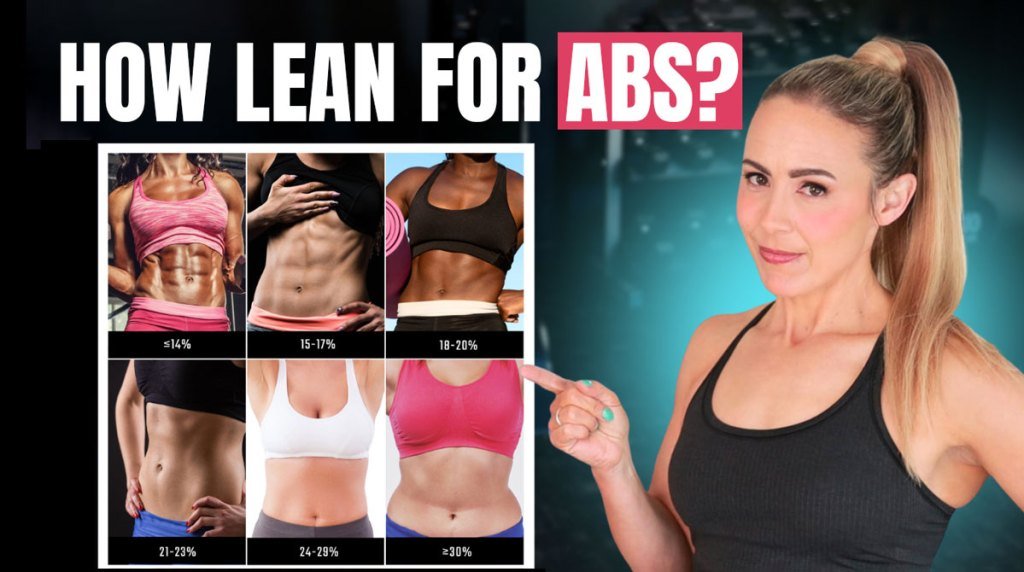
Body fat percentage for abs in women

So what body fat percentage do you need to have to see abs?
Here is a general guide for women:
- 24-29% body fat
This is one healthy series. Many women feel and look fantastic at this level, and it is consistently achievable, sustainable and supports overall well-being. - 21-23% body fat
At this point, you may start to see some definition around your waist—a faint outline of abs. It’s a great balance: lean, but still retain some feminine curves and a fullness to your muscles that look attractive and healthy. Most women will have to work a little harder to achieve and maintain this level of body fat. - 18-20% body fat
This is where visible abs are more likely to appear, especially if your body stores fat more evenly (you don’t tend to store more in your stomach). But it usually means strict discipline in your training, diet and lifestyle. It is harder to reach and harder to maintain. - 15-17% body fat
This is it below what most women should be if they care about health and longevity. It is comparable to a fitness competitor during conditioning and is extremely difficult to maintain. Many women in this range report low energy, irregular cycles, mood problems, and poor sleep and recovery. - Under 15%
This is a stage field, and it’s not realistic – or healthy – for most women, no matter what your age.
So yes – abs are visible possible for the average woman at around 18–21% body fat, but even then, body type and fat distribution play a big role. Some women may still not see clear definition even at lower levels.
Did you know…?
At lower body fat levels, you can train and develop your abs to make them more visible. This works because bigger muscles will be more visible. However, at higher body fat levels, you need to be careful about developing your abs too much. If you develop large muscles under a layer of fat, you risk making your middle even bigger. This is why trying to spot reduction is not a good strategy!
The social and lifestyle trade-offs of having abs
Here’s the truth: the pursuit of abs comes with a cost that most women aren’t willing to pay.
To get lean enough for abs, you need:
- A very consistent, tightly controlled diet
- Little to no alcohol
- Good sleep hygiene and stress management
- Intense, structured, regular workouts
- Saying “no” in social situations more often
- Weighing and tracking all food
If you really want to see abs, you need to ask yourself if you are willing to make these changes. Your commitment to your physique should be a top priority, and the reality is for most women this is not true. There are so many other competing priorities, especially as we get older. And that’s fine – but you’ll have to get your values straight and accept what that means for your waistline. This is very important because otherwise you will continue to feel frustrated about something you want to change but aren’t willing to put in the work to change.
The health implications of chasing low body fat and abs
Let’s talk about the deeper impact. Getting too thin can have serious drawbacks – especially as we get older.
Muscle Mass & Strength
As we age, we naturally lose muscle (a condition called sarcopenia). Staying too thin can accelerate this because weight loss usually involves muscle loss – you can’t have one without the other. Sarcopenia is linked to frailty, reduced mobility and chronic conditions such as heart disease and even cancer. To be a healthy, independent senior, you want to maintain as much muscle mass as possible.
Bone health
Estrogen plays an important role in bone density – and when you cut body fat too low, estrogen can decrease further. For many women, this creates a higher risk osteopenia or osteoporosis.
Hormonal Health
Excessive thinness acts as a stressor in the body. This can further reduce sex hormones such as estrogen and progesterone – exacerbating symptoms such as hot flashes, low libido, mood swings or menstrual irregularities.
Sleep, Mood & Motivation
Low-calorie diets disrupt sleep, raise cortisol, and sap your energy. You may look thinner, but feel flat, irritable, anxious or low.
My personal experience with being skinny and having abs
Because I have a body type that easily stores fat in the abs, I have to work really hard if I want a lean midsection. I’ve leaned for photo shoots before – and I’ll be honest, it felt awful. I became emotionally unstable – very anxious and cried very often. My body was telling me, this is quite modest. Even when I’m not prepping for photos, being on the thin side becomes a challenge mentally – and it also means lower energy, less strength, and feeling cold all the time. My body doesn’t like being that skinny.
In my early 20s, I missed my period for a few years because my body fat was so low. I had what was called the “Female Athletic Triad” – where you’re too active, don’t eat enough (or at least enough of the right things), and lose bone density. I ended up with osteopenia, which I eventually reversed – but only by increasing calories and gaining weight. This experience changed everything for me – my health is much more important than my looks.
Now, even though I’m on social media and expect to “look the part,” I’ve come to terms with not having a super skinny midsection. It’s just not worth the cost to my hormones and long-term health.
Is it realistic for you to get abs?
Instead of chasing an unrealistic body fat level and ripped abs, ask yourself:
- Do I feel strong and capable?
- Do I have good energy and a stable mood?
- Am I eating well and nourishing my body?
- Can I enjoy food and life within healthy limits and without guilt?
That’s it all the more important rather than being able to see your abs.
Mental health advice:
Remember: what you see online is not real life. Gymnasts know how to manipulate lighting, angles, water and food intake, and even tanning to make their abs pop. That doesn’t mean their bodies look like this 24/7 – and it’s not a realistic standard to measure yourself against again.
You can have abs, but are you willing to pay the cost?
You box have abs – but it will depend on:
- Your body type and fat distribution
- Your age and hormonal status
- Your willingness to trade flexibility for discipline
- How your body (and brain) responds to being so thin
If you’re still motivated to chase visible abs, that’s fine – but go in with your eyes open. And if you’re not? And that’s more than okay. Get your priorities straight and make peace with them. You may be willing to make quite a few sacrifices to get a slightly contoured abs – this is certainly achievable for most women.
If you are wondering what your Your version of strong, lean and healthy can look like – no extreme restrictions – my training programs are designed to help you build muscle, improve body composition and feel confident in your own skin at any age.
Whether abs are the goal or not, you are welcome to my world.
Learn more about educational programs here.

