


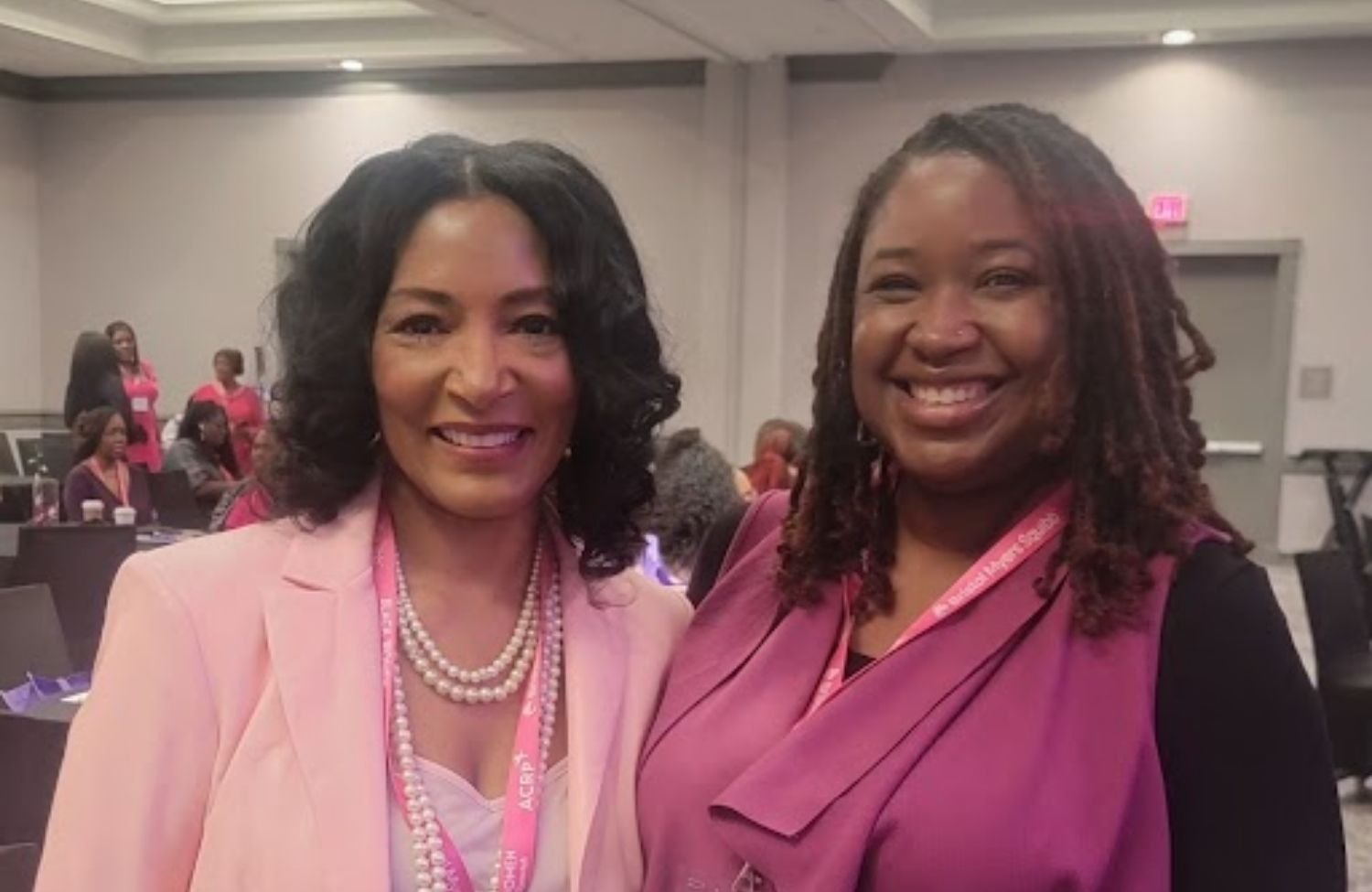
A discussion with Dr. Jayne Morgan on What Black Women Need to Know About Menopause and Cardiovascular Disease
Let’s talk about something that doesn’t get nearly enough attention: the connection between menopause and heart disease. Not just as separate chapters of our health journey, but as deeply intertwined experiences that Black women need to understand — especially during Heart Health Month.
Dr. Jayne Morgan, a cardiologist and VP of Medical Affairs at Hello Heart, has been sounding the alarm about this for years. And recent findings from the Black Women’s Health Imperative Menopause Survey—the largest ever conducted with black women—make it clear why this conversation is long overdue.
The protection we are losing
Here’s what many of us don’t know: during our reproductive years, our risk of heart disease is half that of men. But once we move into menopause, this risk becomes equal. By our seventies, it overcomes men’s danger.
Why? Estrogen.
“We now know that estrogen is cardioprotective,” explains Dr. Morgan. “It lowers your cholesterol and is anti-inflammatory.” But as we enter perimenopause—which can start as early as our thirties—those estrogen levels begin to drop. And with them, that cardiovascular protection begins to fade.
This is not abstract medical theory. It’s about understanding why that constellation of symptoms you’re experiencing—the ones you may have been told to just “deal with”—are actually your body signaling something important.
When symptoms become risk factors
Let’s be real: when most of us think of menopause, we think of hot flashes. Maybe night sweats. But the BWHI survey of more than 1,500 black women revealed something startling: 54 percent said they didn’t have enough information to effectively manage their symptoms. And many were shocked to learn of symptoms beyond hot flashes—brain fog, joint pain, weight gain, depression.
What Dr. Morgan wants us to understand is that these are not just inconvenient annoyances. Many of these symptoms are independent risk factors for heart disease.
Get hot flashes. “The severity and intensity of hot flashes also correlates with heart disease,” notes Dr. Morgan. “We know that black women tend to have hot flashes of longer duration, more intensity, and over longer periods of time. So there is a further increase in heart disease.”
Or consider sleep disturbance – something 55% of respondents struggled with weight gain and 42% struggled with depression. Dr. Morgan points out that insomnia has a direct correlation with heart disease, both in the duration and quality of sleep. “And we know that during menopause, sleep is often disrupted. So now we have women whose estrogen levels drop, their risk of heart disease increases, and they have an independent risk factor also as one of the symptoms of menopause.”
As one study participant said: “I literally only heard of one symptom which was hot flashes. The brain fog and low energy is the absolute worst thing. I really thought I was going into early Alzheimer’s.”
The information gap that puts us at risk
The answer of Dr. Morgan on the BWHI research findings pulls no punches: “This is a fundamentally critical research imperative that dispels the myth that black women may not experience the full range of menopausal symptoms. It actually supports our knowledge that not only do all symptoms occur, but often for longer periods of time and for a longer duration than white populations.”
And here’s what should concern us all: even among the highly educated, insured, professionally active black women who participated in the survey—women with strong earnings and access to care—there was still a huge information gap. 52% reported that they did not know which recommendations to follow.
“Culturally, it’s often misunderstood and rarely talked about, and certainly has nothing to do with heart disease,” says Dr. Morgan. “This is a major contribution to our knowledge of the health of this well-educated, high-income population, which continues to lack resources and accurate information.”
What we need to know now
So what should you be watching? Dr. Morgan recommends paying attention to your pregnancy history as a first indicator. If you’ve ever been diagnosed with pre-eclampsia, eclampsia, pregnancy-induced hypertension or gestational diabetes, you already have a double your risk of heart disease.
“Pregnancy serves as your first stress test,” she explains. “And a cardiologist would see this patient as a volume overload patient with a failed stress test.” Ideally, there should be a referral from your OB-GYN to a cardiologist. “This rarely happens and almost never happens in populations of color.”
As you approach perimenopause and menopause, you should get heart tests and talk with your healthcare provider about whether menopausal hormone therapy might be appropriate — not just for symptom management, but as a potential heart health strategy when you start at the right time.
Moving this one off the back burner
Women surveyed by BWHI made their needs clear: 66% expressed a need for more culturally grounded education starting in their 30s. They seek affordable treatment options, access to trusted providers, and safe spaces to share experiences and reduce stigma. See our survey results and get more perimenopause and menopause resources here.
As one participant shared: “I wish more had been said in my 30s about perimenopause. I wish I had better access to health care I could trust.”
Dr. Morgan’s message is direct: “This must be moved from the back to a full frontal view in order to live and experience our healthiest lives and most productive years.”
This heart health month, let’s start having the conversations that need to be had—about our symptoms, our risks, and the care we deserve. Because understanding the link between menopause and heart health isn’t just about managing symptoms. It is about protecting our lives.
