

Close Menu
Healthtost
  • News
  • Mental Health
  • Men’s Health
  • Women’s Health
  • Skin Care
  • Sexual Health
  • Pregnancy
  • Nutrition
  • Fitness
  • Recommended Essentials
What's Hot

The new molecular framework paves the way for targeted therapeutic interventions for Parkinson’s disease

May 5, 2026

Aging in place takes more than good intentions — It takes smart infrastructure

May 5, 2026

Breaking Barriers, Building Strength: The Maya Nassar Story

May 5, 2026
Facebook X (Twitter) Instagram
  • About Us
  • Contact Us
  • Privacy Policy
  • Terms and Conditions
  • Disclaimer
Facebook X (Twitter) Instagram
Healthtost
SUBSCRIBE
  • News

    The new molecular framework paves the way for targeted therapeutic interventions for Parkinson’s disease

    May 5, 2026

    The use of symptom dimensions may provide more accurate, personalized mental health care

    May 4, 2026

    Randomized controlled trial validates total hip arthroplasty to improve functional capacity

    May 4, 2026

    New genetic risk report reveals hidden risk of heart disease before symptoms appear

    May 3, 2026

    Five-target drug beats GLP-1/GIP therapy in obese diabetic mice

    May 3, 2026
  • Mental Health

    Every mental health journey starts with being seen

    May 2, 2026

    What animal studies teach us about toxic work environments

    April 27, 2026

    I hate hope: How to manage hope when you have treatment-resistant bipolar disorder

    April 19, 2026

    Rose Byrne is raw, magnetic and unfiltered as a woman in crisis

    April 18, 2026

    Can a single mother change her child’s surname in India?

    April 16, 2026
  • Men’s Health

    Aging in place takes more than good intentions — It takes smart infrastructure

    May 5, 2026

    Dr. William O. Brant on male sexual health and the risks and benefits of supplements

    May 4, 2026

    3 Day Home Workout Plan: Build Muscle and Burn Fat

    April 30, 2026

    GLP-1 drugs promise broader health benefits, but experts advise caution on use

    April 28, 2026

    Trauma patients recover faster when medical teams know each other well, new study finds

    April 28, 2026
  • Women’s Health

    Breaking Barriers, Building Strength: The Maya Nassar Story

    May 5, 2026

    How to do a breast self-exam and spot lumps

    May 4, 2026

    Finding the best lupus treatments

    May 3, 2026

    What is the difference between UVA and UVB rays?

    May 1, 2026

    Are you a fungus fanatic? We unpack the nutritional trend of mushroom mania

    April 29, 2026
  • Skin Care

    How I Did It: Fading Hormonal Hyperpigmentation Without Lasers

    May 3, 2026

    The truth about waterless care: What your skin really needs

    May 2, 2026

    What happens to your skin while you sleep? (the science of “Beauty Sle

    May 1, 2026

    Face Peeling Mask Guide: Shine Without Irritation

    April 28, 2026

    Is your moisturizing face mist really drying out your skin?

    April 28, 2026
  • Sexual Health

    5 Ways to Improve Heart Health for Men

    May 5, 2026

    Early signs of Peyronie’s disease and when to seek help

    May 3, 2026

    Boost erectile health and confidence

    May 1, 2026

    Judicial Restrictions on Abortion COVID-19 < SRHM

    April 30, 2026

    Can herpes affect fertility?

    April 29, 2026
  • Pregnancy

    Why is anemia during pregnancy high in Indian women?

    May 2, 2026

    5 things you need for the third trimester

    May 1, 2026

    Eating disorders in pregnancy and breastfeeding: Why “healthy eating” is not always easy

    May 1, 2026

    Comprehensive yoga for pregnancy, birth and beyond

    April 29, 2026

    Midwifery and Life – The postnatal health check New mums don’t know they can ask for

    April 28, 2026
  • Nutrition

    Can magnesium help you lose weight?

    May 4, 2026

    9 Easy Chia Pudding Recipes (+ The Perfect Pudding Ratio) • Kath Eats

    May 4, 2026

    A cancer-causing contaminant in drugs and meat

    May 3, 2026

    How Nutrition Supports Mood, Energy and Gut Health

    May 2, 2026

    How to create a self-care plan when you’re stressed

    May 1, 2026
  • Fitness

    The most underrated skill I wish everyone learned

    May 3, 2026

    Landmine Training and Why I Love It – Tony Gentilcore

    May 3, 2026

    9 Powerful Fitness Tips for Pear Shaped Bodies

    May 2, 2026

    If you can still do these 7 things at 60, your body is aging better than most

    May 2, 2026

    A Hike Leader’s Must-Have Kit

    April 30, 2026
  • Recommended Essentials
Healthtost
Home»News»C-section births do not increase risk of allergy in infants in a large Japanese cohort study
News

C-section births do not increase risk of allergy in infants in a large Japanese cohort study

healthtostBy healthtostNovember 14, 2025No Comments5 Mins Read
Facebook Twitter Pinterest LinkedIn Tumblr Reddit WhatsApp Email
C Section Births Do Not Increase Risk Of Allergy In Infants
Share
Facebook Twitter LinkedIn Pinterest WhatsApp Email

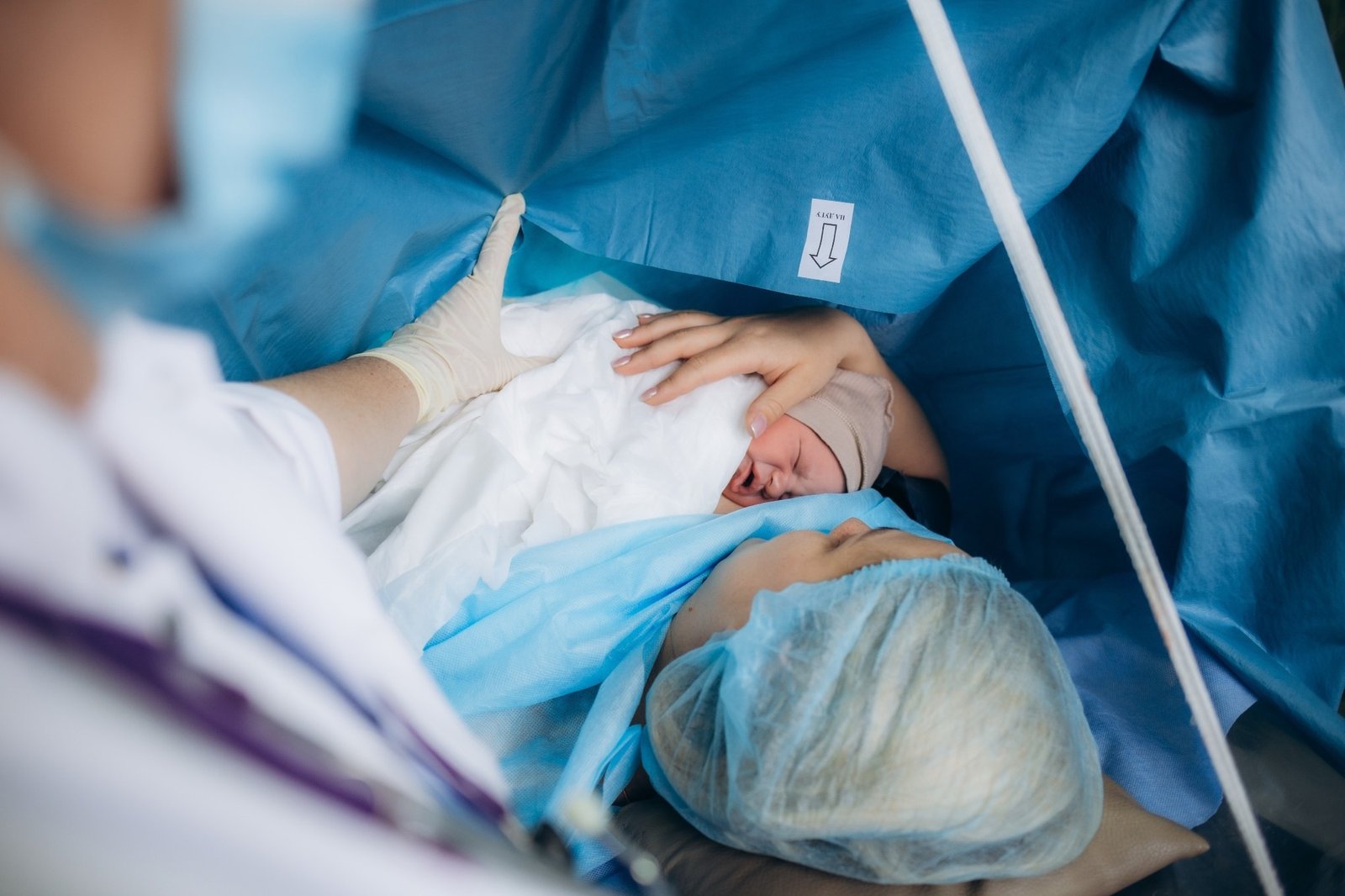
A national Japanese cohort finds no evidence that cesarean delivery increases the risks of eczema, wheezing, asthma or atopic dermatitis in early life, challenging concerns that the mode of birth alone leads to infant allergic disease.

Study: Association of caesarean section with asthma and atopic dermatitis in infants from the Japan Child and Environment Study. Image credit: Roman Fenton / Shutterstock

In a recent study published in the journal Scientific Reportsresearchers in Japan investigated associations between cesarean delivery and the development of eczema, wheezing, asthma, and atopic dermatitis in Japanese infants.

Increasing the Allergy Burden in Children’s Health

The incidence of allergic diseases has recently increased worldwide. In Japan, allergic diseases are a major health concern, with high rates of atopic dermatitis, wheezing and asthma seen in children. Meanwhile, caesarean section rates have also increased worldwide. Children born by caesarean section have an altered cytokine profile and gut flora compared to those born vaginally, although the clinical significance of these differences remains debatable.

Mode of delivery as a determinant of immune development

Therefore, the mode of delivery may be a critical factor influencing the development of the immune system and the incidence of disease in infants. The relationship between cesarean section and allergic diseases remains controversial, with some studies suggesting associations between allergic diseases and cesarean section, while others report no associations.

Cohort and JECS study population characteristics

In the present study, researchers investigated associations between cesarean delivery and the development of eczema and wheezing among Japanese infants. The team used data from the Japan Environment and Children Study (JECS), a large cohort study examining the impact of environmental factors on children’s health. THE JECS included 103,062 pregnancies between January 2011 and March 2014.

Methods of data collection and evaluation of results

The current study used his March 2018 data set JECS and those with miscarriage, multiple babies or stillbirth are excluded. Self-reported questionnaires were administered to collect information about pregnancy and children. Atopic dermatitis, wheezing, asthma and eczema were assessed based on information provided when the children were one year old. Participants were assigned to vaginal or caesarean section based on mode of delivery.

Classification of Emergency and Elective Cesarean Section

The caesarean section group was further divided into an elective or emergency delivery group. Emergency caesarean section included non-reassuring fetal condition, gestational hypertension syndrome, premature rupture of membranes, cephalopelvic disproportion, endometrial infection, obstructed or delayed delivery, and other complications.

Elective caesarean section included fetal malpresentation, placenta previa, repeat caesarean section, and history of uterine surgery. The researchers used multiple logistic regression analyses, adjusted for potential confounders, to assess the risks of eczema, atopic dermatitis, asthma, and wheezing associated with cesarean delivery. Odds ratios and 95% confidence intervals were calculated.

Confounding Adjustment and Statistical Analysis Approach

Confounding factors included sex, parity, maternal age at pregnancy, gestational age (GA), maternal allergy history, smoking status, maternal passive smoking during pregnancy, pet ownership, marital status, small for GA (SGA), mother’s level of education, annual family income, breastfeeding at six months and infant exposure to secondhand smoke. Finally, the team assessed the associations between emergency and elective caesarean sections and the risks of eczema, asthma, atopic dermatitis and wheezing.

Distribution of delivery modes and allergy results

The study involved 74,639 mothers from JECS. Of these, 81.6% underwent vaginal delivery and 18.4% underwent caesarean section. Among cesarean deliveries, 41.4% were emergency and 58.6% were elective deliveries. In infants born by cesarean section, the rates of atopic dermatitis, asthma, eczema, and wheezing were 4.2%, 2.7%, 18.1%, and 20.2%, respectively.

The corresponding percentages in those born with vaginal delivery were 4.4%, 2.5%, 19% and 19.5% respectively. GA less than 39 weeks, parity of two or more, SGAmaternal age at pregnancy of 30 years or older, maternal smoking during pregnancy, higher maternal education, higher annual family income, and pet ownership were associated with an increased incidence of cesarean delivery. In contrast, breastfeeding at six months and primipara were associated with a reduced incidence of cesarean delivery.

Regression findings for allergies and respiratory outcomes

Adjusted regression analyzes revealed that cesarean delivery was not associated with a higher risk of infant wheezing, asthma, atopic dermatitis, or eczema. All adjusted odds ratios had 95% confidence intervals that included 1.0. Similarly, elective delivery was not associated with an increased risk of eczema, wheezing, atopic dermatitis or asthma. However, emergency delivery was associated with reduced odds of eczema (adjusted odds ratio 0.91, 95% confidence interval 0.85 to 0.98), representing a modest risk reduction of 9%.

Interpretation of findings and diagnostic limitations

Overall, cesarean delivery was not associated with the development of eczema or wheezing in infants up to 1 year of age. Similarly, emergency and elective cesarean deliveries did not increase the odds of eczema and wheezing.

The study treated eczema, defined as a recurrent pruritic rash, and atopic dermatitis, defined as a clinician-diagnosed condition, as separate outcomes, a distinction relevant for clinical interpretation.

Limitations of the study include the use of self-reported data, which may have led to underreporting, a narrow window of outcome definition in the first year of life, which may be too early to observe associations, particularly for asthma, which is difficult to reliably diagnose in infants, lack of disease severity data, and potential unmeasured misinformation among potential confounders and confounders.

The authors define these null findings as strong evidence against a significant association between cesarean delivery and the development of early allergic disease.

Journal Reference:

  • Maeda H, Hashimoto K, Iwasa H, et al. (2025). Association of caesarean section with asthma and atopic dermatitis in infants from the Japan Child and Environment Study. Scientific Reports15(1), 39700. DOI: 10.1038/s41598-025-23252-z,
allergy births cohort Csection increase infants Japanese Large risk study
bhanuprakash.cg
healthtost
  • Website

Related Posts

The new molecular framework paves the way for targeted therapeutic interventions for Parkinson’s disease

May 5, 2026

The use of symptom dimensions may provide more accurate, personalized mental health care

May 4, 2026

Randomized controlled trial validates total hip arthroplasty to improve functional capacity

May 4, 2026

Leave A Reply Cancel Reply

Don't Miss
News

The new molecular framework paves the way for targeted therapeutic interventions for Parkinson’s disease

By healthtostMay 5, 20260

A new study led by researchers from VIB and KU Leuven shows that Parkinson’s disease…

Aging in place takes more than good intentions — It takes smart infrastructure

May 5, 2026

Breaking Barriers, Building Strength: The Maya Nassar Story

May 5, 2026

5 Ways to Improve Heart Health for Men

May 5, 2026
Stay In Touch
  • Facebook
  • Twitter
  • Pinterest
  • Instagram
  • YouTube
  • Vimeo
TAGS
Baby benefits body brain cancer care Day Diet disease exercise finds Fitness food Guide health healthy heart Improve Life Loss Men mental Natural Nutrition Patients Pregnancy protein research reveals risk routine sex sexual Skin Skincare study Therapy Tips Top Training Treatment ways weight women Workout
About Us
About Us

Welcome to HealthTost, your trusted source for breaking health news, expert insights, and wellness inspiration. At HealthTost, we are committed to delivering accurate, timely, and empowering information to help you make informed decisions about your health and well-being.

Latest Articles

The new molecular framework paves the way for targeted therapeutic interventions for Parkinson’s disease

May 5, 2026

Aging in place takes more than good intentions — It takes smart infrastructure

May 5, 2026

Breaking Barriers, Building Strength: The Maya Nassar Story

May 5, 2026
New Comments
    Facebook X (Twitter) Instagram Pinterest
    • About Us
    • Contact Us
    • Privacy Policy
    • Terms and Conditions
    • Disclaimer
    © 2026 HealthTost. All Rights Reserved.

    Type above and press Enter to search. Press Esc to cancel.