


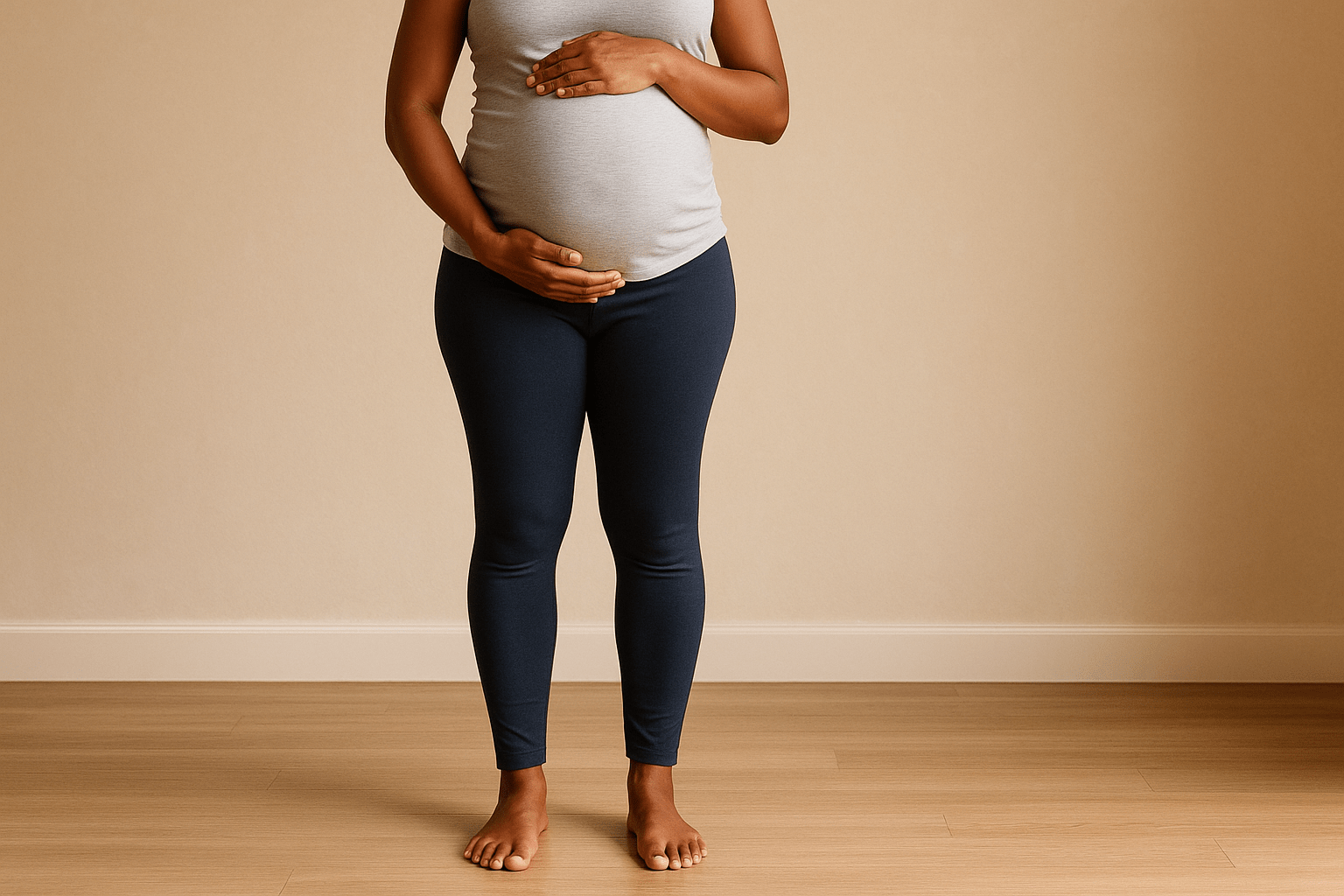
When you think of strengthening your core during pregnancy, your legs probably aren’t the first thing that comes to mind. In fact, they may not come to mind at all.
But here’s the thing: your legs and core are directly connected, and changes in your legs during pregnancy can affect how well your core works. Understanding this connection gives you another way to support your core strength, literally, from the ground up.
To explain this important relationship, we work with Dr. Emily Splichal, podiatrist, author, human movement expert and founder of Naboso Technology. He is one of the leading experts on this topic and shares some useful information, exercises and recommendations in this article.
Read on to find out:
- How your legs and torso are connected
- Common Leg Changes During Pregnancy (And How They Affect Core Function)
- How to strengthen your core from the ground up
- Special tools and exercises to support leg and core health during pregnancy
Quick answer: Your legs are connected to your core through your nervous system and fascia. When pregnancy causes changes like swelling, flat arches, or plantar fasciitis, it can disrupt the signals between your feet and your core and can make it harder for your core to activate effectively. Targeted exercises and sensory stimulation can help restore this connection and support both your legs and core throughout pregnancy.
How are your legs and core connected?
Your body doesn’t work in individual parts. Every movement you make—whether you’re bending over to pick something up, reaching over your head, or simply walking—involves your entire body working together as a system.
The connection between your legs and your core happens in two important ways:
1. Sensory connection (your nervous system)
Your feet are full of sensory nerve endings that send information to your brain about where your body is in space. This information travels up through your spine, passing through your pelvis and core along the way. These nerves signal to your core how much (or how little) it needs to fire for any given movement.
Think of your feet as the foundation that tells the rest of your body how to respond. When this foundation changes or becomes less stable (such as during pregnancy), the signals are disrupted.
2. Physical connection (Fascia)
Your legs are also connected to your core through fascia—a web-like connective tissue that wraps around and connects muscles throughout your body. Some of these zones run from the bottom of your feet up and through your pelvic floor and core.
When there are changes in the function and structure of the foot (as discussed below), the fascial connection can become disrupted and affect the function of the core and pelvic floor.
What leg changes happen during pregnancy (and how do they affect your core)?
During pregnancy, hormonal changes, weight gain and fluid retention can lead to many foot-related problems. Here’s how each of these common problems can disrupt the leg-core connection:
flat feet (fallen arches)
During pregnancy, hormonal changes loosen ligaments throughout your body, including those in your feet. Combined with weight gain, this can cause your arches to stretch and flatten. This explains why some people’s feet increase in size during pregnancy (and which may persist after delivery). When your feet lose their structural support, your ability to provide a stable footing and accurately feel the ground can be impaired. These changes can affect the kernel’s ability to activate efficiently.
Swollen Feet and Ankles
Fluid retention during pregnancy can cause significant swelling in your feet and ankles. This swelling dulls the sensory nerve endings in your legs, reducing the quantity and quality of information that travels to your core. This reduced sensory input can also affect the activation of the nucleus accumbens.
Plantar fasciitis
The added weight and alignment changes of pregnancy can stress the plantar fascia (the thick band of tissue along the bottom of your foot), leading to heel and arch pain. When your feet hurt, you naturally change the way you walk and stand, which changes your core alignment and recruitment.
Leg and leg cramps
Many pregnant women experience cramps in their legs, calves and feet — especially at night. These cramps can be caused by increased weight, circulatory changes or mineral imbalances. This can create movement changes and, as a result, affect core engagement.
How can you strengthen your core from the ground up?
Now that you understand this connection, here are practical strategies to support both your legs and your core during pregnancy. These work together to improve the leg-to-core relationship and you can incorporate them in whatever way works best for you.
1. Master 360° Breathing
Core activation is the foundation of all core strengthening work. 360° Breathing (the #1 most effective core exercise) teaches your deep core muscles—including your diaphragm, transverse abdominis, and pelvic floor—to work together in a coordinated way. This breathing pattern is essential for regulating stress in your core and will enhance everything else you do.
2. Establish your connection from the leg to the core
Once you’ve learned how to breathe well and engage the core through the breath, it’s time to make the direct connection from the legs to the core. In the video below, Dr. Emily takes you through one 3 step process which will help you find and engage your pelvic floor (the bottom of your core), create your leg ‘tripod’ and then connect your legs to your core with one simple exercise.
3. Strengthen your leg-to-core connection with movement
After practicing the above elements, you can strengthen this connection through movement. The key is to do exercises barefoot so your feet can fully engage the ground. Try this “tap toe row” below to challenge your legs, core, and pelvic floor (and feet) to work together through different movement patterns. By moving your legs in different directions, you lengthen and strengthen your pelvic floor and core from multiple angles. Perform 1-2 sets of 6-8 reps per side. Master one exercise before moving on to the next.
Additional support for pregnancy foot health
In addition to the exercises above, here are some more strategies to support your legs during pregnancy:
Stretch and mobilize
- Gently stretch your calves, feet and toes daily
- Essay mobility exercises that improve circulation and reduce tension in your lower body
- Self-myopersonal liberation (such as foam rolling) can help release tension, but be careful in the third trimester and avoid deep pressure on the ankles and Achilles area, as this stimulation could potentially trigger contractions. Try this great one 2 minute leg release exercise using it Naboso Neuro Ball.
- If you experience cramps, make sure you’re getting enough magnesium (talk to your healthcare provider about supplements)
Choose the right footwear
- As your feet change size, make sure your shoes still fit properly
- Look for shoes with good arch support
- Avoid high heels and completely flat shoes (a small heel lifter is ideal)
- Measure your feet if you notice significant changes in size
- Consider Naboso soles or socks to add sensory stimulation throughout your day, even when wearing shoes
Swelling address
- Elevate your legs when resting to improve circulation and reduce fluid build-up in your lower extremities and feet
- Stay hydrated and limit excess sodium
- Wear compression stockings if recommended by your healthcare provider
- Keep moving throughout the day to promote circulation
Work with experts when needed
If you have persistent foot pain, plantar fasciitis, or other foot problems that don’t improve with self-care, consider working with a physical therapist or podiatrist who has experience with pregnant clients.
About Dr. Emily Splichal
Dr. Emily Splichal is a podiatrist, human movement expert and founder of Naboso Technology. She is its author Barefoot Strong: Unlock the secrets to movement longevity and Sensory Sapiens: A Sensory-Based Approach to Movement and Longevity. Dr. Emily’s work focuses on the science of barefoot exercise and how sensory stimulation through the feet can improve movement, balance and overall function.
Partner notification
This post contains affiliate links to Naboso products. We may earn a commission from purchases made through these links. However, we only endorse companies that we have personally reviewed and trust.
