


Have you ever wondered how to create a daily routine? The genre or routine that will lead you to better habits? When I started being more aware of my daily routine and habits, I noticed that the little things (and sometimes the big ones) kept leading me into bad habits. Even though I would start out with the best of intentions to execute my new habits, it was very easy to fall back into a bad rut.
For example, if I wanted to exercise thirty minutes a day as part of my new routine, I would let the excuses creep in and distract me. I ate a big meal and relaxed, telling myself I would do it tomorrow. Or, I would hit the snooze button on my alarm clock and wake up in a rush to get ready for work, not allowing myself time to exercise in the morning.
I quickly realized that I needed to create a daily routine so that I could plan out my week and give myself the best chance to create better habits. I found that if I stayed consistent, results would come with whatever I did. But if I made excuses, things would stay the same. That’s why I’m so passionate about adding small, achievable habits each day to gradually improve. When you keep things realistic, you have a better chance of being successful. Over time the little things get easier and you can take on even more.
I think that’s why creating a daily routine is so difficult for some people – you start out with the best of intentions, but life sometimes just gets messy and seems to pull you in many directions. Sometimes goals are too big and just not realistic.
I’m the type of person who needs a structured routine or is easily distracted from pursuing my goals. In this post, I’ll go over what I think is the best way to create a daily routine to incorporate new habits into your day.
“We are what we repeatedly do. Excellence, then, is not an act, but a habit.”
Aristotle
The benefits of a daily routine
So why would you need a daily routine? Here are some of the benefits I’ve reaped from a more structured daily routine.
- Improved focus
- Improved sleep
- Improved relationships
- Improved mood
- Improved organization
- Improved health in terms of mental and physical performance
Simply put, when you have a daily routine to follow, life is less chaotic and more structured, giving you a little more mental clarity.
How to create a daily routine
There are probably many different ways you can create a daily routine for more structure with things like work. However, for me, creating a daily routine is so much more than just being productive, it’s about everything you do in a 24-hour day so you can create a healthier life overall. And if you were to go so far as to break up your day into hourly chunks, it’s extremely helpful when it comes to making time for healthier habits, for example.
So where do you start?
1. Identify the basics
Your daily routine will have basic things to do that are largely set in place, things like work or caring for a loved one. I think it’s a good idea when creating a daily routine to list your main tasks first each day so you can identify the time of day when you have the most control over your daily routine. Of course, your weekend will probably look different, but for the sake of this exercise, let’s stick to weekdays where things tend to be more rigid.
Start by jotting down your ‘essentials’. For example, your list might look something like this.
- Sleep from 10 p.m. – 6 a.m. (8 hours)
- Work from 9 a.m. until 5 p.m. (9 hours)
- Elderly parent visit 6 p.m. – 8 p.m.)
2. Define your “free time”
I think one of the reasons why creating a daily routine sometimes fails is because life isn’t always as simple as saying, “I’m going to work out in the morning,” or “I’m going to drink my bulletproof coffee before I leave for work,”
Perhaps you have to rush out at night to deal with an emergency or have someone visit you as a surprise. However, there will be times during the day that are almost always the same and these are the times when it will be easy to make excuses. Once you have identified your daily “essentials” you can find the vacancies or “free time” where you can start creating your best habits and start building a better daily routine.
For example, your free time would be the time between waking up and the time you need to leave for work minus the time you need to get ready for work. Your free time will be the time you have on your lunch break minus the time you spend eating.
And your free time can be from the time you get home from work minus the time you spend putting the kids to bed at night. During that time you can exercise or cook something healthy, for example.
That “free time” can start to look something like this.
- 6 a.m. – 9 a.m. free time minus time getting ready for work and kids ready for school might leave you 1.5 hours.
- 5 p.m. – 10 p.m. in the evening minus the time it takes to get home from work and the time it takes to get your kids ready for bed.
In this example, you may find that you have 1.5 hours in the morning that you can add to your daily routine, and in the evening, you may have 3 hours. This gives you a daily total of 4.5 five hours you could realistically commit to new healthy habits in your daily life.
3. Identify your ‘wasted time’
If you want to create a daily routine that is productive, I think it’s helpful to see where you might be “wasting time” in relation to making progress with your habits. For example, in those 4.5 hours of free time during your work days, you might find that you spend a lot of time watching TV or scrolling through Instagram that you could be putting towards one or two of your goals.
I think it’s important to still have time to relax, but how much of your “free time” do you use for pointless tasks? For example, I sometimes spend a lot more time watching TV than I know I should. I know I could use that time for exercise or reading. I refer to this as “wasted time”.
Sometimes it looks like this;
- 30 minutes of mindless scrolling at night
- 1 hour watching TV
When you identify your wasted time in your free time, you can begin to find pockets of time where you can realistically begin to start better habits.
4. Determine your priorities
Once you have identified your daily essentials within your daily routine, your free time and your wasted time, you can start to really think about what you want to prioritize in your daily life. Because we all have a finite number of hours each day where it is realistic to do certain things, we must choose what we want to spend our time doing.
For example, I can’t learn to be a nutritionist, become a world champion bodybuilder, and have the biggest and best blog on the internet all at the same time. I have to choose a finite number of things to add to my daily life to really focus on – those are the things that are most important to me. Trying to do too many things would quickly burn me out.
Make a list of what you want to realistically achieve in your daily life. For example, mine might look like this.
- Write 500 words
- Drink 5 large cups of water
- Do 30 minutes of physical activity
- Perform leg stretches for 5 minutes
- I eat my first meal at 11am
- Eat 5 different plant foods
- Have a protein-rich lunch and dinner
- Cook a healthy dinner from scratch
Once you’ve done this, you can add your daily activities into your daily routine where it makes the most sense.
For example, I would stretch for 5 minutes in the morning every day, drink a glass of water and drink two more with my lunch and another two at night. I would eat my protein-rich lunch at 1pm, cook my healthy dinner recipe at 6:30pm, and write at least 500 words by 8pm, etc.
5. Create a schedule
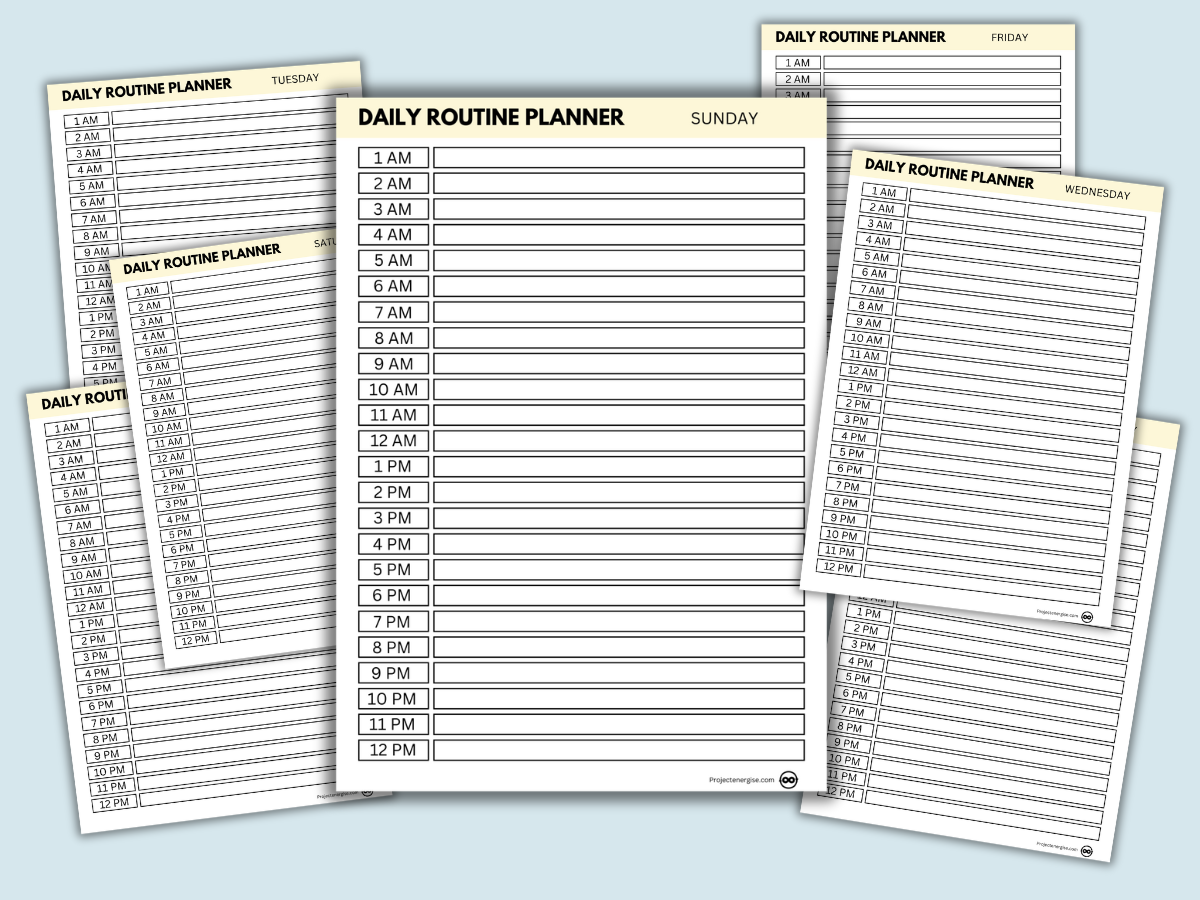
Then you can create a daily routine by planning one daily schedule to help you get more structure for these habits, day by day.
Because you’ve already identified your daily core activities, free time, and “wasted time,” you can now map out your ideal daily routine with ease in terms of habits.
Download the daily routine schedule below so you can write down your daily routine hour by hour.
Create a daily routine with this FREE daily routine planner
6. Commit to your daily routine
Once you have a good idea of what your daily routine will look like, it’s time to commit to it! With anything new, there will be some discomfort at first, especially if your new daily schedule is completely different from what you’re used to.
From my experience, there is no way to avoid it, except to start! However, if your daily routine is realistic, your daily habits won’t feel like a chore and you’ll be more likely to stick to your new routine. If your new daily routine is really too hard to stick to, you can always cut out a few things and start at a slower pace.
Make it so simple that you’ll achieve your new habits until you finally feel like adding a few more healthy habits! After all, Rome wasn’t built in a day and changing your routine isn’t always easy, especially if you’ve lived a certain way for a long time. Always try to be patient and compassionate with yourself.
conclusion
Creating a daily routine, especially a brand new one, can feel daunting, but I think if you break down your typical day a little at a time, you can get a good idea of what you can do and when. If you’re trying to build new habits into your schedule, having a structure like a schedule can help you stay more focused.
Track your daily activities like you would track your daily expenses and you’ll be able to find the time in the day when you can go to the gym or study much more easily. Make the things most important to you non-negotiable and you’ll go from making excuses to finding discipline in whatever you want to do.
If you enjoyed this post, read it below to learn how you can develop and stick to your new habits.
