


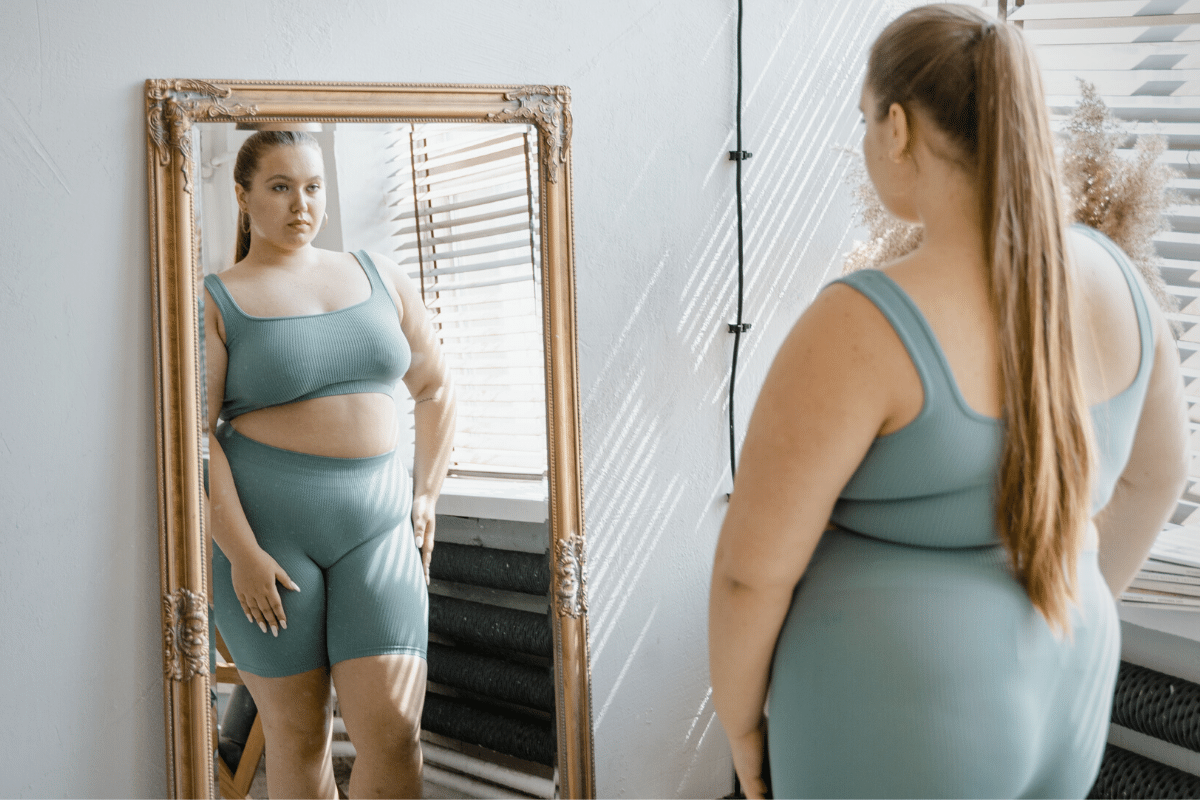
I see so much shame — too much shame — about our bodies (their shape, their size, their functionality) and our food (what we eat, when we eat, why we eat, how much we eat).
If you’re dealing with food and body shaming, I want you to know two things:
- First, you have done nothing to be ashamed of.
- Second, if you struggle with body image or your eating habits make you uncomfortable, then you deserve aidnot shame.
Because your “food guilt” is really food shame
Quick, you just ate a cupcake…what thoughts are running through your head? “Wow, that was really tasty!” or “Why did I eat that? I’m so bad!”
It is true that some foods are more nutritious than others. This is an objective fact, without moral implications. It’s one thing to admit guilt and feel ashamed because you intentionally ran over someone with your car or cheated on a test. It’s another thing to be embarrassed because you ate a cookie. Karla McLaren, author of “The Language of Emotions» says that shame is the natural emotional consequence of guilt and wrongdoing. But eating a cookie is not wrong, any more than eating broccoli is virtuous.
It’s a common belief that shaming ourselves for our less nutritious food will, at least a little, help us stay on track with our nutritional goals, but more often than not it paralyzes us. Research shows that Harsh self-criticism about food or body contributes to disturbed eating patterns and poor body image, while self-compassion has the opposite effect.
A recent study in New Zealand found that People who associated chocolate cake with guilt instead of celebration were more likely to have more unhealthy eating behaviors and less intention to eat healthy in the future.
What happens when you feel ashamed of eating something you’ve decided isn’t healthy? You might end up feeling like it wasn’t just your food choices that were bad—you might start to feel like you’re bad, too.
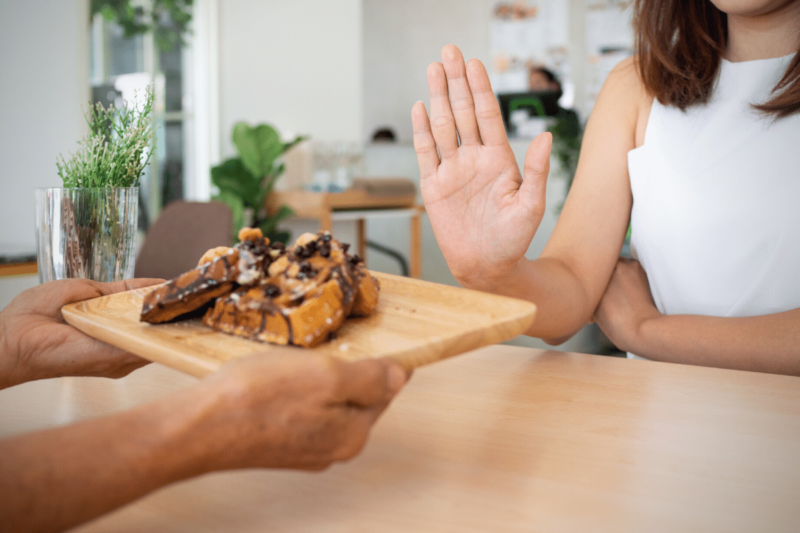
The vicious cycle of shame
If you tend to be rigid about your diet, shame may make you more restrictive with your food to compensate for your perceived weakness. If you tend to eat for emotional reasons—as many people do—shame can make you feel even worse, leading you to seek out more food in an attempt to calm down, leading to more shame.
It’s a cycle that feeds on itself. Shame about a perceived food transgression can also simply lead to an “it’s all right” attitude because the damage has already been done.
No food makes you healthy or unhealthy. It’s about how the multiple food choices you make each day add up. If you’re regularly eating in a way that doesn’t support your nutrition or health goals, despite your best intentions, there’s likely a reason.
Let’s say you find it hard to stop snacking in the evening between dinner and bedtime — when you’re not even hungry. Instead of succumbing to shame, try being curious. Ask yourself, “What’s really going on?”
Are you bored or tired? Are you stressed or angry? Are you sad or lonely? All of these feelings are legitimate and worthy of attentionbut food is at best a band-aid for what is really eating you.
It can be hard to let go of food shame. But it’s much worse to beat yourself up after eating a cookie than to eat that cookie, savor every bite, and think, “um.” This kind of mindset can even help you be satisfied with one cookie instead of feeling like you want to devour a whole dozen.

From fat talk to body shaming
Do you engage in fat talk – self-deprecating comments to other people about someone’s weight or body? If you direct this conversation towards yourself, it is a form of self-deprecation. Maybe you criticize your weight, shape, or fitness level. (“I’m so fat” or “My thighs look huge in these shorts” or “I’m so shapeless… I feel like a big blob.”)
Fat shaming is essentially fat talk directed at one’s body. This could be your body or someone else’s body and can be either direct (criticizing your body or the body of the person you are talking to) or indirect (making comments to your friends about someone’s body when your target it’s not” I’m not introducing you or listening to you). Unsurprisingly, this often accompanies diet/food shaming discussions, such as discussion of:
- If a food is “good” or “bad”
- You are either “good” or “bad” based on what you have eaten or are about to eat
- You either “should” or “shouldn’t” eat a food
- The diet you are on (or plan to be on)
Most of my friends are weight-neutral dieters, so I don’t have to engage in much discussion about nutrition when sharing a meal. (I hear a little from some family members.) But my clients tell me all the time what they have to deal with from women in book groups or art classes, friends of friends, other teachers at lunch. (I have had several clients who are teachers and inform me that the teachers are the worst for these kinds of discussions.)
Here’s why this is a problem…

Food and body shaming do real harm
Fat talk and diet talk (aka body and food shaming) may seem like benign (non-harmful) behaviors, especially if the person is talking about their body and food choices, but they are not benign.
When you criticize someone’s food choices or body – whether the subject of that criticism is you, someone you’re with, a mutual acquaintance who isn’t with you, or a complete stranger – these words have a negative and harmful impact.
Both engaging in and being exposed to fat talk contributes to body dissatisfaction, reinforces our perception of social and cultural pressure to be thin, and can lead us to overinvest in our appearance (self-objectification). All of these factors erode quality of life, which is bad enough, but they also increase the risk of adopting disordered eating behaviors – or even developing an eating disorder.
Imagine that you are in a larger body (you may not need to imagine this). You’re sitting with a friend with a smaller body than yours, and she starts saying she’s “too fat.” How does this make you feel about your body? Do you feel ashamed?
Similarly, what if you hear someone make disparaging comments about a woman’s body passing by. Maybe it’s your size, maybe it’s smaller, maybe it’s bigger. Either way, this can trigger thoughts and feelings:
- “If her The body is ‘bad’ than what does that mean for my body?’ the
- “I’d better make sure I don’t put on weight, if that can be said for me.”
This is weight stigmawhich research shows harms both physical and psychological health.
So when you engage in this kind of speech, it’s impossible to know who you’re shaming and harming or to what degree, but make no mistake – you’re causing harm.
Related posts
This post contains Amazon affiliate links. As an Amazon affiliate I earn on qualifying purchases.
Carrie Dennett, MPH, RDN, is a registered dietitian nutritionist based in the Pacific Northwest, freelance writer, intuitive nutrition consultant, author, and speaker. Her superpowers include; debunking nutritional myths and empowerment of women feel better about their bodies and make food choices that support pleasure, nutrition and health. This post is for informational purposes only and does not constitute personalized nutrition or medical advice.
Looking for 1 on 1 nutritional advice? Carrie offers a 6-month Food & Body program (intuitive eating, body image, awareness, self-compassion) and a 4 month IBS management program (How-FODMAP diet coaching with an emphasis on increasing food freedom). Visit the links to learn more and book a free introductory call to see if the program is a good fit and if we’re a good fit!
 Print this post
