


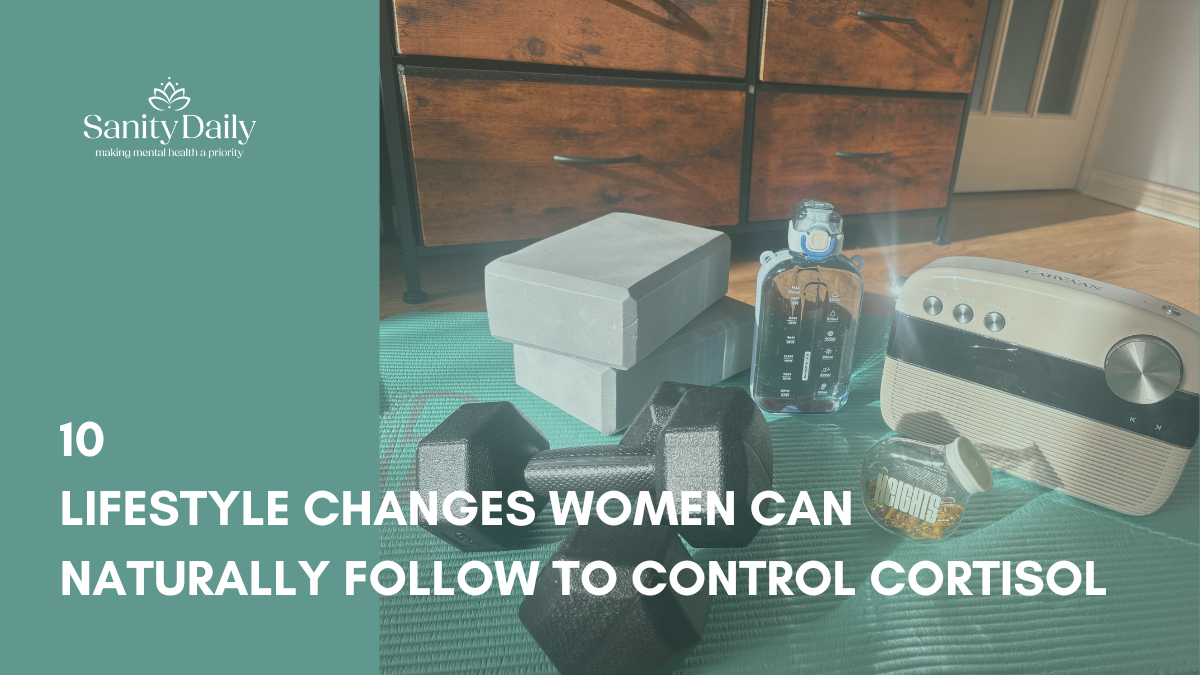
High cortisol levels can significantly affect a woman’s daily life, leading to fatigue, mood swings and general health problems. To effectively manage cortisol in women, incorporating lifestyle changes is essential. Daily habits like staying hydrated, taking mini-breaks to relax, connecting with supportive people, prioritizing joy and establishing a simple routine can make a big difference. By incorporating these practices, we as women can learn how to control our cortisol levels, live a healthier and more balanced life amidst daily stressors.
10 Ways to Calm Your Cortisol and Get Your Energy Back as a Busy Woman
In this article, we’ll explore effective ways to calm cortisol, ensuring you can manage stress and improve your well-being. Understanding ways to calm cortisol is vital to maintaining a balanced life in the midst of challenges.
The good news: small, practical changes can help you calm cortisol and regain energy even if your schedule is full.
1. Prioritize quality sleep
Sleep is the #1 natural regulator of cortisol. Without 7-8 hours of quality sleep, the stress hormone remains elevated, making you tired and irritable. I know many moms struggle to manage this healthy relationship with sleep, but it’s when our bodies repair and restore, so if you don’t want to wake up groggy and irritable, get a good night’s sleep.
Try to maintain a consistent bedtime and avoid screens 30-60 minutes before bed which prepares your brain for sleep.
2. Move your body, wisely
They have moderate exercise proven to reduce cortisol. For stressed-out women it can be hard to get up and start exercising, but here are plenty of options that promote wellness through gentle movement like walking, gentle stretching, and if you can, go for a run, gym or Zumba class.
Staying active with your body is your way of releasing excess cortisol helping you feel less stressed.
3. Practice conscious breathing
Simple breathing exercises calm your nervous system and reduce cortisol. A few mindful deep breaths, also known as yogic breaths, where you go all the way to your stomach and then immediately exhale, help you feel tension in your body. Practicing deep breathing and pranayama such as Anlom Vilom is particularly known for stress relief.
Even 5 minutes in the morning or before bed can make a noticeable difference.
4. Eat to support hormonesnot your taste buds
A balanced diet prevents cortisol from rising. Include:
- Protein at every meal: eggs, milk, paneer, chickpeas
- Foods rich in magnesium: nuts, leafy greens
- Omega-3: salmon, chia seeds
- Fruits & vegetables: antioxidants and fiber
Avoid: too much sugar, refined carbohydrates and too much caffeine.
5. Consider a daily multivitamin
For busy, stressed women, a multivitamin acts as nutrient insurance. Multivitamins are supportiveit is not a substitute for lifestyle changes, but can be very helpful if combined with a good lifestyle.
- B vitamins support energy and adrenal function
- Vitamin C supports the adrenal glands
- Magnesium and zinc help with relaxation
- Vitamin D supports mood and resistance to stress
6. Stay hydrated
Even mild dehydration can increase cortisol and fatigue. Aim for 1.5–2L of water dailymore if active.
- Avoid too much caffeine, which can increase cortisol
- Herbal teas (chamomile, green tea) are great for stress relief
7. Take mini breaks and calendar
Women often carry multiple responsibilities at the same time. Pausing helps regulate stress:
- Breathing or stretching breaks of 5 minutes during work
- Quick calendar: write down 3 things that cause stress + 3 things you can control, this handy and easy exercise can become a long-term coping skill.
8. Connect with supportive people
Social connection lowers stress hormone levels. Laughter and shared experiences are powerful cortisol reducers. Chat with a friend or family member daily or join an online community for women under similar stress.
9. Prioritize fun and joy
Stress doesn’t go away, but engaging in enjoyable activities can help, even 10-15 minutes daily boosts mood and lowers cortisol. Simple activities like listening to music or a podcast while you cook, do laundry can help.
10. Create a simple and mindful routine
A routine around you and your family demands, not what society or neighbors expect you to be. Consistent sleep and meal times signal the brain for your routine. Supportive meals, nutritional supplements and small body movements help to get rid of the stress that envelops your body. And gentle practices like breath work and journaling become your coping skills to constantly remind you of what is in your control and what is not.
Cortisol is your body’s response to stress. But chronically high cortisol can sap energy, affect mood, and disrupt health. Busy women can take back control by making some changes to their routine and combining sleep and routine, mindful movement, smart eating and mini-breaks.
If stress management is overwhelming, my guided support sessions for women can help you get started.
