


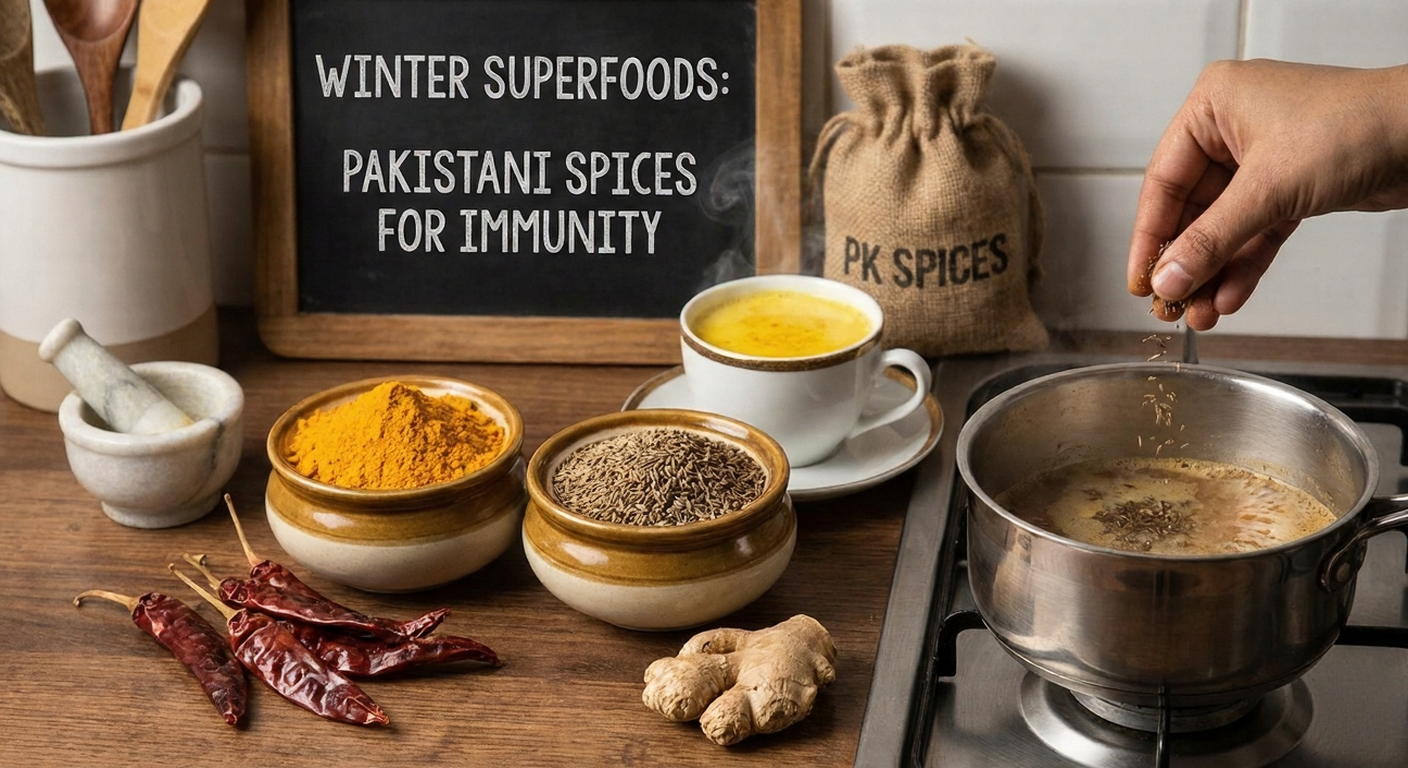
As winter takes over the Northern Hemisphere – bringing frosty Swedish mornings, chilly evenings to the UK and even cooler vibes to the US – our bodies crave natural defenses against colds, flu and that nagging tiredness from the shorter days. In Pakistani homes, this is not a new battle. For centuries, spices like turmeric (haldi) and cumin (jeera) have been the unsung heroes of winter wellness, woven into daily rituals such as haldi doodh (golden milk) and jeera water.
These are not just flavor enhancers. they are strong winter superfoods backed by both tradition and modern science for immune support, anti-inflammatory and digestive resilience. At the Nutric Food Show, we specialize in low-oil Pakistani recipes that adapt these gems for global cuisines—or combine them in Swedish rotfruktsgryta (root vegetable stew) or a simple British curry, turmeric and cumin provide warmth without the calories. Let’s unpack their science, lore, and practical advice—the perfect time for Christmas Eve warmth in your julbord table.
The Science Behind Turmeric: Nature’s Golden Immune Shield
The magic of turmeric lies within curcuminits main bioactive compound (up to 5% in high quality roots). This polyphenol is a powerhouse: antioxidant, anti-inflammatory, and immunomodulatory—meaning it fine-tunes your immune response rather than simply revitalizing it.
Winter-specific benefits (backed by studies):
- Immune Modulation Curcumin activates T cells, B cells, macrophages, neutrophils, natural killer cells, and dendritic cells while downregulating proinflammatory cytokines such as TNF-α, IL-1, IL-6, and IL-12 (often via NF-κB inhibition). A 2007 review of Journal of Clinical Immunology he called it a “potent immunomodulatory agent,” boosting antibody responses at low doses — perfect for flu season. Recent studies 2021–2025 (e.g. Frontiers in Pharmacology) confirm that it balances overactive immunity, reducing the risk of sepsis and supporting the effectiveness of the COVID-19 vaccine by boosting IgG antibodies.
- Respiratory Relief Reduces airway inflammation, relieves congestion and fights sore throats – key to winter ailments. Human studies show that it reduces acute-phase proteins (eg, CRP) that rise during infections.
- Gut-Immune Link ~70% of immunity resides in the gut. Curcumin promotes beneficial bacteria (probiotic effects), aiding nutrient absorption in root-heavy cold weather diets and stews.
- Warming and uplifting It creates internal heat (thermogenic), fights seasonal blues through dopamine support, and fights oxidative stress from less sunlight.
Bioavailability Hack: Combine with black pepper (piperine boosts absorption by up to 2000%) and a healthy fat – important for low-fat cooking.
Cumin: Earth’s digestive and antimicrobial ally

Package cumin seeds (Cuminum cyminum). cuminaldehydeflavonoids (apigenin, luteolin) and terpenes—which provide antioxidants, antimicrobials, and carbonation. Earthy and nutty, it’s a winter staple for gut health (where immunity thrives).
Key Winter Benefits (Evidence Based):
- Fortress of Immunity Antioxidants neutralize free radicals. antimicrobial effects kill bacteria/fungi (eg H. pylori). Strengthens white blood cells through vitamins A/C/E. animal studies show anticancer potential (stomach/cervical). Human trials have linked it to better insulin sensitivity and reduced inflammation – vital for slowing metabolism in the winter.
- Digestion Dynamo Stimulates enzymes (amylase, lipase), bile flow. relieves IBS, bloating, holiday gas. Studies (eg 57 IBS patients) confirm relief of symptoms in 2 weeks. Fiber/minerals (iron, Mg) prevent constipation in cold months with low fiber content.
- Heating Thermogenic Improves circulation, metabolism. helps with weight management (overweight trials: reduced BMI/waist);
Pakistani winter traditions Jeera water (boil the seeds) starts in the morning for detoxification/immunity. Haldi doodh (turmeric emulsion with a pinch of cumin) fights coughs—the granny flu, now a global “golden milk” trend.
Synergy in low-fat Pakistani cooking: Maximize nutrients

These spices shine in desi dishes (biryani, karahi, haleem)—the low-fat versions retain the active ingredients (heat-stable curcumin/cuminaldehyde).
Pro tips for US/UK/Swedish kitchens:
- Daily tonics Haldi doodh (½ tsp turmeric + pinch of cumin/black pepper in hot milk, sweetened). Vegan? Use oat/almond milk. Swedish twist: Add lingonberry for tartness juicy.
- One-Pots Moderate cumin seeds (1 tsp) in 1 tsp olive oil (vs. ghee for lower saturated fat – studies favor olive’s MUFAs for heart health, ghee for high-heat stability). Add turmeric to root vegetable stews – Nordic fusion!
- Dose ½–1 teaspoon/day each. Roast whole seeds for potency (low/no oil).
- Storage Cool, dark jars—retain volatiles.
Ghee vs Olive Oil Quick Note For tadka (curing), ghee’s high smoke point (485°F) beats olive (375–410°F), but olive’s antioxidants/MUFAs prevail for heart/low oil. Alternative: 1:1 mixture.
Bonus Air Fryer Retains more antioxidants vs frying (less oxidation)—ideal for samosas/pakoras (studies show 20–50% nutrient loss in oil frying).
Why Fusion Works for Swedish/US/UK Winters

Swedish vintermat (root vegetables, oats) pair seamlessly: The turmeric-cumin in the grits enhances the absorption of beta-carotene. Diaspora communities (large in the UK) already love it. US health trends (keto/paleo) are embracing golden lattes. Science + culture = unsurpassed.
These spices are affordable (~$5/month supply), safe (up to 6g/day of curcumin), and versatile—your Pakistani low-oil advantage for hardy winters.
Try it tonight Jeera-haldi tea after Julbord. Did you feel the warmth? Comment your fusions! Tag us on social media with #WinterSuperfoods #HaldiDoodh #JeeraPower #mat #hälsosamt #julmys #godmat #vintermat #healthyfood
Stay fortified! ❄️🌿
