

Close Menu
Healthtost
  • News
  • Mental Health
  • Men’s Health
  • Women’s Health
  • Skin Care
  • Sexual Health
  • Pregnancy
  • Nutrition
  • Fitness
  • Recommended Essentials
What's Hot

How sugar affects your microbes

February 10, 2026

The health benefits of walking at any age

February 10, 2026

‘Partial reprogramming’ of engram neurons restores memory performance in mice

February 10, 2026
Facebook X (Twitter) Instagram
  • About Us
  • Contact Us
  • Privacy Policy
  • Terms and Conditions
  • Disclaimer
Facebook X (Twitter) Instagram
Healthtost
SUBSCRIBE
  • News

    ‘Partial reprogramming’ of engram neurons restores memory performance in mice

    February 10, 2026

    SPT Labtech and Bellbrook Labs Introduce High-Throughput Screening Platform for Cancer Research

    February 10, 2026

    The nervous system actively promotes precancerous lesions of the pancreas

    February 9, 2026

    UK Ambulance Intensive Care Expands But Unequal Access Still Limits Life-Saving Treatment

    February 9, 2026

    New neuroprotective drug improves recovery after acute ischemic stroke

    February 8, 2026
  • Mental Health

    Advancing the Future of Behavioral Health Data Exchange

    February 7, 2026

    How to avoid watching disturbing videos on social media and protect your peace of mind

    February 6, 2026

    Mental Health in the Black Community: Addressing…

    February 3, 2026

    Some people gain confidence when they think things through, others lose it – new research

    February 2, 2026

    3 practical ways to improve a writer’s mental health

    January 31, 2026
  • Men’s Health

    Air conditioning in nursing homes reduces heat-related risk

    February 6, 2026

    Analysis: What it’s like to have non-verbal autism and what helped me

    February 5, 2026

    Testicular cancer self-examination and why it could save your life

    February 2, 2026

    25-Minute Bodyweight Functional Training Program for Beginners

    February 1, 2026

    Turning everyday eggs into powerful nutrient delivery systems

    January 30, 2026
  • Women’s Health

    Perimenopause symptoms to watch out for in your 30s and 40s

    February 9, 2026

    Breast reduction surgery saved my life

    February 9, 2026

    2.6 Friday Faves – The Fitnessista

    February 7, 2026

    Enjoying Endorphins: How to Spoil Your Mood with Feel-Good Hormones

    February 5, 2026

    A critical maternal health data system is at risk

    February 5, 2026
  • Skin Care

    5 Signs Your Skin Needs a Drink (And What to Do About It)

    February 10, 2026

    Fraxel Laser in Philadelphia | About Facial Aesthetics

    February 10, 2026

    Complete serum that works: The nighttime routine for real results

    February 8, 2026

    How to avoid shaving irritation: 7 myths that keep your skin angry

    February 7, 2026

    TNW Rich Cream for Soft, Smooth Skin – The natural wash

    February 7, 2026
  • Sexual Health

    Australia is closer to ending cervical cancer

    February 9, 2026

    Adventurous intimacy is more common than you think — Alliance for Sexual Health

    February 5, 2026

    A guide to a comfortable cervical check with Dr. Unsworth

    February 1, 2026

    How “Bridgerton” and the Other Romances Evolved in Their Depictions of Consent

    January 30, 2026

    Extraction, gold mining and SRHR in Kenya

    January 29, 2026
  • Pregnancy

    18 places to get free baby products, samples and gear in 2026

    February 8, 2026

    Pregnant on Chhath Puja? Hydration and nutrition tips

    February 6, 2026

    The second trimester sweet spot is real. Here’s how to get the most out of it

    February 4, 2026

    Is it safe to drink milk during pregnancy? What to know

    January 31, 2026

    12 Expert Answers to Your Pregnancy Yoga Questions

    January 29, 2026
  • Nutrition

    How sugar affects your microbes

    February 10, 2026

    Stress and weight in midlife

    February 9, 2026

    Nutrient Loss in Modern Cooking: How Frying, Microwaving and Overcooking Deplete Vitamins

    February 9, 2026

    Intuitive Eating 101: It’s More Than ‘Eating When You’re Hungry’

    February 8, 2026

    The gut is not a tube

    February 8, 2026
  • Fitness

    The health benefits of walking at any age

    February 10, 2026

    The Orthopedic suggested cardio exercises that are easy on your joints

    February 8, 2026

    The Best Travel Products for Women Over 50 (Comfort and Convenience)

    February 8, 2026

    Ben Greenfield Weekly Update: January 30th

    February 7, 2026

    Smart Shoulder Solutions: An Evidence-based Approach

    February 7, 2026
  • Recommended Essentials
Healthtost
Home»Skin Care»What is the skin barrier?
Skin Care

What is the skin barrier?

healthtostBy healthtostDecember 19, 2023No Comments5 Mins Read
Facebook Twitter Pinterest LinkedIn Tumblr Reddit WhatsApp Email
What Is The Skin Barrier?
Share
Facebook Twitter LinkedIn Pinterest WhatsApp Email

Everything you need to know about Skin Barrier

Human skin, often underestimated in its importance, is actually the largest organ of the body, comprising approx a seventh or nearly 15% of one’s total body weight. It serves as a basic barrier that protects the delicate inner workings of the body from harsh external elements. The most critical component of the skin is arguably its natural moisture barrier, also known as the skin barrier.

In this guide, you’ll learn all the information you need to understand how each layer works to maintain healthy skin.

Why is the Skin Barrier so important?


At the physical level, it serves as a guard against a wide range of external dangers, including infectious agents, chemicals, systemic toxins and allergens. Internally, the skin plays a vital role in maintaining the body’s balance and protecting it from excessive water loss.

What does the skin barrier look like?

To understand the skin barrier, we need to look at the different layers. of the skin.

Your skin is made up of three layers:

  • The skin: The outermost layer of the skin and serves as the first line of the body defense against external factors such as bacteria, UV radiation and pollutants.

  • Dermio: It contains blood vessels, nerves, hair and sweat glands and special fibers called collagen and elastin. The dermis helps with things like the sense of touch, wound healing, keeping the skin strong and elastic, and growing hair.

  • The subcutaneous tissue: The deepest layer of skin, located below the dermis. It has many important roles, including insulation, shock absorption and energy storage.

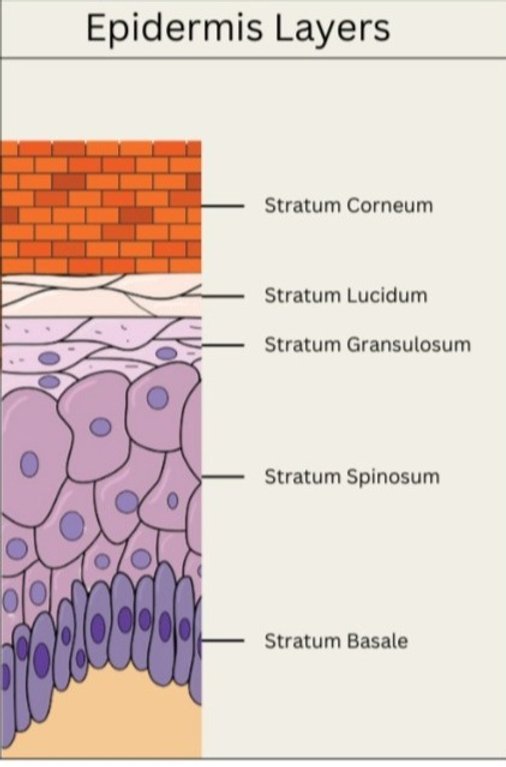
The first layer, the epidermis, is often referred to as the “skin barrier”. It serves as the outermost layer of the skin and acts as a protective barrier between the body’s internal environment and the outside world.

Inside the epidermis is another set of layers. These 5 layers include:

  1. Stratum corneum: The outer layer of the epidermis and serves as a protective barrier of the skin composed of keratinocytes. Think of individual keratinocytes as bricks that form a brick wall to protect the layers below it.

  2. Lucidum Stratum: Skin care ingredients do not usually target this layer specifically, as its functions are mainly related to providing additional thickness and protection to the skin.

  3. Stratum Granulosum: It is located below the stratum corneum and is involved in the cell cycle and immune responses.

  4. Stratum Spinosum: Provides extra protection and durability to the skin in areas subject to friction and pressure

  5. Basal Stratum: The deepest layer of the epidermis and contains basic cells responsible for the production of new cells. Skin care ingredients usually do not reach this layer. However, certain treatments such as lasers and micro-needling can affect the basal layer by stimulating collagen production and promoting skin renewal.

Think of the Stratum Corneum (outermost layer) as a protective wall, with keratinocytes as its strong bricks, firmly they are held by ceramides, cholesterol and fatty acids.

Nested within them “bricks”, you will discover keratin and natural moisturizers. This incredibly thin but vital barrier not only protects you from environmental toxins and pathogens, but also prevents the escape of essential body water, ensuring proper hydration and overall well-being. It is imperative to maintain and protect your skin barrier to maintain optimal skin health.

What happens to the skin barrier as we age?

As individuals age, many critical aspects of the skin barrier are altered or disrupted. These are subject to change seven key areas:

  1. Skin structure: The structure of the skin is vital because it provides a natural barrier that prevents harmful substances, such as bacteria and toxins, from entering the body. Changes in this structure can lead to problems such as wrinkles. Air pollution it has been found to lead to premature aging of the skin due to a damaged natural barrier.

  2. Barrier function: The skin’s barrier function is vital because it prevents excess water loss from the body. Moreover, research has shown that a weakened barrier is associated with an increased risk of wrinkles.

  3. Calcium levels: Calcium plays a role in maintaining the strength and function of the skin. Changes in calcium levels can affect the skin’s ability to repair itself and stay healthy, possibly leading to dryness and reduced resilience, which can contribute to the development of wrinkles.

  4. Lipid Production: Lipids (fats) in the skin help keep it hydrated and prevent water loss. Changes in lipid production can lead to dry skinmaking it more prone to wrinkles and hyperpigmentation as dry skin is less resilient and more susceptible to damage.

  5. Immune response: Immune response of the skin it is vital to detect and fight infection or injury. Changes in this response can slow the body’s ability to heal and defend itself from harmful invaders. This potentially exacerbates issues such as hyperpigmentation from healing scars.

  6. Skin acidity: The skin’s natural acidity acts as a defense mechanism, inhibiting the growth of harmful bacteria. Changes in skin acidity can make the skin more susceptible to infection and can contribute to problems such as dry skin, wrinkles, and hyperpigmentation if the protective properties of the skin are compromised.

Understanding these aspects of the skin barrier and their importance is essential to maintaining healthy and effective skin protection, especially as we age, to prevent or mitigate problems such as wrinkles, dry skin and hyperpigmentation.

barrier Skin
bhanuprakash.cg
healthtost
  • Website

Related Posts

5 Signs Your Skin Needs a Drink (And What to Do About It)

February 10, 2026

Fraxel Laser in Philadelphia | About Facial Aesthetics

February 10, 2026

Complete serum that works: The nighttime routine for real results

February 8, 2026

Leave A Reply Cancel Reply

Don't Miss
Nutrition

How sugar affects your microbes

By healthtostFebruary 10, 20260

Understanding how added sugar shapes your gut microbiome and why balance mattersAuthor: Megan XipolitosWhen we…

The health benefits of walking at any age

February 10, 2026

‘Partial reprogramming’ of engram neurons restores memory performance in mice

February 10, 2026

5 Signs Your Skin Needs a Drink (And What to Do About It)

February 10, 2026
Stay In Touch
  • Facebook
  • Twitter
  • Pinterest
  • Instagram
  • YouTube
  • Vimeo
TAGS
Baby benefits body brain cancer care Day Diet disease exercise finds Fitness food Guide health healthy heart Improve Life Loss Men mental Natural Nutrition Patients People Pregnancy protein research reveals risk routine sex sexual Skin study Therapy Tips Top Training Treatment ways weight women Workout
About Us
About Us

Welcome to HealthTost, your trusted source for breaking health news, expert insights, and wellness inspiration. At HealthTost, we are committed to delivering accurate, timely, and empowering information to help you make informed decisions about your health and well-being.

Latest Articles

How sugar affects your microbes

February 10, 2026

The health benefits of walking at any age

February 10, 2026

‘Partial reprogramming’ of engram neurons restores memory performance in mice

February 10, 2026
New Comments
    Facebook X (Twitter) Instagram Pinterest
    • About Us
    • Contact Us
    • Privacy Policy
    • Terms and Conditions
    • Disclaimer
    © 2026 HealthTost. All Rights Reserved.

    Type above and press Enter to search. Press Esc to cancel.