


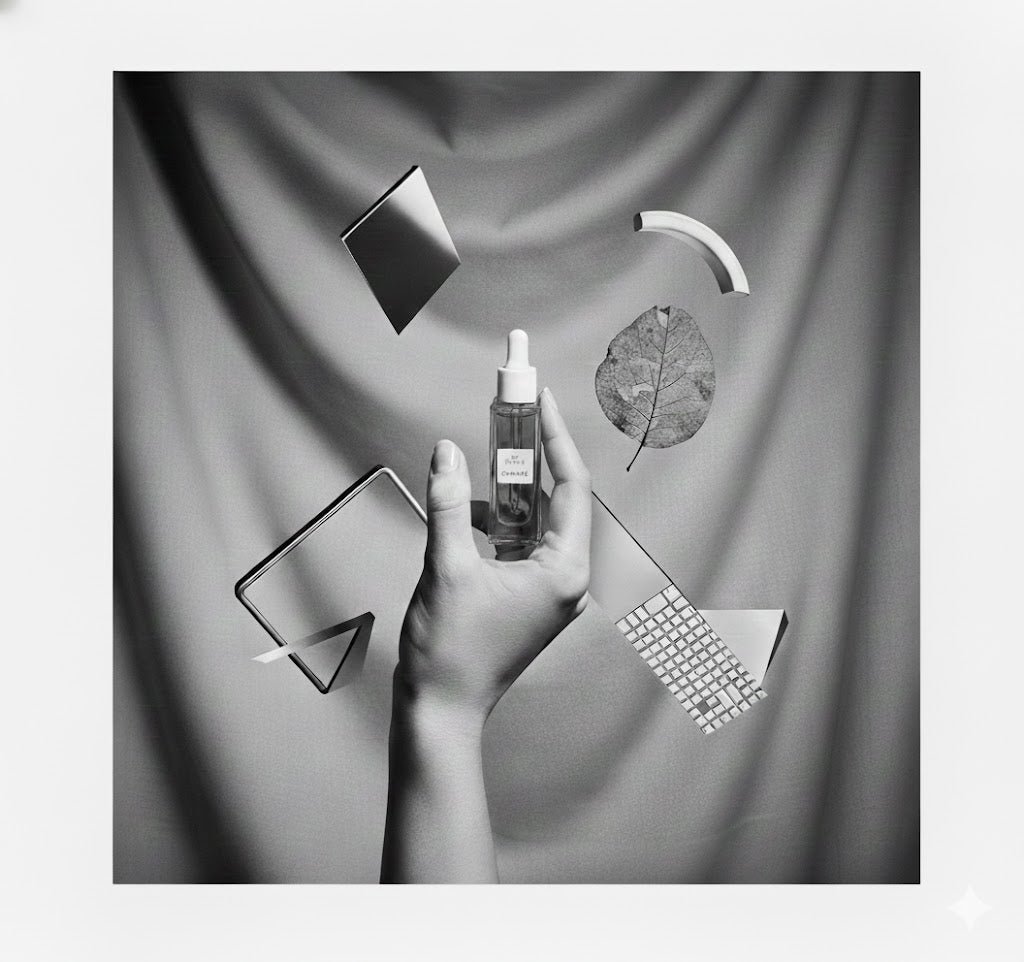
UMERE Laboratory — Environment & Skin Biology
A scientific reflection on how modern, fully synthetic environments affect the nervous system and how natural, biologically aligned skin care can maintain a continuous tactile connection to the natural world.
Summary – Human physiology evolved in direct contact with natural materials: soil, plants, water, raw fibers. In modern life, many people spend entire days without touching a single non-synthetic surface. This article considers the skin as a sensory and immunological interface, summarizes how continuous exposure to processed environments can contribute to dysregulated stress physiology, and proposes naturally derived, biocompatible skin care as a remaining point of contact with the natural world. OUMERE formulations, comprised of plant extracts and non-petrochemical emollients, provide not only barrier support and visible antiaging benefits, but also sustained physical contact with materials sourced outside the synthetic loop.
Import
The human nervous system was calibrated over millions of years to operate in external, irregular environments: changing light, temperature gradients, soil microflora, volatile plants, and physical contact with water, stones, and natural fibers. In contrast, a typical modern day can progress from synthetic mattress to plastic flooring, processed breakfast, artificial lighting, polymer clothing, climate-controlled car, concrete parking structure, closed office air, fast food packaging, digital screens and back again — with almost no direct, tactile contact with anything living.
This mismatch between evolutionary design and daily sensory input is a plausible contributor to chronic low stress, sleep disturbance, and physical tension. The organization uses an operating system written for forests and fields within an architecture of plastic, chipboard and conditioned air.
 Figure 1. Composite daily exposure profile
The skin as an interface of the nervous system
The skin is not a passive wrapper. It is a dense sensory and immunological organ containing mechanoreceptors, thermoreceptors, nociceptors and an extensive population of immune cells. Skin-derived signals inform central nervous system activity, autonomic tone, and endocrine supply.
When all tactile input is mediated by low-variance synthetic materials, the skin is exposed to a narrow band of sensory information. This is very different from physical contact, where small changes in texture, temperature and chemistry constantly update the nervous system. The modern environment replaces this dynamic current with uniform plastics, smooth laminates and neutrality of interior climate.
Natural vs Synthetic contact: A simple model
Mainly synthetic contact
- Polyester, acrylic and other petrochemical fibers against the skin.
- Indoor, recirculated air with a low diversity of microbial and volatile plant compounds.
- Treated surfaces: plastic steering wheels, keyboards, vinyl flooring, coated furniture.
- Highly processed foods and beverages as a major chemical input.
Mainly physical contact
- Vegetable fibers, untreated natural materials and mineral surfaces.
- Outdoor air, light variation and a more diverse microbial environment.
- Direct contact with soil, water, plants and natural textures.
- Nutrientally minimally processed foods with complex biochemical profiles.
Most people exist near the first column for most of the day. Even modest, repetitive physical contact—walking on soil, touching plants, using natural fibers, or applying botanicals to the skin—can help restore some of the missing sensory environment.
UMERE: Physical contact on the surface of the skin
OUMERE was formulated from the ground up to be biocompatible and not purely synthetic. The core range includes plant extracts, oils and acids of natural origin chosen for their relevance to skin structure and physiology, rather than trend value.
1. Continuous installation interface
Because the skincare stays on the skin for hours, it becomes one of the longest-lasting tactile and chemical interfaces of the day. When this interface consists of petrochemical fillers, strong fragrances and harsh surfactants, the skin is in constant contact with materials it was not evolved to encounter at this intensity.
When formulations are built on lipid fractions of plant origin, polysaccharides, polyphenols and mild organic acids, the interface shifts. The body is in prolonged contact with materials derived from living systems that behave in a manner more aligned with barrier biology.
2. Stress, routine and predictable input
Stress is multifactorial and cannot be pinned down to any one product or habit. However, predictable, nonstimulating sensory input can be stabilizing. A skincare routine that doesn’t sting, lather aggressively, or produce volatile artificial scents becomes a small, repetitive ritual of neutral or positive feeling.
OUMERE’s non-foaming cleanser, acidic yet controlled exfoliator (No. 9) and serum system of plant oils and extracts are designed to modify the skin’s surface naturally, without the shock of pH extremes, detergent stripping or aromatic stimulation common to conventional routines.
3. Barrier biology and perceived comfort
Mechanistically, a well-functioning barrier maintains water balance and reduces subclinical inflammation. People often describe comfortable skin as “less tight”, “less reactive” or simply “easier to ignore”. This reduction in peripheral stimulation does not treat anxiety, but it can remove a constant source of low-level sensory noise from the system.
Daily life example: A synthetic day vs. a physical touch point
Consider a typical program:
- Insufficient sleep in a synthetic bed environment.
- Processed breakfasts and drinks high in sugar.
- Move through concrete and asphalt in a window-limited building.
- Eight or more hours of artificial light, treated air and screen focus.
- Back to a building made of composite materials, with plastic furniture and more screens.
At no point in this chain is direct contact with something alive guaranteed. The skin, eyes and lungs interact almost exclusively with synthetic intermediates. In this context, even a seemingly small variable: a laboratory-controlled but naturally derived composition that sits on the skin for most of the day, becomes relevant. It is one of the few biologically rooted materials in constant proximity to the nervous system.
Frequently Asked Questions
Can skin care alone treat stress?
No. Stress is a complex condition involving genetics, environment, sleep, diet and many other factors. Skin care cannot treat or cure it. The discussion here is about reducing the synthetic load on the skin surface and providing more biologically compatible sensory inputs as a small part of a larger lifestyle.
How does OUMERE differ from conventional products in this regard?
OUMERE avoids foaming surfactants, heavy synthetic fragrance and unnecessary fillers, using non-pore-clogging plant extracts and lipids aligned with barrier biology. This shifts daily contact to naturally sourced materials while supporting the skin’s structural health.
Does using natural skin care replace time in nature?
No. Direct contact with the outside environment, natural light and movement has effects that cannot be reproduced in a bottle. Skin care is a supplement, not a substitute. It’s just a realistic point where everyday contact can move from synthetic to physical.
Why focus on what touches the skin?
The skin is the largest organ in terms of surface area and a dense sensory field. Constant, daily contact with any material — synthetic or natural — becomes part of the body’s environmental contribution. Adapting this input to biologically familiar materials is a logical step.
Further Reading & Research
Editor’s Workshop Note
Modern life reduces direct contact with natural materials to almost zero for many people. While stress cannot be explained or managed by any single variable, the skin remains a major interface between the organism and the environment. Formulations based on biologically relevant, naturally derived ingredients provide continuous contact with materials that exist outside the synthetic production chain while supporting barrier structure and function.
