

Close Menu
Healthtost
  • News
  • Mental Health
  • Men’s Health
  • Women’s Health
  • Skin Care
  • Sexual Health
  • Pregnancy
  • Nutrition
  • Fitness
  • Recommended Essentials
What's Hot

The best supplements for fatty liver disease

May 9, 2026

NIH funding terminations disproportionately affect marginalized health justice researchers

May 9, 2026

Eat Your Way to a Stronger Heart: The Essential Guide to Healthy Eating

May 9, 2026
Facebook X (Twitter) Instagram
  • About Us
  • Contact Us
  • Privacy Policy
  • Terms and Conditions
  • Disclaimer
Facebook X (Twitter) Instagram
Healthtost
SUBSCRIBE
  • News

    NIH funding terminations disproportionately affect marginalized health justice researchers

    May 9, 2026

    Short bouts of exercise help smokers manage the immediate craving for nicotine

    May 8, 2026

    India’s first large-scale search for biomarkers of aging

    May 8, 2026

    Non-hormonal treatments for vasomotor symptoms

    May 7, 2026

    Targeted RAS inhibitor shows promise against pancreatic cancer mutations

    May 7, 2026
  • Mental Health

    Every mental health journey starts with being seen

    May 2, 2026

    What animal studies teach us about toxic work environments

    April 27, 2026

    I hate hope: How to manage hope when you have treatment-resistant bipolar disorder

    April 19, 2026

    Rose Byrne is raw, magnetic and unfiltered as a woman in crisis

    April 18, 2026

    Can a single mother change her child’s surname in India?

    April 16, 2026
  • Men’s Health

    35 Minute High Rep Bodyweight Full Body Workout Challenge

    May 7, 2026

    Study reveals neglected crisis of paternal deaths after childbirth

    May 5, 2026

    Aging in place takes more than good intentions — It takes smart infrastructure

    May 5, 2026

    Dr. William O. Brant on male sexual health and the risks and benefits of supplements

    May 4, 2026

    3 Day Home Workout Plan: Build Muscle and Burn Fat

    April 30, 2026
  • Women’s Health

    Eat Your Way to a Stronger Heart: The Essential Guide to Healthy Eating

    May 9, 2026

    Carrying the Load: What Mental Health Looks Like for Black Women Leaders

    May 8, 2026

    Your sex life after menopause

    May 8, 2026

    How to insert a tampon: Step by step guide

    May 7, 2026

    Eat the Vitamins, Kids: A Guide to Kids Vitamins | The Wellness Blog

    May 6, 2026
  • Skin Care

    Skin Spa NYC: What to book for radiance, pore cleansing and lifting

    May 7, 2026

    What is Skinification? A simple guide to this beauty trend

    May 6, 2026

    How I Did It: Fading Hormonal Hyperpigmentation Without Lasers

    May 3, 2026

    The truth about waterless care: What your skin really needs

    May 2, 2026

    What happens to your skin while you sleep? (the science of “Beauty Sle

    May 1, 2026
  • Sexual Health

    how do you tell them apart?

    May 7, 2026

    What is Sexology? Complete guide to the field — Sexual Health Alliance

    May 6, 2026

    5 Ways to Improve Heart Health for Men

    May 5, 2026

    Early signs of Peyronie’s disease and when to seek help

    May 3, 2026

    Boost erectile health and confidence

    May 1, 2026
  • Pregnancy

    What to eat & avoid

    May 9, 2026

    Transforming birth through informed, empowered support

    May 6, 2026

    4 Key Steps to Reconnecting with Your Core

    May 5, 2026

    Why is anemia during pregnancy high in Indian women?

    May 2, 2026

    5 things you need for the third trimester

    May 1, 2026
  • Nutrition

    The best supplements for fatty liver disease

    May 9, 2026

    Low energy after 35? Because your sleep and blood sugar feel low

    May 8, 2026

    How living with joy becomes a powerful act of rebellion

    May 5, 2026

    Can magnesium help you lose weight?

    May 4, 2026

    9 Easy Chia Pudding Recipes (+ The Perfect Pudding Ratio) • Kath Eats

    May 4, 2026
  • Fitness

    The best menopause workout for women over 40

    May 8, 2026

    Dealing with customer misconceptions with Ask-Offer-Ask

    May 7, 2026

    A must-have pre-wedding diet plan for every bride-to-be

    May 7, 2026

    Kemari Copeland’s Explains His Strategy for Squatting 605 Pounds for 10 Reps

    May 6, 2026

    The most underrated skill I wish everyone learned

    May 3, 2026
  • Recommended Essentials
Healthtost
Home»News»Women show greater increase in antidepressant use after breakup than men, study finds
News

Women show greater increase in antidepressant use after breakup than men, study finds

healthtostBy healthtostFebruary 9, 2024No Comments6 Mins Read
Facebook Twitter Pinterest LinkedIn Tumblr Reddit WhatsApp Email
Women Show Greater Increase In Antidepressant Use After Breakup Than
Share
Facebook Twitter LinkedIn Pinterest WhatsApp Email

While both divorce and remarriage in later life are becoming more common, there is insufficient research on their effects on mental health. A new study in Journal of Epidemiology and Community Health investigated patterns of antidepressant use among Finnish adults aged 50–70 years experiencing divorce, separation, or bereavement, alongside trends in pre- and post-cohabitation use.

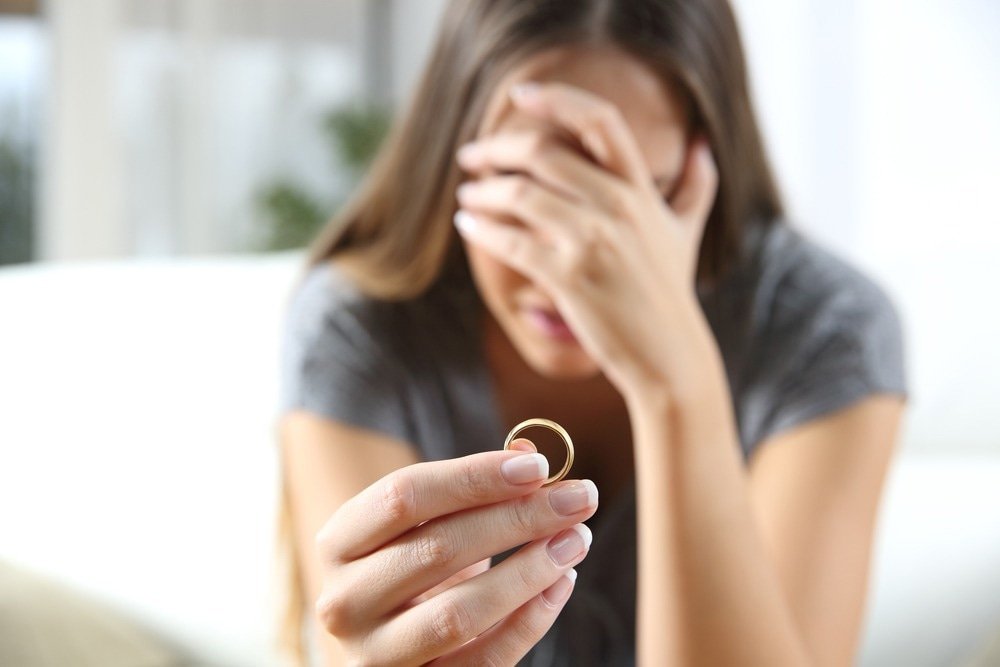
Study: Trajectories of antidepressant use before and after union dissolution and reunification in later life: a population-based prospective cohort study. Image credit: Antonio Guillem/Shutterstock.com

Record

Unlike previous generations, older people today are more likely to divorce and remarry or take on new partners. However, such relationships typically do not last as long as conjugal unions and repeated intercourse are common in this subgroup.

About 10-15% of people over the age of 55 have symptoms of clinical depression. Correlates of poor mental health have been identified, including divorce, nonmarital separation, and death of a partner, but much research has not addressed these factors in this population.

Existing studies show that older adults show increased signs of depression, clinical or otherwise, after a divorce. However, an American study showed that depressive symptoms started before divorce, peaked with divorce and slowly declined to pre-divorce levels over the next four years.

Other research shows similar trends, although recovery in one UK study appeared to be significantly faster than in several US studies. However, all of these did not separately examine depression and antidepressant use among couples who separated during cohabitation. The effect of new relationships is also unclear, although some research in the US suggests that depression symptoms are reduced by forming new partnerships, especially among men.

The study is based on Finnish population register data from 1996 to 2018. It included nearly 230,000 people aged between 50 and 70 in the years 2000-2014. The focus was on antidepressant use over a period spanning four years before to four years after the end of any relationship, including death and subsequent formation of a new relationship.

What did the study show?

Of the large group, about a third each bereaved, divorced or divorced between the ages of 50 and 70. Separations were likely to occur at earlier ages compared to bereavement, leading to differences in socioeconomic characteristics between these categories.

That is, divorced people were more often employed, had more income, and lived with children compared to bereaved people. The latter were more likely to own their homes.

After bereavement, less than 8% formed new relationships, compared to one in five after divorce. In contrast, almost half of those who left their partners found new partners. Men were more likely to find new partners after bereavement or losing their partners, a difference that was not as pronounced among divorcees. A higher income was associated with a higher rate of finding new partners.

Both men and women had similar average ages at the point of dissolution of marriage or formation of new relationships.

After adjusting for potential confounders, the scientists found that both men and women used antidepressants significantly more during the four years leading up to and following relationship breaks.

When calculated as percentage points, the increase in divorce was five for men versus seven for women. With extramarital relationships it was smaller, by three and four, respectively. Men who lost their partner increased their use of antidepressants by five and women by six percentage points.

People were more likely to increase their use of antidepressants shortly before the end of the relationship, with a slow decline after that. The final extent of use was, however, at a consistently higher level compared to that before the event.

Even after new relationships were established, antidepressant use failed to return to baseline, with the 0.1–1.5 percentage point drop being temporary. Women showed a greater increase in antidepressant use than men and showed extremely transient partial recovery after finding new partners.

While men showed a modest increase in use during the four years preceding separation from a live-in partner, this declined to the level recorded one year before the event and leveled off. Women showed larger increases but almost no recovery after such a breakup, and usage rates began to rise at a slower rate from the first year onward.

After partner separation, antidepressant use decreased slightly over the four years prior to repartnering for both sexes. It started to rise again a year after reconnection for men, but at 6 months for women.

Among bereaved couples, antidepressant use began to increase in the four years leading up to the event, but particularly rapidly among women. Men and women experienced a sharp increase in antidepressant use three months after losing their partner compared to 3 months before. A slight decrease in usage occurred later, but it never returned to the original value.

After finding new partners after the bereavement, both sexes showed a decline in antidepressant use during the six months before to the 6 months after that event. For women, this continued to increase thereafter.

With divorce, men and women began using more antidepressants in the four years before, with a peak in the previous six months. A divorce-related decline followed, although usage rates remained higher than before the divorce. With repartnering, the trend continued to increase during the eight years before and after, with a break in the year just before repartnering for women. For men, this break lasted a year before and after repartnering (the “honeymoon effect”).

What are the consequences;

Both men and women suffered equal rates of depression, as reflected in the use of antidepressants after bereavement in later life. However, when separated from live-in partners, women showed twice as many increases in antidepressant use as men.

The authors suggest that the loss of a life partner can trigger a cascade of detrimental effects, including loss of income and social support that accumulate over time, and this appears particularly important for women who experience separation from their live-in partners in relationship with men. same situation.

“The biggest increases in [antidepressant] The use associated with union dissolution among women in our study may indeed be related to the fact that the mental health costs of union dissolution fall more heavily on women than on men.”

More research is needed to understand why forming new partnerships is helpful in reducing antidepressant use only among bereaved and separated couples but not divorced ones.

antidepressant Breakup finds greater increase Men show study women
bhanuprakash.cg
healthtost
  • Website

Related Posts

NIH funding terminations disproportionately affect marginalized health justice researchers

May 9, 2026

The best menopause workout for women over 40

May 8, 2026

Short bouts of exercise help smokers manage the immediate craving for nicotine

May 8, 2026

Leave A Reply Cancel Reply

Don't Miss
Nutrition

The best supplements for fatty liver disease

By healthtostMay 9, 20260

What are the best supplements for fatty liver disease? That’s the question I’ll try to…

NIH funding terminations disproportionately affect marginalized health justice researchers

May 9, 2026

Eat Your Way to a Stronger Heart: The Essential Guide to Healthy Eating

May 9, 2026

What to eat & avoid

May 9, 2026
Stay In Touch
  • Facebook
  • Twitter
  • Pinterest
  • Instagram
  • YouTube
  • Vimeo
TAGS
Baby benefits body brain cancer care Day Diet disease exercise finds Fitness food Guide health healthy heart Improve Life Loss Men mental Natural Nutrition Patients Pregnancy protein research reveals risk routine sex sexual Skin Skincare study Therapy Tips Top Training Treatment ways weight women Workout
About Us
About Us

Welcome to HealthTost, your trusted source for breaking health news, expert insights, and wellness inspiration. At HealthTost, we are committed to delivering accurate, timely, and empowering information to help you make informed decisions about your health and well-being.

Latest Articles

The best supplements for fatty liver disease

May 9, 2026

NIH funding terminations disproportionately affect marginalized health justice researchers

May 9, 2026

Eat Your Way to a Stronger Heart: The Essential Guide to Healthy Eating

May 9, 2026
New Comments
    Facebook X (Twitter) Instagram Pinterest
    • About Us
    • Contact Us
    • Privacy Policy
    • Terms and Conditions
    • Disclaimer
    © 2026 HealthTost. All Rights Reserved.

    Type above and press Enter to search. Press Esc to cancel.