If you are nearing or already going through menopause, you may have noticed changes in your skin during menopause.
Hormonal changes in the body can affect the skin. If you’re seeing more dryness, breakouts, itchiness, signs of aging or sensitivity, you’re not alone. Many women endure these symptoms.
Fortunately, there are many things you can do to help your skin manage this period better.
What causes skin changes in menopause?
Hormonal changes are the main cause of skin changes in menopause. As your period slows down and stops, the body experiences a significant drop in estrogen levels. Estrogen is the female reproductive hormone that regulates the menstrual cycle, but it also does many other things.
Actually, estrogen affects the reproductive system, but also the urinary system, the heart and blood vessels, the bones, the breasts, the skin, the hair, the mucous membranes, the pelvic muscles and the brain! It has many positive effects, such as protecting the heart and brain from inflammation and disease, improving muscle mass, boosting mood and keeping the vagina lubricated so that sex is enjoyable.
Estrogen also helps prevention of skin aging. It helps slow the decline of collagen, which provides structure to the skin. It also retains skin moisture, which can help prevent dryness and reduce the appearance of wrinkles.
During perimenopause and menopause, estrogen levels drop. This is what causes most of the unpleasant symptoms, including vaginal dryness, mood swings, night sweats and hot flashes.
Other hormones involved in skin changes in menopause
Progesterone is another female reproductive hormone that declines during menopause. During reproductive age, it is involved in pregnancy and also affects menstrual periods. The body gradually stops producing progesterone at menopause. This causes symptoms such as headaches, mood swings, hot flashes, sleep problems and weight gain. It can also affect the skin.
Progesterone stimulates the production of sebum (skin oil) in the pores, which can help the skin maintain its moisture level. As levels drop, you may notice more dryness and increased visibility of fine lines and wrinkles. Fluctuating progesterone levels, such as those that can occur during perimenopause, can also lead to overproduction of sebum, causing increased acne breakouts.
Women have low levels of testosterone, the “male” reproductive hormone. This hormone stimulates the production of sebum, which can keep the skin hydrated, but can also lead to acne. It also helps to normalize inflammation in the skin, reducing the risk of acne and redness.
Testosterone naturally declines in both men and women as they age. As levels drop, women may notice increased sensitivity of their skin or more dryness, redness and acne.
Stress hormones increase skin changes in menopause
As if all that weren’t enough, stress hormones often increase before and during menopause. High cortisol levels can lead to increased inflammation, which worsens skin conditions like acne and eczema. The skin may become drier, more sensitive, or develop redness or rashes.
If cortisol levels remain high for a long time, they can break down the skin’s collagen and elastin. This leads to more sagging and bagging and can increase the number of wrinkles you see on your skin.
Cortisol can also prevent your skin from repairing itself as it normally does. Wounds may take longer to heal, but the skin may also thin while losing its firmness.
As for why cortisol levels are rising at this time, there are several possible reasons. Scientists think it may be related to changes in abdominal fat, which affects the metabolic system. Low estrogen and progesterone levels can also affect cortisol levels. Before menopause, these hormones have a regulatory effect on cortisol and stress in general. As their levels drop, women lose that cushion against stress and cortisol.
You may also feel stressed because you are experiencing menopause symptoms such as hot flashes and night sweats. Finally, cortisol levels tend to increase with age, from the late 40s onwards.
How to manage skin changes in menopause
Managing the changes you may experience during perimenopause and menopause requires a whole-body approach. Yes, you need to take care of your skin. But taking care of your entire body and mind will also benefit your skin and overall appearance.
1. Eat well
What you eat ultimately feeds your skin, so you want to be careful that your meals are as nutritious as possible. Include plenty of fruits and vegetables, as they contain antioxidants that help neutralize harmful free radicals.
Then include healthy fats in your meals and snacks. These include omega 3 and omega 6 fats, as they help support the skin’s structure while improving the appearance of the skin. They also protect the outer layer of the skin, preventing water loss, while reducing inflammation. Good sources include oily fish, seeds and cold-pressed oils.
Finally, limit foods high in sugar. They can aggravate skin problems such as acne, while further disrupting the hormonal balance in the body. If you have redness or rosacea, avoid alcohol and caffeine, as well as spicy foods that can worsen the flushing.
2. De-stress
Make it a point to engage in a daily stress-relieving activity to help lower those cortisol levels. Exercise is a great way to relieve stress, but there are many options. Choose anything that helps you relax and forget your problems. Try a warm bath, relaxing massage, journaling, meditation, yoga or just taking a leisurely walk in the park.
3. Calm Inflammation
If your skin reacts to the changes of menopause with increased acne, redness and inflammation, make a point to calm that inflammation. Look for products with mild, soothing ingredients that can help reduce that itchy and inflamed feeling. Get rid of any products you currently have that may be too hard. Check them out with our ingredients to avoid.
We highly recommend our CV Skinlabs products as they are all designed to help reduce inflammation. Key ingredients like Turmeric, Reishi Mushroom, Aloe and more work together to help the skin deal with any rising inflammatory reactions.
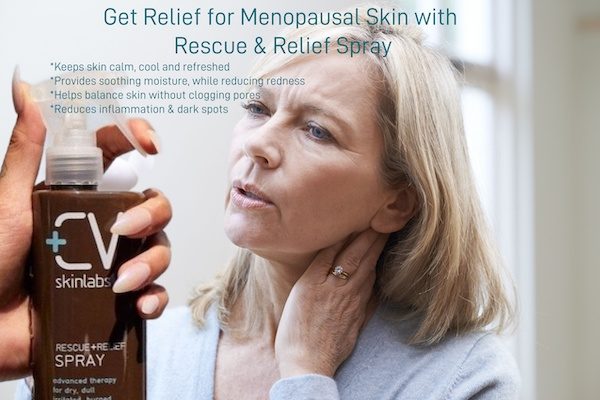
Keep your Rescue + Relief Spray handy as you can use it to remove the heat whenever you need it. It features cooling cucumber, water lily, and fennel to dispel heat while helping to support skin healing and help reduce swelling that can cause dark spots. It’s non-comedogenic, so it won’t clog pores or aggravate acne breakouts. Keep it in the fridge for those nights when you wake up with night sweats or hot flashes.
4. Hydrate more
One of the most common changes that occur with menopause is dryness. Hormonal changes strip the skin of some of its ability to retain moisture, so it’s likely to look drier than before.
Step up your moisturizing treatments and make sure you’re using a safe product that won’t further aggravate the inflammation. We recommend the Soothing Hydration and Body Repair Lotion. They are rich in antioxidants and reduce inflammation while deeply moisturizing the skin. Plus, you can apply them as often as you want without worrying about clogging your pores.
5. Unlock resources
If you struggle with menopausal acne, be careful with anti-acne products. Most of these are made for teenage skin and are likely to aggravate dryness, which can make your acne worse. Focus on balancing oil production.
Cleanse with a mild cleanser that includes salicylic, lactic, or other mild pore-cleansing acids, then use an alcohol-free toner (like Rescue + Relief Spray). Helpful ingredients include retinol and niacinamide.
Try our tonic Rescue + Relief Spray to balance skin and soothe any sensitivity, irritation or redness that may be caused by acids or exfoliants. Try to be patient with your skin—it may take a few months to adjust. Keep a routine that includes these ingredients morning and night.
6. Light up
Melasma and other pigmentation changes can occur during menopause. You may notice more age spots and dark areas, as well as more uneven skin tone. Try using a vitamin C serum as it can help even out pigmentation. Other good ingredients include kojic acid, azelaic acid, niacinamide, glycolic acid, and arbutin.
Turmeric is in every one of our formulas and is rich in antioxidants that can lighten dark spots. It also has moisturizing, anti-inflammatory and antibacterial properties that can help with dry skin as well as blemishes.
Restorative Skin Balm includes essential fatty acids – such as castor oil – and other ingredients that contain antioxidants that fight free radicals in the skin. With regular use, brown or dark spots will fade and your skin tone will even out.
7. Protect yourself
As your skin is likely to be more sensitive and prone to hyperpigmentation, sun protection becomes even more important during perimenopause and menopause. Choose SPF 30 or higher, preferably in a product that uses only zinc oxide and/or titanium dioxide, as these are the safest sunscreen ingredients.
Have you noticed skin changes during menopause?
Featured image by Anna Shvets via Pexels.