


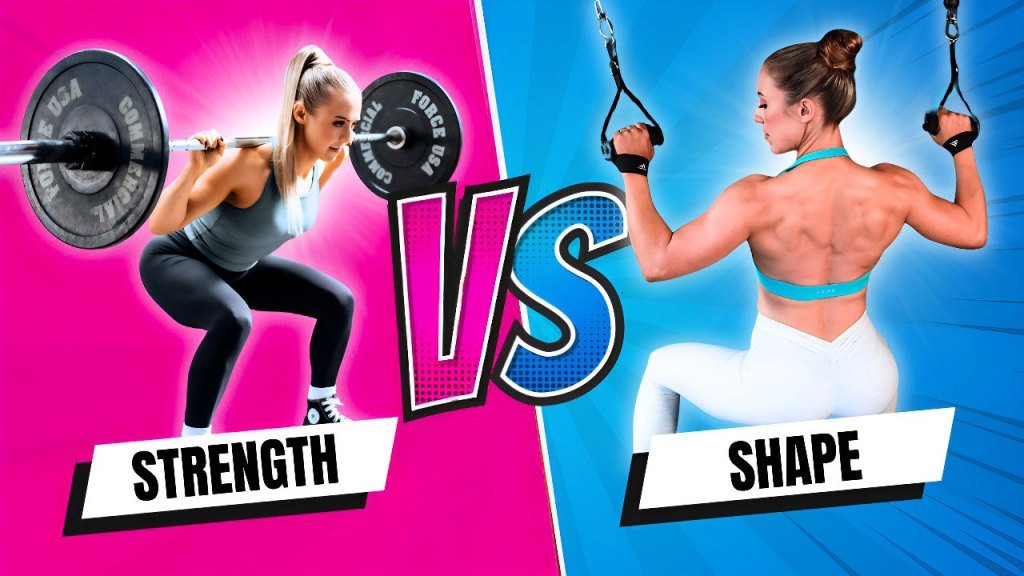
If you’re in your 40s or 50s and confused about the best way to exercise, you’re not alone. Do you have to lift heavy? Stick to light weights to avoid getting bulky or injured? Do you do high intensity circuits to burn more fat?
There’s a lot of conflicting advice out there, and a lot of it isn’t tailored to what midlife women really need – or want. In this article, I will analyze the best way to workout over 40 – especially if you want to build strength, prevent muscle loss, and still be interested in shaping your body in a way that feels good.
If you’d rather watch than read:
Why most workout tips are incomplete for women over 40
As we grow older, our goals begin to change. We want to:
- stay strong,
- Prevent age-related muscle loss (sarcopenia).
- Maintaining healthy bones,
- And yes – most of us still care about how we look.
The problem?
There’s something really positive happening on social media right now – we’re hearing from more and more experts in the fields of women’s health, aging and hormones. Unfortunately, many of these women inadvertently create confusion about what type of training will keep you strong for the longest. Most of them say the best way to stay strong is through traditional strength and power style training – and when you train for strength, you can’t necessarily train for muscle and shape as well.
????️ On the one hand, you have “strength training” – usually means heavy compound lifts like squats and deadlifts, low reps (usually 6-8) and very heavy weights.
???? On the other hand, there is “hypertrophy training” – higher repetitions (10+), uses compound movements but also more isolated exercises, often advertised for those who want to build muscle and improve their aesthetics or tone.
But here’s the truth: there is one a lot of overlap between these styles, and this is where it gets confusing. For example, as I just mentioned hypertrophy training can incorporate some compound movements and lower rep training. And it doesn’t just build muscle and shape – it will also build strength. Strength training, on the other hand, isn’t just going to build strength – it’s going to build some muscle and shape, too. It just won’t build that shape strategically like hypertrophy training. So it’s very confusing to try to separate the two.
In theory, there is a difference between training styles and this matters whether you are an athlete or a competitor. But, really, it doesn’t matter that much to the average person. You can train for strength, muscle and shape at the same time.
In my programs, for reasons you’ll soon learn, we lean more towards this style of hypertrophy training, and I have so many testimonials from women of all ages saying how much stronger they’ve gotten from my programs. You can read just a fraction of them on my site – from ladies facing life dreams like climbing Machu Picchu to everyday examples like a recent message I received from a client who said her husband says she is much more helpful doing yard work now.
Another example that illustrates my point is people who get strong from their professions or sports – without ever lifting a weight! I was recently at a women’s expo and saw a group of trainers demonstrating gymnastics. They didn’t see bars – just body weight and skill-based movement – and they had incredible upper and lower body strength, as well as some amazing shoulder and back muscles.
So what really pisses me off is when I hear these experts say that the best way to get strong as you get older is through traditional strength training – because this is simply not true. Of course, if you’re an athlete, you’d prioritize one training style over another – but the average person is just looking for something effective, safe and sustainable. There is more than one way to get strong – and you should choose the one that’s right for your goals but also the one that keeps you safe and fit for the long term.
Because lifting heavy weights isn’t always the answer
Now, don’t get me wrong – we all need to train hard and challenge ourselves to get stronger. But there is a difference between traditional “strength/power” lifting that uses more explosive, quick movements and hypertrophy lifting that is typically slower, more controlled and deliberate. So when I refer to heavy lifting in this section, I’m referring to the endurance/strength style of lifting, and here are the main problems I have with it:
1. Most women can’t do these heavy lifts safely.
These lifts are highly technical. Most women don’t have the mobility, movement control or mind-muscle connection to perform them safely – especially without training. It can take years to learn to do these exercises correctly.
And, in fact, for many women over 40, those lifts just aren’t going to work at all due to various issues – like back pain, arthritis and mobility limitations.
2. Training in low rep ranges is hard to get right.
Most women underestimate how heavy they are must lift in the 6–8 rep range. They don’t push hard enough to see results – or worse, push too hard and end up hurting. I’ve even heard one of the most popular of these experts say that he trains with 4 sets of 4 reps. This will be very difficult for the average person to perform safely and effectively.
3. Lifting heavy weights puts extra stress on joints, tendons and ligaments.
As estrogen declines, our joints, tendons and ligaments become more vulnerable. Aggressive lifting without proper control or support can lead to problems such as tendinitis or long-term pain. Just ask the average 30-year-old man who works out regularly – many will tell you that their worst injuries come from heavy compound lifts like deadlifts, squats and bench presses. If these exercises are causing them problems, imagine how much more dangerous they can be for us at this age.
4. You may not have the equipment.
If you train at home, chances are you don’t have the heavy weights needed to effectively work low rep ranges. At any given time, I have hundreds of women doing my programs – over half of them from home – and most of them don’t have the setup for heavy compound lifts.
5. It gets boring.
A program that focuses on compound lifts can be repetitive – not only physically taxing, but also mentally draining. With traditional strength training, you have to practice the same exercises and techniques over and over for a very long time. Getting better at a lift is one way to get stronger, so you need to practice it all the time.
I don’t know about you, but I’d rather follow a plan with a wide variety of exercises, different rep ranges, smarter techniques, and unilateral or corrective movements that help build a balanced, resilient body. Variety keeps things interesting and viable.
6. Does not build shape.
One of the main reasons I started Female Fitness Systems was to help women train in a way that created a feminine shape – something that was missing from most programs. At our age, we can still do so much to shape and tone, so why not train in a way that improves your physique – as well as making you stronger and more resilient.
The best way to train over 40
So what do I suggest?
i call it “functional body sculpting”. It’s a style of training balances strength with aesthetics and longevity.
You lift weights, yes – but you do it in a way that works with your body, not against it. This approach includes:
• Smart endurance work with safer variations
I still use traditional strength exercises, but with more variety than in a strict weightlifting program.
???? For example: Instead of loading up on barbell squats, we might do taped box squats (great for your knees) or Smith Machine Seats (ideal if you train alone and want extra stability).
???? Or instead of heavy overhead and chest presses, which can be problematic for the shoulders, we do more neutral shoulder presses and floor presses for the chest and triceps.
• Hypertrophy focus to shape your body
We build muscle strategically to create shape — not bulk.
???? Most women still care about their appearance, so we train for a strong, feminine aesthetic.
???? For example, instead of pushing very heavy chest presses and lat pulldowns (which can widen the upper body), we prioritize the shoulders and upper back to improve posture and create definition without adding width.
???? And if you want more definition in your arms? You will need concentrated work for you biceps and triceps — something that most general strength programs don’t include.
• Functional training to keep your body strong and resilient
I always include work that supports mobility, core control, balance, joint and tendon health, and injury prevention.
???? Your shoulder and back workouts will often include addiction style movessuch as rotator cuff exercises and postural work tones.
???? We use methods like isometric and eccentric to support tendon health.
???? You will also do a lot unilateral work (training one side at a time) to improve coordination and correct muscle imbalances.
Training for Strength and Shape
So if traditional strength training is your thing, that’s fine – but I hope this helped you see you don’t have to choose between power and aesthetics. You box train in a way that gives you both.
And remember – when you hear someone being overly dogmatic about training or nutrition, challenge them. Trust your intuition and your experience – especially as a midlife woman.
If you want a plan that takes care of everything for you, be sure to check out my plans – and all the testimonials from women just like you who have become so empowered!
Learn more about my most popular program here.

