


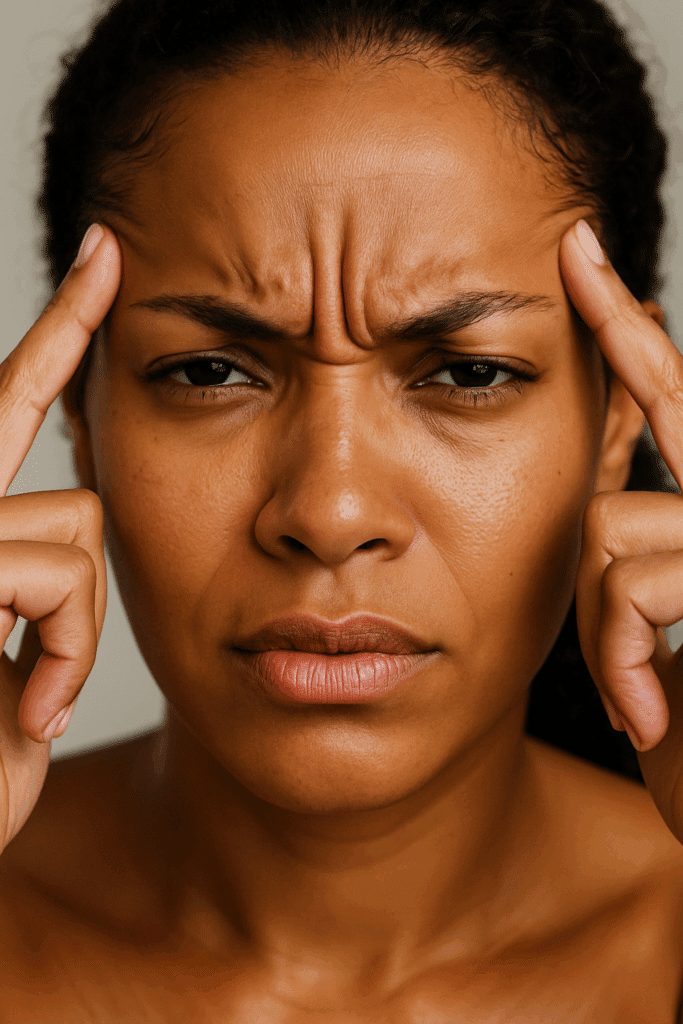
When it comes to smoothing fine lines and wrinkles, two popular names often come up: Jeuveau and Botox. Botox is the OG in the neuromodulator space, and Jeuveau is the up-and-coming, trendy newest treatment. But how do these wrinkle-relaxing injectables compare? And which one to choose?
If you’re looking for a safe, effective way to rejuvenate your appearance without surgery, this article will walk you through the key differences, similarities, and everything in between when it comes to Jeuveau vs. Botox.
What is Jeuveau and Botox?
Both Jeuveau and Botox are injectable treatments made from botulinum toxin type A. They are both part of the neuromuscular class of skin care ingredients used in aesthetics to help prevent and erase the signs of aging. Neuromodulators are ingredients that work by temporarily relaxing the muscles that cause wrinkles, especially in areas such as the forehead, between the brows (furrow lines) and around the eyes (crow’s feet).
When the neuromodulators prevent these muscles from contracting so strongly, the skin appears smoother and more youthful. They can be used after lines and wrinkles have formed or they can be used preventively.
Jeuveau vs Botox: Quick Comparison
| Feature | Jeuveau | Botox |
|---|---|---|
| FDA approval | 2019 (cosmetic use only) | 2002 (cosmetic + medical use) |
| Main use | Aesthetic treatment of wrinkles | Aesthetic & medical treatments |
| Start the results | ~ 2-3 days | ~ 3-4 days |
| Duration of Results | 3–4 months (up to 6 in high doses) | 3-4 months |
| Cost per unit | ~20–25% less than Botox | Typically higher |
| Common Side Effects | Mild headache, bruising at injection site | So does Jeuveau |
| Unique Feature | Made exclusively for beauty use | It is used for both beauty and medical purposes |
So how are Jeuveau and Botox?
From a scientific point of view, Jeuveau and Botox are almost identical. Both skin care treatments:
- Use botulinum toxin A to stop muscle spasms
- Have the same dosage for effective results (20 units for frown lines)
- They are injected into similar facial muscles
- Offer temporary smoothing of wrinkles
- They last up to 3 to 4 months for most people

In head-to-head clinical studies, Jeuveau matched Botox in both safety and wrinkle-reducing power, with 87% of Jeuveau users and 83% of Botox users seeing a visible improvement in frown lines by day 30.
What makes Jeuveau different?
1. Focus only on aesthetics
Jeuveau is the first neurotoxin designed exclusively for cosmetic use. It does not have medical approvals like Botox for migraines or muscle spasms. This unique focus allows the manufacturer to keep prices competitive and marketing tailored for beauty use. In my opinion, it also means that they were able to focus on features that are important to beauty lovers, such as faster action and limiting side effects from long-term use.
2. Cost advantage
Because Jeuveau is not part of a wider medical portfolio, it is often 20-25% less expensive than Botox for the same treatment. For people who do regular repairs every few months, this adds up to real savings over time. Or if you’re someone who wants to try it for the first time, this gives you a lower entry point into treatment.
3. Cleanliness process
Jeuveau is made using a high-purity method called “Hi-Pure,” which can reduce inactive proteins in the formula. This could potentially reduce the (already low) risk of developing resistance after repeated use associated with some other neuromodulators.
What about the results? What are the differences between Jeuveau and Botox?

Both Jeuveau and Botox offer quick, noticeable results, but some studies show that Jeuveau may start slightly faster. In clinical studies, results from Jeuveau usually appeared in 2-3 days compared to 3-4 days for Botox. In particular, a study comparing four toxins, Jeuveau showed one of the fastest onsets of muscle relaxation effects by Day 3. For anyone looking for results before a big event, this could be a small but significant plus.
How long do the results last?
For most people, for both Jeuveau and Botox, the results lasted about the same amount of time. Both last about 3-4 months at standard doses and up to 6 months at higher doses. After all, everyone’s results are very individual and you could have different results.
Who is better for Jeuveau compared to botox?
Everyone can benefit from these treatments, too, but Jeuveau showed greater satisfaction among younger users (especially millennials). In trials, 97% of patients under 40 saw visible results, compared to 85% in older groups.
This makes Jeuveau a strong choice for people in their 20s and 30s who are starting preventive treatments early to prevent the formation of fine lines and wrinkles.

Jeuveau vs Botox: So Which to Choose?
Finally, talk to your skin care provider about which treatment should be your last step before pursuing any treatment. However, here are some general guidelines you could use to start a conversation and provoke thoughts about what makes the most sense for you:
| If you want… | Choose… |
|---|---|
| A trusted brand with medicinal uses | Botox |
| A cost-effective, beauty-focused option | Jeuveau |
| Faster startup and high satisfaction among younger users | Jeuveau |
| To stick with what is widely known | Botox |
Both treatments are backed by clinical research, approved by the FDA, and considered very safe when performed by trained professionals.
Are There Risks?
The risks are almost the same for both. The most common side effects include:
- Mild headache
- Bruising at the injection site
- Temporary eyelid droop (rare, ~1–2%)
- Mild redness or swelling
These effects are usually mild and resolve on their own. No serious safety concerns have been associated with either product when used for cosmetics.
So, what’s the final verdict on Jeuveau vs. Botox?
When comparing Jeuveau vs. Botox, there is no one-size-fits-all answer. Both offer reliable science-based wrinkle reduction. The right choice depends on your goals, your budget and your provider’s recommendation.
References
Beer, KR, Shamban, AT, Avelar, RL, Gross, JE, & Jonker, A. (2019). Efficacy and safety of prabotulinotoxin A for the treatment of pot lines in adults: results from 2 identical phase III studies. Dermatologic Surgery, 45(12), 1381-1393. DOI: 10.1097/DSS.00000000000001903
Cheon, HI, Jung, N., Won, CH, Kim, BJ, & Lee, YW (2019). Efficacy and safety of prabotulinotoxin A and onabotulinotoxin A for crow’s feet: a phase 3, multicenter, randomized, double-blind, separate-person study. Dermatologic Surgery, 45(12), 1610-1619. DOI: 10.1097/DSS.0000000000001920
Rzany, BJ, Ascher, B., Avelar, RL, et al. (2020). A multicenter, randomized, double-blind, placebo-controlled, single-dose, phase 3, non-inferiority study comparing prabotulinumtoxinA and onabotulinumtoxinA for the treatment of moderate to severe pot lines in adult patients. Aesthetic Surgery Journal, 40(4), 413-429. DOI: 10.1093/asj/sjz110
Gadarowski, MB, Ghamrawi, R., Taylor, SL, & Feldman, SR (2021). PrabotulinumtoxinA-xvfs for the treatment of moderate to severe pelvic lines: a review of phase II and III clinical trials. Annals of Pharmacotherapy, 55(3), 279-287. DOI: 10.1177/1060028020943527
Avelar, RL (2024). Post hoc analysis comparing safety and efficacy of prabotulinumtoxinA in millennials and non-millennials with moderate to severe glabellar lines. Dermatologic Surgery, 50(9 Suppl), S42–S47. DOI: 10.1097/DSS.00000000000004249
Lemdani, MS, Honig, SE, Habarth-Morales, TE, et al. (2025). Comparison of botulinum toxin A formulations for the treatment of glottis in women: a double-blind randomized clinical trial. JAMA Dermatology, 161(7), 723-730. DOI: 10.1001/jamadermatol.2025.1335
Jung, BK, Park, H., Cheon, YW, et al. (2023). Clinical investigation of botulism toxin (prabotulinotoxin A) for bruxism associated with masseter muscle hypertrophy: a prospective study. Journal of Cranio-Maxillofacial Surgery, 51(5), 332-337. DOI: 10.1016/j.jcms.2023.05.005
Fagien, S., Avelar, RL, Cox, SE, Joseph, JH, Kaufman-Janette, J., & Marcus, KA (2024). Safety and duration of action of prabotulinotoxin A-xvfs 40 units for the treatment of moderate to severe lines ovale in adult patients: a phase II, multicenter, randomized, double-blind, active-controlled trial. Aesthetic Surgery Journal, 44(9), 987-1000. DOI: 10.1093/asj/sjae051
Clifton, M. (2023). PrabotulinumtoxinA-xvfs (Jeuveau, Evolus) for the temporary treatment of ink lines: what does this toxin bring to the table? The Dermatology Digest.
European Medicines Agency. (2019). Nuceiva (botulinum toxin type A) – EPAR product information. EMA/249428/2019. (Available on the EMA website).
