


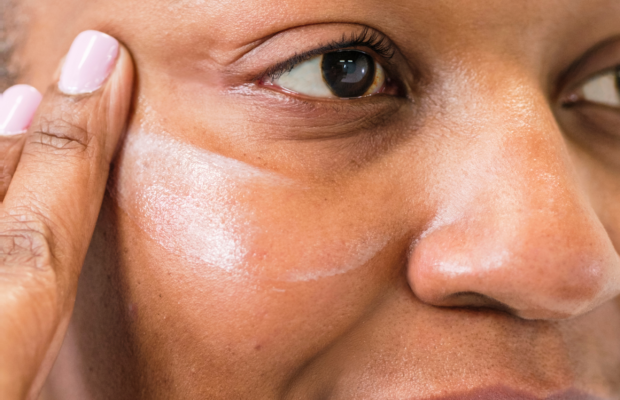
Let’s talk about dry skin. Chances are, if you’re over 40, your skin’s natural oil production has slowed and you’re now wondering what type of moisturizer is best for dry skin. Sound about, right? Most moisturizers for dry skin are packed with what are called “occlusives,” which are oils that give a thick, greasy feel, but does this type of moisturizer really fix your skin’s dryness?
Well, let me start by saying this. Moisturizers have come a long way and your mother’s moisturizer of yesteryear didn’t work as well as the one made today. However, many product manufacturers haven’t innovated and you may not be giving your dry skin what it really needs.
In this post, I’ll educate you on how moisturizers really work, why formulas don’t really get to the root of the problem, and what to look for when deciding how to choose a moisturizer for dry skin. Let’s dive in!
The history of moisturizers
The use of moisturizers to treat dry skin dates back thousands of years with cultures using natural remedies such as animal fats, lanolin (derived from sheep’s wool), oils found in almonds and olives, and beeswax. All of these have a greasy feel on the skin, but worked to relieve skin tightness and give a soft, supple feel to the skin.
In the 19th century, cold cream was invented, and in the following years, petroleum jelly. They also have a greasy feel that would make dry skin feel better and less tight.
With the rise of cosmetic science and dermatology, moisturizers became highly specialized and commercial moisturizers were developed using not only oils (occlusives), the addition of water and emulsifiers.
Fast forward to today, moisturizers are constantly being updated to meet the needs of what we now need in a dry skin moisturizer, but it’s not enough.
What made us believe that a heavy oil-based moisturizer is the most effective for dry skin?
- Oils give the illusion of shine. The oils give an instant glow upon application and reflect light so skin actually looks better. But that doesn’t mean it actually fixed the dryness from the inside.
- A false sense of relief. Oils create elasticity and when an oily moisturizer is applied and you talk or move your face, you don’t feel that “pulling” or “tightening” of the skin. People associate this feeling with not being dry. This is just a feeling. Again, it doesn’t mean it improves skin dryness.
- We’ve come to expect a certain type of moisturizer for dry skin – something with occlusives that are heavy and on point. This has been passed down from our mother’s and grandmother’s moisturizers which – for most of us – were our initial skin care influencers.
What does my dry skin really need?
- Water/hydration. Both dry skin and oily skin require water. Skin cells are like fish and need water to live! This means using a toner within 60 seconds of cleansing and leaving it moist. Use a hyaluronic acid-rich serum or moisturizer under moisturizer to provide skin-plumping hydration. Learn the difference between dryness and dehydration and watch this video. Also, drinking water won’t hydrate your skin, but these three things will.
- Oil. Only dry skin types require oil since oily skin is already incorporated.
- A well formulated moisturizer for dry skin, no matter how thick or heavy it is. Don’t think that just because something is rich and fatty, that it’s a cure-all. Sometimes a moisturizer can add the required hydration and oiliness to the skin without it just sits on top of the skin.
- Repairing your skin’s barrier. To truly fix dryness, you need to repair from the inside of the skin, not just the surface of the skin. Learn about repairing a damaged skin barrier.
- Avoid using harsh products and ingredients. Did you know that your vitamin C serum could be causing “vitamin C acid burn?” Ouch. It’s not good.
How do I choose a moisturizer for dry skin?
- Don’t judge a product by its weight. You need to look beyond the texture, as even lighter textures can provide excellent hydration and repair. Avoid making assumptions when dealing with a rich, oily moisturizer.
- Choose moisturizers for dry skin that restore the skin barrier. Ingredients listed on a bottle are often hard to sort out, but at the very least, if a product is marketed for “barrier repair,” that’s a great sign.
- Choose a moisturizer for dry skin with these key ingredients. If you really want to get serious about correcting dry skin, look for ingredients like niacinamide, linoleic acid, usnic acid, phytosterols, ceramides, shea butter, squalane, vitamin E, dimethicone, and soybean oil to get you started. (There are too many to list!) Here are five methods to remedy dry skin.
- Consult an esthetician or dermatologist for a moisturizer recommendation for dry skin. Trust those who really know and understand how skin works, and what it takes to restore your dry skin.
Did you know you can achieve barrier correction without using oily occlusives? Oily and acne-prone skin doesn’t need the oil it needs, but that doesn’t mean their barrier doesn’t need help – especially with acne treatments that can actually damage the skin’s barrier. Check out this before and after!
How long does it take to see improvement in dryness when using the right moisturizer for dry skin?
A skin’s life cycle is 28 days, so it’s important to give any product time to see results. Dry, flaky skin takes time to peel and fall off, giving way to new, soft and supple skin.
If you’re looking for a moisturizer for dry skin (that’s surprisingly light, because it doesn’t have to be heavy!) try Balm for the restoration of the skin. With Barrier5 technology, it repairs the skin barrier by mimicking your skin’s natural lipids, so it hydrates without feeling greasy. It melts instead of sitting on top, offering a smarter way to correct dryness. After application, it will initially feel tacky, which comes from hydrating humectants like glycerin and propanediol that lock in moisture. Once dry, it begins to restore your skin’s barrier, creating a “second skin” effect that lasts all night. By morning, your skin will feel buttery smooth and refreshed.
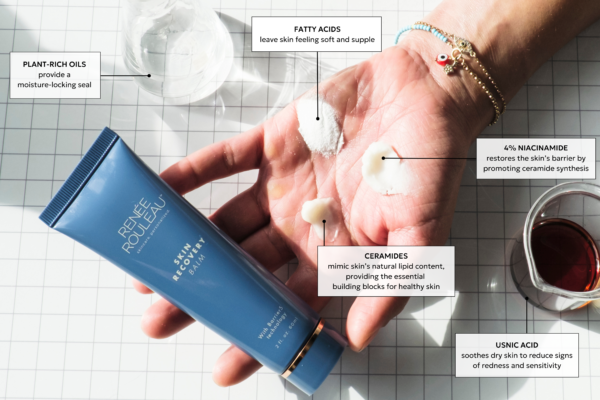
If you prefer a more traditional, richer feel, layer me Rest Day Masque on top or use a skin oil, but on its own, it provides all the moisture your skin needs for long-term barrier health.
In summary…
As an expert esthetician who has touched thousands of faces, I’m here to tell you that you need to rethink how you moisturize. After all, it’s a product you use every day and want to get the most out of it. You can’t just rely on a basic heavy, thick, greasy moisturizer to fix dryness. It’s just not enough. You need a moisturizer for dry skin that can actually repair the skin so you can be on your way to soft, healthy, dewy glowing skin!

Celebrity Esthetician & Skin Care Specialist
As an esthetician trained in cosmetic chemistry, Renée Rouleau has spent 35 years researching skin, educating her audience and building an award-winning line of products. Her hands-on experience as an esthetician and trusted skin care expert has created a real solution — products designed to nine different skin types so your face will have exactly what it needs to look and feel its best. Trusted by celebrities, editors, bloggers, and skincare enthusiasts around the world, her vast real-world knowledge and constant research is why Marie Claire calls her “the most passionate skin professional we know.”
