



Celia Quansah is an English rugby sevens player who plays for Leicester Tigers Women. She was selected as a member of the Great Britain women’s national rugby sevens team for the 2020 Summer Olympics. She was born in Twickenham, England. Born to a Ghanaian father and an English mother, Quansah grew up in Twickenham. She participated in athletics, winning the long jump event at the 2011 School Games and represented England internationally in the heptathlon, competing in the British Championships against Jessica Ennis-Hill. At university, he took up rugby. After playing for six months, she was invited to join the England Sevens program for 2018/19 and played for the winning Great Britain team in the 2019 Rugby Europe Women’s Sevens Olympics qualifying tournament.
She was selected as part of the Great Britain Women’s National Rugby Sevens squad for the 2020 Summer Olympics.
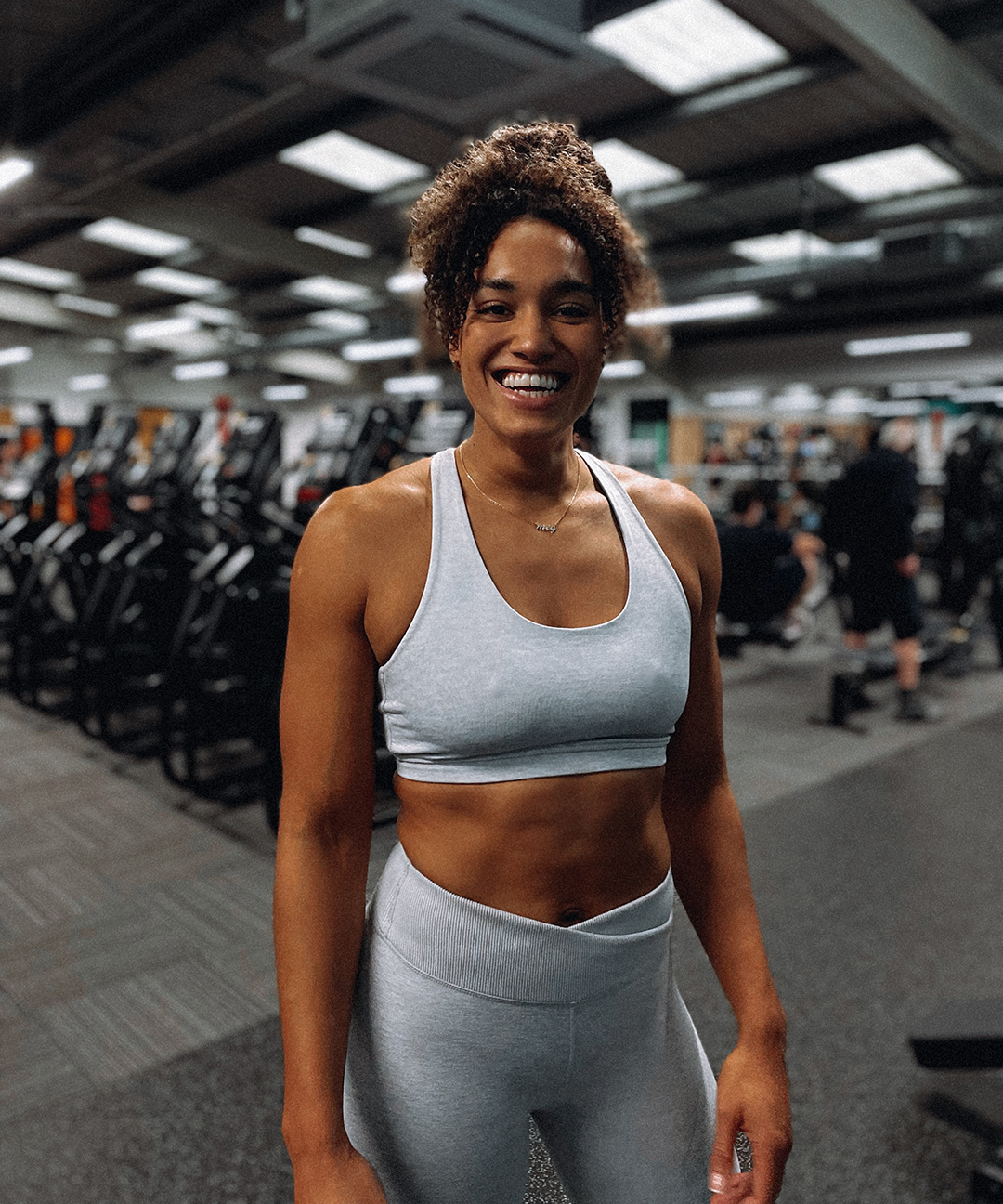
Women Fitness President Ms Namita Nayyar meets Celia Quansah – an extremely talented and accomplished English rugby sevens player. Here she talks about her fitness journey and success story.
Namita Nayar:
You were born in Twickenham, England. You participated in athletics, winning the long jump event at the 2011 School Games and represented England internationally in the heptathlon. While at university, she took up rugby and after playing for six months, was invited to join the England Sevens program for 2018–19 and played for the winning Great Britain team in the 2019 Rugby Europe Women’s Sevens Olympic Qualifying tournament. This later propelled your career to the height where you found yourself at the top of English women’s rugby. Tell us more about your professional journey of extraordinary hard work, perseverance and endurance?
Celia Quansah:
I’ve always loved sports, growing up I’d try anything I got the chance. At primary school I was introduced to sports such as rugby, cricket and athletics. I think the exposure to sports at a young age developed the competitive nature in me and I got so much enjoyment out of it that it never really left.
I started playing rugby because I was desperate for a new challenge and felt I wouldn’t unlock my full potential in Athletics but I told myself I would only do it if I was going to play for England, I wanted to be the best so that was on my mind from the moment I picked up a rugby ball. It was a steep learning curve coming into an international set-up with very little rugby knowledge, so it took a lot of confidence and hard work.
I got a lot of niggles (injuries) early on as my body wasn’t used to the demands of the new sport, but after a year or so I was able to play freely and had a good injury free season. It was then that I really saw my progress accelerate and found myself playing on the world stage in front of thousands of fans in some of the biggest stadiums around the world, moments I will never forget.
In 2021, at the peak of my race after the Tokyo Olympics, I tore my first ACL. This was my first “major” injury and it was devastating. When it happened, I remember lying on the pitch while the physio was assessing me and counting ahead 9 months (the average time it takes to come back from an ACL injury) that it took me a week before our first game at the Commonwealth Games.
At that moment I knew I would do everything I could to get back to this tournament. After talks with my medical team to discuss the risks, we decided to go down the kitchen sink and, against the odds, I returned to the game after 7 months and was selected for the 2022 Commonwealth Games. A dream come true.
Unfortunately, after a short 6 months back on the court, at the Cape Town HSBC World Series tournament, I suffered a high and dislocated my other knee causing significant injuries including a torn ACL and MCL and a torn meniscus. At first my mindset was similar to my first ACL, “here we go again” I thought. But over time, this injury was taking its toll, it felt so hard and I wondered a lot, why me? I struggled through a boot camp based program to get the support I needed and wanted, which impacted me massively over time. However, I was extremely fortunate to have the support of external sources such as the RPA and the IRU.
After multiple scans, two surgeries, injections and countless physio and psych sessions, I returned to playing in the HSBC World Series in February 2024 where I was able to start my rugby journey again which I love. Still, 10 months later, I’m on this journey back with full confidence, full fitness and full enjoyment of the game, but I’m determined to get there.
Namita Nayar:
It is a rugby player’s dream to play in the Olympics. You have been selected as part of the Great Britain Women’s National Rugby Sevens Team for the 2020 Summer Olympics. Tell us more about this spectacular achievement?
Celia Quansah:
Being an Olympian has always been my ultimate dream, sounds silly but growing up I knew I was going to make it come true. I thought it would be in athletics, but life took me on a different path. Many rugby players actually dream of playing in a World Cup rather than the Olympics as that has traditionally been the ‘pinnacle’. However, for me, the Olympics has always been my dream and it is still strange to be able to say that I achieved it.
Like anything else, it becomes normal with time, but it’s really great when people remind you how special it really is. When you’re in the elite sports bubble, do things that aren’t so normal become normal, like being an Olympian? Haha. I am so, so grateful for the coaches who took a chance on me as a 21-year-old heptathlete and within 4 years have grown me into a player who deserves an Olympiacos jersey. It was truly one of the best experiences of my life.
The full interview continues on the next page
This interview is exclusive and conducted by Namita Nayyar, President of womenfitness.net, and may not be reproduced, copied or hosted in part or within complete anywhere without express permission.
All written content Copyright © 2025 Women Fitness
Refusal
The Content is not intended to be a substitute for professional medical advice, diagnosis or treatment. Always seek the advice of your doctor or other qualified health care provider with any questions you may have about a medical condition.
