


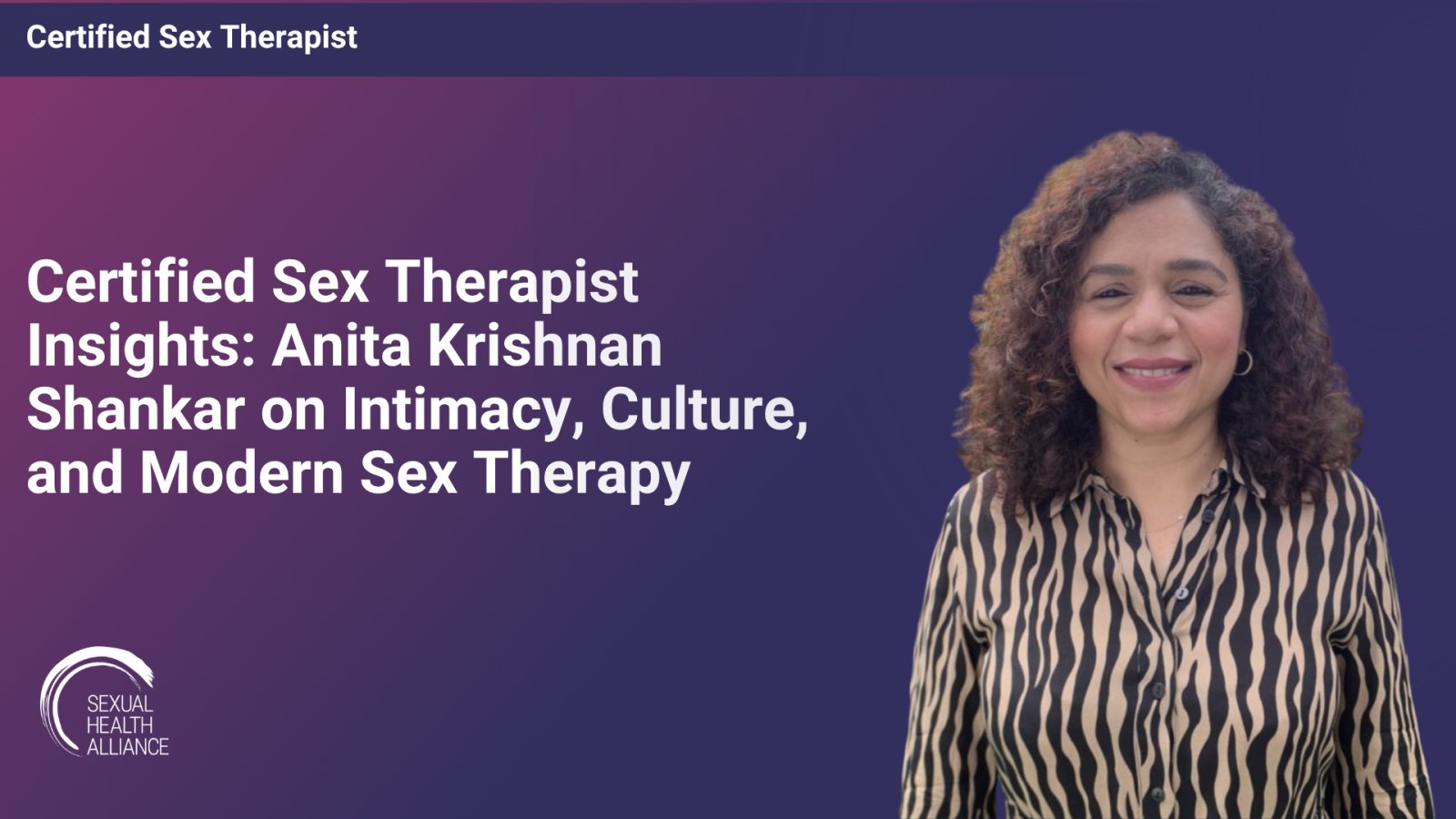
How Anita became a certified sex therapist
Anita’s journey in sex therapy began in a place that many therapists will recognize.
While working as a couples therapist, she consistently saw clients struggling with issues related to intimacy and sexual connection. But there was a problem.
Neither she nor her clients had the tools or the language to navigate these conversations.
As she explains, these issues were often left “on the sidelines” even though they were central to the relationship.
At the same time, he noticed a deeper pattern:
Combined with the lack of trained professionals in her area, this led her to pursue certification and specialize in sexual health.
What modern sex therapy looks like today
One of the most important topics in this discussion is how the field of sex therapy is changing.
Anita describes a shift from a narrow, problem-focused model to what she calls integrated care.
Instead of asking, “What is the sexual problem?”
Certified sex therapists now ask, “What is going on in this person’s life overall?”
This includes:
This broader perspective helps customers connect the dots between their experiences and reduces the sense that something is wrong with them.
The most important realization: Intimacy is about safety
One of the most powerful moments of the interview is Anita’s key message:
Intimacy is not about performance. It is about emotional security.
This redefines the way we understand sexual connection.
Instead of focusing on:
Frequency
Technique
Harmony
Focus shifts to:
According to Anita, when there is emotional safety, intimacy and connection naturally follow. Without it, even the best interventions fall short.
This perception alone challenges many of the dominant narratives that people bring to therapy.
Because cultural context changes everything
Another important focus of discussion is culture.
As a certified sex therapist working in a multicultural environment, Anita emphasizes that there is no one-size-fits-all model of intimacy.
Instead, it argues:
She explains that applying a universal standard can actually increase shame, making clients feel like they are failing to live up to an ideal that doesn’t match their experience.
Effective treatment requires understanding:
Rethinking pleasure across cultures
One of the most fascinating points of discussion is how different cultures understand pleasure.
In many Western contexts, pleasure is often considered a peak experience. Something to achieve or perform.
But Anita describes working with clients who experience pleasure differently.
For them:
The pleasure is continuous, not even a moment
It is associated with emotional security and connection
It can be described as happiness rather than a physical sensation
This highlights an important reality.
Customers may not have the language to describe their experiences. The role of a certified sex therapist is to help him explore and make sense of these experiences without imposing assumptions.
The power of not knowing as a healer
Another key issue is something that many professionals struggle with.
The fear of not knowing.
Anita completely reframes it.
Instead of needing to have the answer, it emphasizes the importance of curiosity.
Saying: “I don’t know. Tell me more.”
This creates space for:
Exploration
Confidence
Deeper understanding
It also reflects a shift away from the traditional ‘specialist’ treatment model towards a more collaborative approach.
Because change is central to intimacy
The discussion also explores how relationships evolve over time.
Anita highlights a critical truth:
Change is the norm. No stability.
In long-term relationships:
People change
It needs a change
Intimacy changes
Problems arise when people resist this change or interpret it as failure.
Instead, it encourages couples to:
See the change as information
Stay curious about each other
Avoid category and comparison
This is especially important in today’s world, where social media creates unrealistic expectations about relationships and intimacy.
What this conversation teaches future sex therapists
For anyone is considering becoming a certified sex therapistthis interview offers a clear message.
This project is not about memorizing techniques.
These are:
Make room for complex experiences
Understanding the full context of a customer’s life
Navigating culture, identity and relationships
Building emotional security
It also highlights the importance of proper education.
Without it, even experienced therapists can struggle to deal with one of the most important aspects of human relationships.
Anita’s experience with the Sexual Health Alliance
Anita also shares the experience of completing it Sexual Health Alliance Certification Program.
She describes it as follows:
One of the most comprehensive trainings he has completed
Both in depth and broad content
Direct impact on her clinical work
She emphasizes that the program has helped her expand her skill set and better support her clients, even as she practices internationally.
The flexibility of the program also allowed her to complete it efficiently while fully immersing herself in the material.
Frequently Asked Questions
What does a certified sex therapist do?
They help individuals and couples navigate intimacy, relationships and sexual health through a holistic, integrated approach.
Why is sex therapy training important for therapists?
Many therapists lack the tools and language to address sexual concerns, which are often central to client relationships.
What is the most important intimacy factor?
Emotional security is the foundation of intimacy, more so than performance or compatibility.
How does culture affect sex therapy?
Culture shapes how people understand intimacy, pleasure and relationships, making personalized approaches essential.
Basic Takeaways
Certified sex therapist focuses on the full context of a client’s life, not just symptoms
Emotional security is the foundation of intimacy and connection
Culture, curiosity and flexibility are essential to effective sex therapy
Your next steps
If this conversation resonates with you, it may be a sign that you are ready to deepen your work in this area.
The Sexual Health Alliance offers certification programs designed to prepare practitioners to become confident, effective certified sex therapists.
Explore:
Visit sexealthalliance.com to learn more and take the next step in your business journey.
Do you want to become an in-demand sexual health professional? Learn more about SHA certification!
